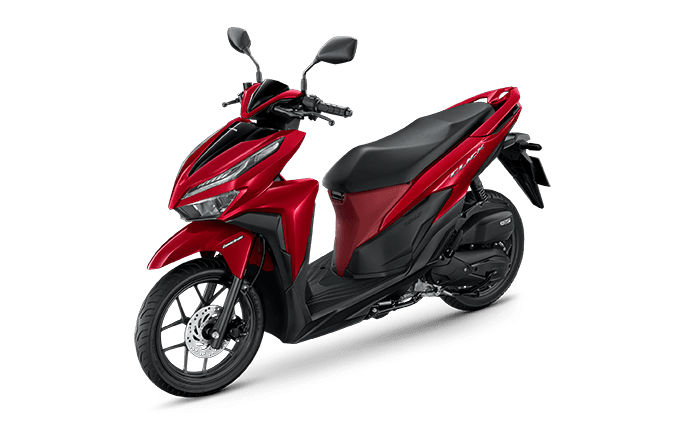
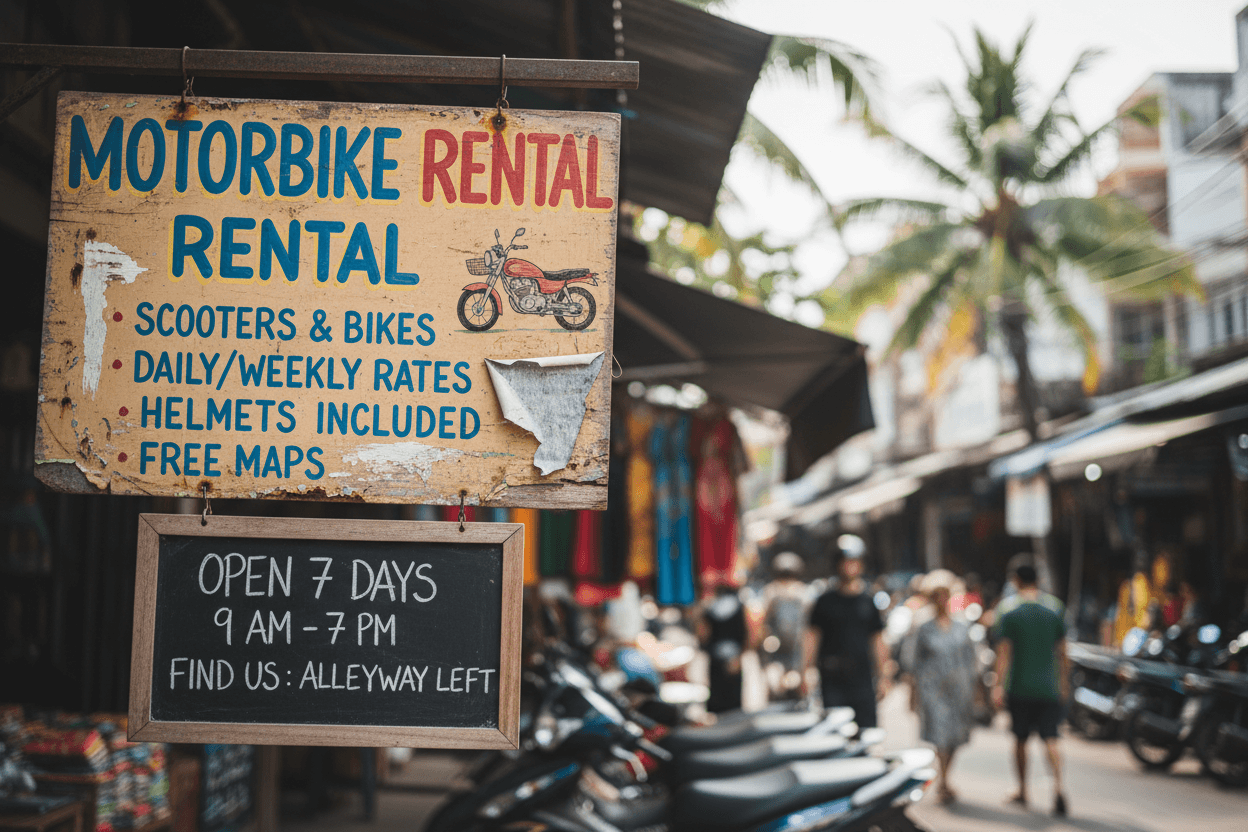
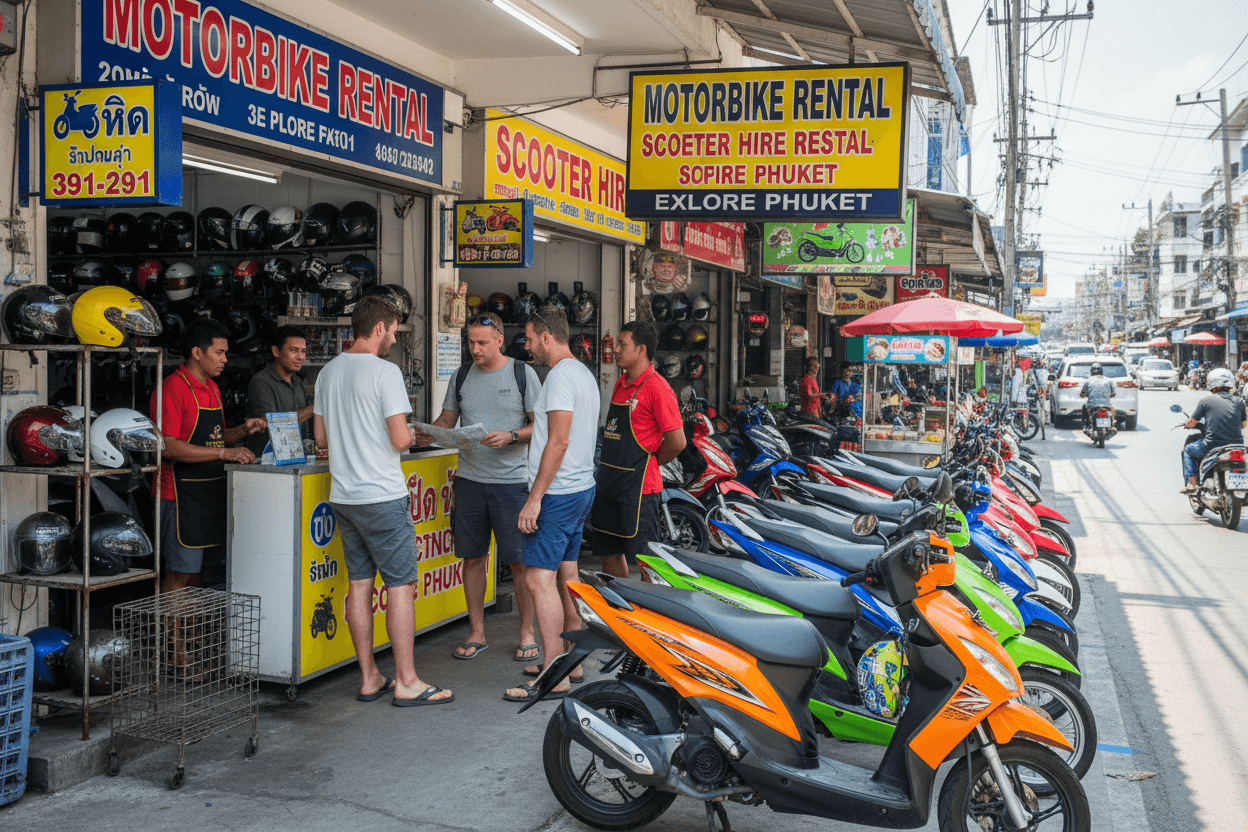
The headline Thailand motorcycle routes split into six regions in 2026: the Northern mountain loops out of Chiang Mai (Mae Hong Son's 600 km / 1,864 curves on Route 1095, the 130 km Pai Loop, the 100 km Samoeng day ride), the Doi Inthanon climb to the country's 2,565 m peak on Route 1009, the eastern Lanna Nan Loop with its Doi Phu Kha pass on Route 1256, the Golden Triangle 200 km borderland circuit out of Chiang Rai, the Isaan Khmer-ruins-and-Mekong tour through Khao Yai and Phimai, and the southern Andaman coast linking Phuket, Krabi, and Hua Hin. Pick the route by terrain and trip length first, then size the bike: 110-125cc Honda Click for short paved days, 150-160cc Honda PCX or Yamaha NMAX for any sustained mountain ride, 250-400cc manual or 500cc+ big bike for the multi-day loops. This guide is the country-level overview; each route has its own deep-dive sibling.
Key Takeaways
- Six route regions: Northern mountain loops (Chiang Mai), the Doi Inthanon climb, the eastern Lanna Nan Loop, the Golden Triangle, Isaan and the Mekong, and the southern Andaman and Gulf coasts.
- Headline distances: Mae Hong Son Loop 600 km / 1,864 curves on Routes 1095 and 108, Pai Loop 130 km / 762 curves, Nan Loop ~600 km, Golden Triangle 200 km, Doi Inthanon 106 km one-way to 2,565 m, Samoeng Loop 100 km day ride.
- Best season: mid-November to mid-February across the entire country (12-25 C in the mountains, dry tarmac). Monsoon June to October closes ridge sections; February to April brings burning-season smoke haze across the north.
- Bike-class fit: 150-160cc maxi-scooter (Honda PCX 160, Yamaha NMAX) at 250-450 THB/day is the workable minimum for any sustained mountain riding; 250-400cc manuals (Honda CRF300 Rally, Kawasaki Versys-X 300) at 500-1,200 THB/day or 500cc+ big bikes (Honda CB500X, Kawasaki Versys 650) at 1,200-2,500 THB/day are the comfortable picks for multi-day loops and two-up touring.
- License floor: home-country motorcycle license PLUS a Geneva-Convention IDP with the "A" (motorcycle) endorsement. Royal Thai Police checkpoints on Route 1095, the Old City Chiang Mai moat, Beach Road in Pattaya, and Bangla Road in Phuket fine 500-1,000 THB on the spot for missing IDP or helmet.
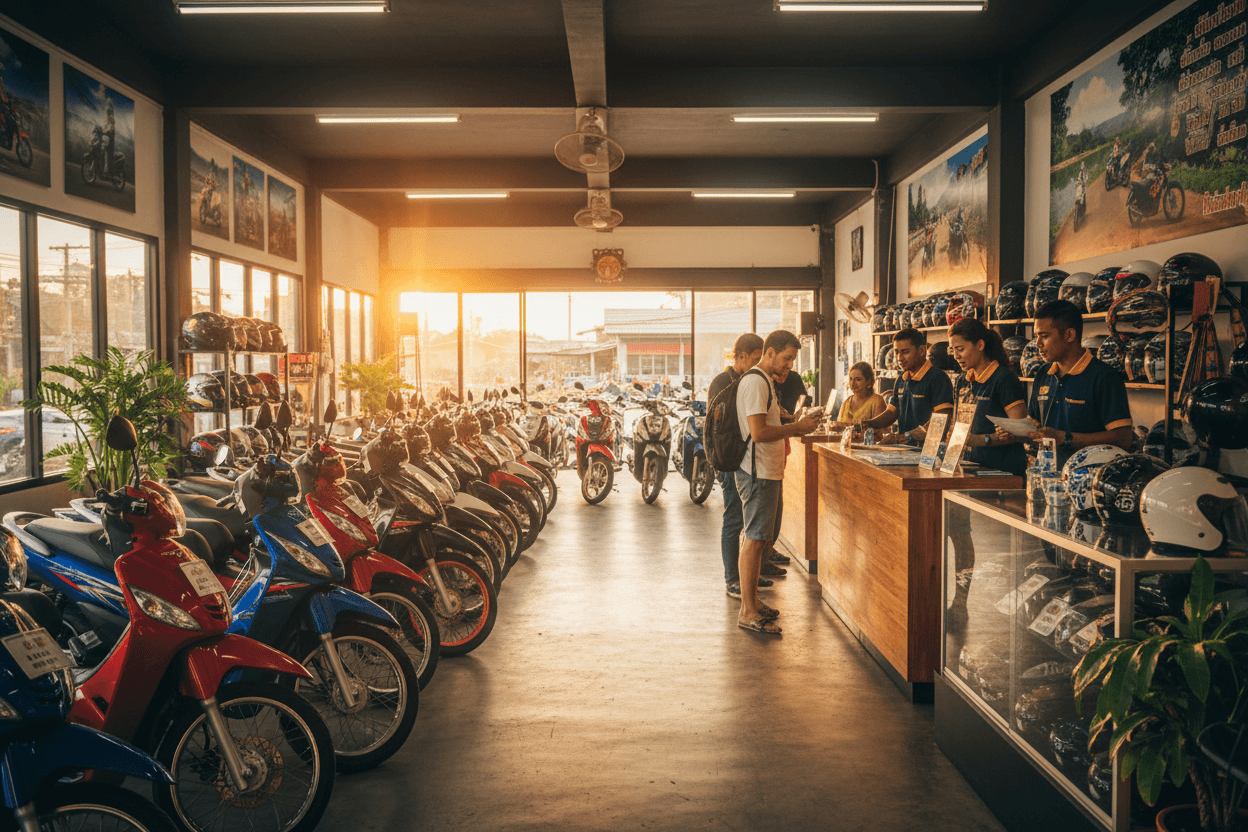
- Rental hubs: Old City Chiang Mai (deepest big-bike fleet in the country) for everything north; Chiang Rai for the Golden Triangle; Krabi Town and Ao Nang for the Andaman; Hua Hin for the Gulf coast; Phuket Town for island circuits. Renting price is set by the city, not the route, so price-shop the city-by-city rental pricing before you arrive.
Why ride Thailand on two wheels?
Thailand stacks the densest mix of beginner-friendly and expert-level motorcycle routes in Southeast Asia inside a single country: paved tarmac on every signature loop, fuel stations every 30-50 km on the headline circuits, and rental fleets in 9 major hubs that range from a 150 THB/day Honda Click 125 to a 2,500 THB/day Honda Africa Twin. The same week-long trip can put a first-time rider on the 100 km Samoeng circuit on a Wednesday and an experienced rider on the 1,864-curve route on the weekend, both staged out of the same Old City Chiang Mai bike shop on Kotchasarn Road.
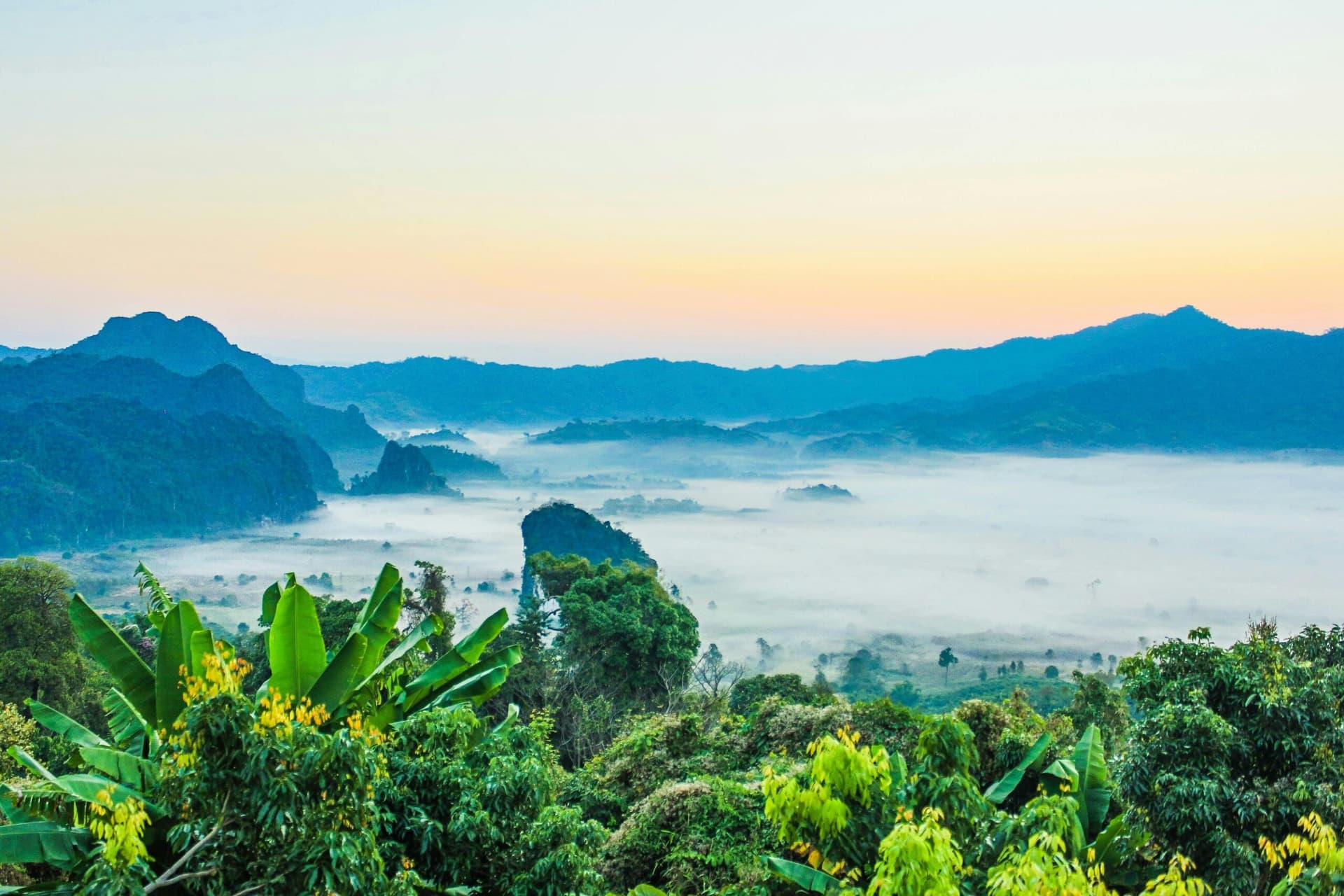
The country's geography drives the route variety. Northern Thailand's spine is a folded mountain corridor between Chiang Mai and the Myanmar border, which is where the curve density is highest (Route 1095 averages six curves per kilometre between Mae Malai and Pai). The eastern Lanna belt around Nan Province is the connoisseur's quieter alternative on Routes 101 and 1256, with terraced rice and Lua and Mlabri hill-tribe villages instead of Pai backpacker bars. The central plains around Bangkok and Ayutthaya are flat-and-easy intro riding. Isaan in the northeast has Khmer temple ruins (Phimai, Phanom Rung) and the Mekong border. The southern coastal half of the country (Phuket, Krabi, Hua Hin, the Gulf islands) trades curves for ocean views and afternoon-monsoon rhythm.
This is the country-level routes pillar. For the rental funnel (price by city, IDP rules, scams to avoid, deposit best-practice) the dedicated read is the country-level rental walkthrough; for the price-by-city breakdown alone, the Thailand scooter rental cost post tabulates 9 cities. Below, the regions split by route style, with bike-class and season notes per row of the comparison table.
The Northern mountain loops out of Chiang Mai
The Northern mountain loops out of Old City Chiang Mai are Thailand's most-recommended motorcycle riding region: the 600 km loop on Routes 1095 and 108 with 1,864 numbered curves, the 130 km Route 1095 Pai ride with 762 of those curves as a single-day option, and the 100 km day-trip warm-up loop from Chiang Mai on Routes 1096 and 1269 as the beginner-friendly option. All three start and finish at the same Old City rental cluster on Kotchasarn Road and Moonmuang Road, where 150-300 THB/day Honda Click 125s, 250-450 THB/day Honda PCX 160s, and 1,200-2,000 THB/day Honda CB500X big bikes share a one-block radius.
The big four anchor stops along the Mae Hong Son loop are Pai's Walking Street, the Tham Lod cave at Pang Mapha, Wat Phra That Doi Kong Mu's hilltop chedi above Mae Hong Son town, and the Sutongpe Bridge bamboo crossing. A 4-5 day counter-clockwise schedule (Chiang Mai → Pai → Mae Hong Son → Mae Sariang → Chiang Mai) is the standard pace; 6-7 days lets you actually visit the stops without burning the daylight in the saddle. The Pai Loop on Route 1095 is the same first 130 km as a single day-ride, and is the right choice for riders with one weekend rather than five days. The Mae Sa Valley waterfall route is the warm-up: 4-5 hours, paved, mellow third-gear curves, anchor stops at Mae Sa Waterfall, Queen Sirikit Botanic Garden, and Mon Cham viewpoint.
A 110-125cc Honda Click handles Samoeng, struggles on the Pai Loop, and is dangerous on the full Mae Hong Son. The bike-class sweet spot for any northern mountain ride is the Honda PCX 160 or Yamaha NMAX at 250-450 THB/day; the 500cc Honda CB500X at 1,200-2,000 THB/day is the right pick for the full Mae Hong Son with a passenger and luggage. For the city-rental flow before you ride out, the motorbike rental Chiang Mai guide covers the Old City and Nimman shops; the big bike rental Chiang Mai post covers the Kotchasarn Road big-bike specialists.
Doi Inthanon: the climb to Thailand's roof
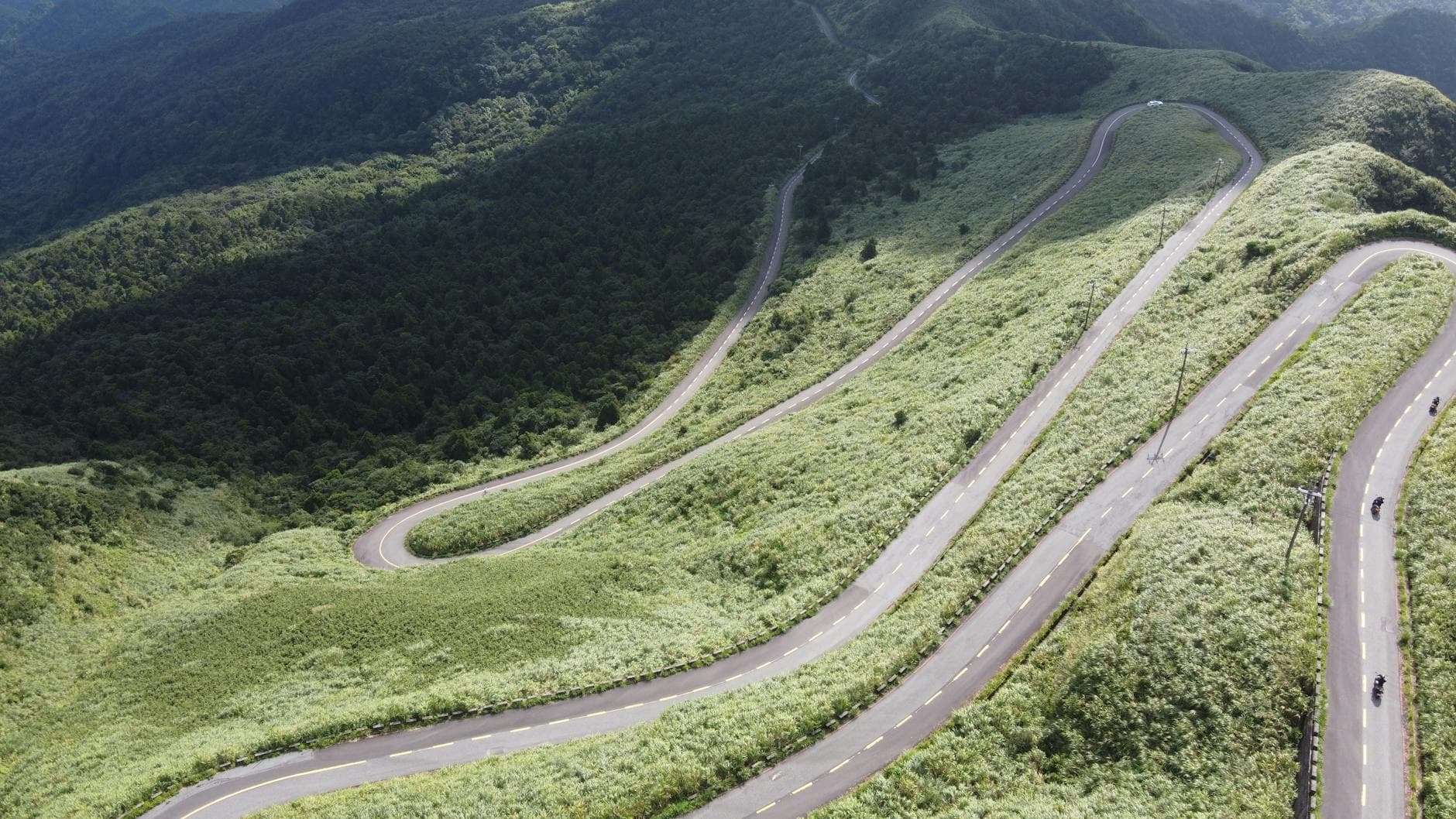
The Doi Inthanon ride is a 106 km one-way climb from Old City Chiang Mai to the country's 2,565 m peak via Route 108 to Chom Thong and Route 1009 into the national park, a 2.5-hour ascent on a 150-160cc maxi-scooter and a 47 km finishing climb that gains 2,265 m of elevation over the Pha Mon Chedi twin pagodas on the way to the cloud-forest summit. Foreigner park entry is 300 THB plus 150 THB for the motorbike at the Route 1009 gate. Summit air sits at 8-12 C even in March-April and drops to near zero on December nights, so a layer is mandatory regardless of when you ride. The conquering Doi Inthanon post covers the day-trip pacing, the foreigner-fee booth, and the bike-class step-up in detail.
Doi Inthanon is the climb that most clearly punishes an undersized bike. A 110-125cc Honda Click can technically reach the summit but engine-brakes weakly on the descent, fades the front pads on the long Route 1009 downhill, and is exhausting on the steep switchbacks above Wachirathan Falls. A Honda PCX 160 or Yamaha NMAX (250-450 THB/day) is the comfortable minimum; a 250cc-plus manual (Honda CB300R, Honda CRF300 Rally) is the right tool for two-up touring or for riders who want engine-braking torque on the descent. Treat Doi Inthanon as a one-day climb out of Chiang Mai rather than a multi-day commitment. Pair it with a Samoeng Loop the next day if you have the bike rented for the week.
Nan Loop and the eastern Lanna alternative
The Nan-and-Doi-Phu-Kha route is the connoisseur's east-side alternative to Mae Hong Son: roughly 600 km from Old City Chiang Mai through Phrae, Nan Town, Pua, and Bo Kluea on Routes 11, 101, 1080, and 1256, with the Doi Phu Kha pass at near 1,980 m as the signature climb. The Nan Loop trades Mae Hong Son's 1,864 numbered curves for terraced rice, Lua and Mlabri hill-tribe villages, the 16th-century Wat Phumin mural cycle in Nan Town, the 13th-century Bo Kluea salt wells that are still worked by Lua-descent families, and the Tai Lue weaving cooperatives in Pua. Where Pai sees 250,000 foreign tourists a year, Nan Town still feels like a working provincial capital.
The Nan Loop's defining riding feature is Route 1256 between Pua and Bo Kluea: 50 km of paved-but-broken switchbacks topping out near 1,700 m with patchy gravel shoulders that punish a 110cc scooter and reward a manual gearbox. Engine braking is the silent factor that separates the right bike from the wrong one, because a CVT scooter coasts on a closed throttle and boils its front fluid on the 30-40 minute descent. The recommended bike for the Nan Loop is a 250-300cc manual adventure bike (Honda CRF300 Rally or Kawasaki Versys-X 300) at 500-1,200 THB/day from Chiang Mai's Kotchasarn Road big-bike specialists; a Honda PCX 160 works for paved-only riders who skip the Doi Phu Kha climb.
A four-day counter-clockwise pace is the minimum (Chiang Mai → Phrae → Nan Town → Doi Phu Kha and Bo Kluea → Lampang → Chiang Mai). Five to seven days lets you sleep in Sapan Village (a Tai Lue homestay village 35 km south of Bo Kluea on Route 1081), spend a full day on the Pua textile cooperatives, and add a Lampang stop for Wat Lampang Luang on the return. Pair the Nan Loop with the Mae Hong Son Loop on a longer northern Thailand trip and a single 250cc rental covers both routes.
The Golden Triangle: borderlands ride out of Chiang Rai
The Golden Triangle motorcycle adventure is a 200 km loop out of Chiang Rai in Thailand's far north, linking the Mae Sai border crossing (Thailand-Myanmar) on Route 110, the Sop Ruak Mekong viewpoint where Thailand, Laos, and Myanmar meet, and the Yunnanese-Thai tea-mountain villages of Doi Mae Salong on the return. The road is fully paved and a 150cc Honda PCX or Yamaha NMAX handles it; the loop pairs naturally with a one-night overnight in Mae Salong (1,000-2,500 THB/night for guesthouses with mountain views) and an early start back to Chiang Rai.
The Golden Triangle's headline stops are Wat Rong Khun (the White Temple, 100 THB foreigner entry) on the way out of Chiang Rai, the Hall of Opium Museum at Sop Ruak (200 THB) for the historical context, the Mekong viewpoint where the three countries converge, and the oolong tea plantations of Mae Salong on the way back. The route is shorter and less technical than the Mae Hong Son Loop, and is the right choice for a 2-3 day add-on rather than a stand-alone trip. Chiang Rai's rental scene is shallower than Chiang Mai's; the typical Chiang Rai range for a 125cc Honda Click sits at 125-300 THB/day and big-bike inventory is limited to a handful of shops near the bus station.
Pair the Golden Triangle with northern Thailand's headline loop by riding out of Chiang Mai on a 250-300cc manual, looping through Pai, Mae Hong Son, Mae Sariang and back, then continuing north to Chiang Rai and the Golden Triangle for a 9-10 day full-northern Thailand circuit. The combined trip is the signature long-form motorcycle holiday in Thailand and works on a single rental from Old City Chiang Mai.
Isaan and the Mekong: the underrated northeast
Isaan is Northeastern Thailand's overlooked motorcycle region: a typical 5-7 day Isaan motorcycle tour covers 600-900 km starting from Khao Yai National Park (160 km northeast of Bangkok), through Phimai's 11th-century Khmer ruins, Phanom Rung Historical Park's hilltop temple complex in Buriram, the Phu Pha Thoep cliffs in Mukdahan, and the Mekong border villages along the Laos frontier from Chiang Khan to Nakhon Phanom. Roads are paved, traffic is light midweek, accommodation runs cheaper than the tourist circuit, and a 250cc Honda CRF250L or a 150cc Honda PCX both handle the routes comfortably.
The Isaan ride is the right choice for a rider who has already done the northern loops and wants quieter roads and historical depth rather than curve density. The cultural anchor stops are dense: Phanom Rung sits on an extinct volcano with intricate Khmer carvings aligned to sunrise on the equinoxes; Phimai is the Angkor-style temple complex that predates Cambodia's Angkor Wat; Ban Chiang Archaeological Site near Udon Thani is one of Southeast Asia's most significant prehistoric settlements; That Phanom in Nakhon Phanom is the sacred Mekong-side stupa that draws Buddhist pilgrims from both sides of the river. The Mekong River itself runs from Chiang Khan in the west to Nakhon Phanom in the east and is the single longest scenic riverside ride in the country.
Bangkok is the realistic rental base for an Isaan tour because the Khao Yai gateway is 160 km northeast of the capital and the Bangkok rental fleet has the scooter and manual-bike depth to support a long circuit. The best motorbike rental Bangkok post covers the Sukhumvit, Silom, and Khao San rental shops; the how to rent a motorbike in Bangkok post covers the documentation flow. Cross-border rides into Laos are universally prohibited on Thai rental contracts.
The southern coast: Phuket, Krabi, Hua Hin, and the islands
Thailand's southern coast trades curves for ocean views, afternoon-monsoon rhythm, and island-circuit riding. The signature southern routes split into the Andaman side (Phuket, Krabi, Koh Lanta) where the southwest monsoon brings June-October rain, and the Gulf side (Hua Hin south to Khao Sam Roi Yot, Koh Samui, Koh Phangan) where the rainy season reverses to a November-December peak. Phuket Town to Krabi via Route 4 and Route 4035 is the headline mainland southern coastal run at 165 km; Hua Hin south to Khao Sam Roi Yot National Park on Route 4 and Route 3168 is the easier flat-and-coastal beginner ride at about 65 km one-way.
The southern islands are a different shape of riding entirely. Phuket is large enough to sustain a full-day island circuit (the Patong-Kata-Karon-Rawai loop on Route 4233 is about 60 km of beach hopping); Koh Samui's perimeter ring road is roughly 50 km and rideable in a half-day; Koh Phangan and Koh Lanta are smaller still. The bike-class step-up matters in the south: hilly Koh Samui's southern stretch and southern Phuket past Rawai both benefit from a 150-160cc maxi-scooter rather than a 110cc Click. The best scooter rental Phuket post covers the island-wide rental scene; best motorbike rental Koh Lanta covers Saladan-area shops.
For renters basing on the Andaman side, the motorbike rental Krabi guide covers the Krabi Town and Ao Nang price split (province-wide range 150-300 THB per day), and the top 10 Krabi motorbike rides post catalogs the best beach-to-viewpoint day routes from a single rental day. For Gulf-side riders, the motorbike rental Hua Hin guide covers the Naresdamri Road shops, where 125cc Honda Click daily rates run 120-400 THB across the strip, the lowest mainland entry price in 2026.
Picking the route by km, curves, season, and bike class
The fastest way to choose a Thai motorcycle route is to start with the trip length you have, the experience level you bring, and the bike you can comfortably handle, then match those three to one of the six route regions. The table below ranks the headline routes by distance, curve count, recommended bike class, and best season, with the rental hub each route stages out of. The headline rule: never ride above the bike class for the route. A Honda Click 125 on the full Mae Hong Son Loop is more dangerous than the price saving is worth.
Two patterns repeat across the table. First, Old City Chiang Mai is the gravity well for any northern route: Mae Hong Son, Pai, Samoeng, Doi Inthanon, and the Nan Loop all stage out of the same one-block radius of rental shops, which is why a 7-day northern Thailand trip is best run on a single Chiang Mai rental rather than splitting bikes between cities. Second, the southern routes are city-by-city and the bike usually returns to its origin shop; one-way rentals between cities are rare and add 1,500-3,000 THB when offered. Plan accordingly.
Big bike vs scooter on Thai roads
The single biggest 2026 rental decision for any multi-day Thai route is bike-class. A 110-125cc Honda Click 125 (150-300 THB/day) covers 90% of city errands, beach hopping, and short paved day-rides. A 150-160cc Honda PCX 160 or Yamaha NMAX (250-450 THB/day) is the workable minimum for any sustained mountain riding or two-up touring. A 250-400cc manual (Honda CRF300 Rally, Kawasaki Versys-X 300) at 500-1,200 THB/day is the right tool for the full Mae Hong Son or Nan Loops, especially with luggage. A 500cc+ big bike (Honda CB500X, Kawasaki Versys 650) at 1,200-2,500 THB/day is the comfortable choice for highway distance and 6-foot two-up riders who want a real seat.
Engine braking is the silent factor on the multi-day mountain loops. A CVT-equipped automatic scooter coasts when you close the throttle, which means continuous brake-pad application for 30-40 minutes on the long Doi Phu Kha or Doi Inthanon descents and a real risk of fluid boil and pad fade. A geared 250-300cc manual lets you drop into second and use the engine to hold speed. The Honda CRF300 Rally is the standout pick across the entire country because the 270 mm front-wheel suspension travel also absorbs the broken edges on Route 1256 and the Mae Hong Son backroads. For the deeper Honda CB500X versus Kawasaki Versys 650 comparison, the big bike rental Chiang Mai guide covers both spec-by-spec.
The cash-deposit conversation also changes by bike class. A 125cc Click rents on a 500-2,000 THB cash deposit and a passport copy at any vetted shop. A 250cc CRF300 Rally requires 5,000-10,000 THB cash. A 500cc CB500X jumps to 5,000-20,000 THB and most shops also demand a credible riding history (a motorbike license held for 2+ years from your home country, photos of bikes you have owned). Show up wanting your first 500cc+ rental in Thailand and most shops will route you to a 250cc CB300R for the day instead. For the full bike-class step-up by city, the best motorbike for beginners Thailand post ranks the five most rentable models on stability, weight, and parts availability.
Frequently Asked Questions
What is the best motorcycle route in Thailand?
The Mae Hong Son Loop is the country's most-recommended single route: 600 km, 1,864 numbered curves on Routes 1095 and 108, 4-5 days minimum, with Pai, Mae Hong Son town, and Mae Sariang as the overnight stops. For first-time foreign riders the 100 km Samoeng circuit is the right warm-up day; for experienced riders who want quieter roads, the Nan Loop trades curves for terraced rice and the Doi Phu Kha pass.
When is the best time to ride a motorcycle in Thailand?
Mid-November through February is the dry-cool season across the country: 12-25 C in the northern mountains, 22-30 C on the southern coasts, dry tarmac, clear ridge visibility, and no monsoon downpours. December and January are peak; book bikes in Old City Chiang Mai 2-4 weeks ahead. Avoid June through October for the southwest monsoon (Andaman coast) and the northern mountain landslide risk; avoid mid-February to mid-April for burning-season smoke haze across the north.
Do I need an International Driving Permit for Thailand?
Yes, on every route described above. Thai law requires a valid home-country motorcycle license PLUS the Geneva-Convention IDP carrying the "A" (motorcycle) endorsement. A car-only license, a car-only IDP, or no IDP at all leaves you uninsured and liable for 500-1,000 THB police fines per checkpoint. Apply through your home-country automobile association (AAA, CAA, UK Post Office, AA Australia) before you fly; in-country issuance is not available.
Can I ride the Mae Hong Son Loop on a 125cc scooter?
Physically yes, advisedly no. The 600 km loop has gradients on Route 1095 between Chiang Mai and Pai where a Honda Click 125 maxes out at 30-40 km/h while diesel trucks queue behind you, and descents into Mae Hong Son where small-bike brakes overheat. A 150cc Honda PCX 160 or Yamaha NMAX (250-450 THB/day) is the workable minimum; a 250-400cc Honda CRF300 Rally is the comfortable price-conscious choice; a 500cc Honda CB500X is the mainstream big-bike pick.
Where should I rent a motorbike for a Thailand road trip?
Old City Chiang Mai is the gravity well for any northern route (Mae Hong Son, Pai, Samoeng, Doi Inthanon, Nan Loop): the rental fleet is the deepest in the country, the daily rates are the lowest, and the big-bike specialists on Kotchasarn Road carry the Honda CRF300 Rally and Kawasaki Versys 650 you actually want for multi-day touring. Chiang Rai stages the Golden Triangle. Bangkok stages Isaan. Phuket Town, Krabi Town, and Hua Hin stage the southern coast. The Thailand motorbike rental guide tabulates rates across 9 hubs.
Is it safe to ride a motorcycle in Thailand?
Thailand's road safety record is mixed: the country has a high motor-vehicle fatality rate by global standards, with two-wheelers over-represented in foreign-rider crashes per Tourism Authority of Thailand and Royal Thai Police reporting. The mitigations are real and within your control: ride in daylight, wear a helmet (legally required for rider and pillion), carry the IDP, never ride above your bike class, and respect the burning-season and monsoon windows. The top 10 motorbike safety tips for Thailand post covers checkpoint behaviour, helmet quality, and the sober-rider rule in full.
How much does a Thailand motorbike road trip cost?
A four-day Mae Hong Son ride on a Honda PCX 160 costs roughly 6,000-12,000 THB total: 1,000-1,800 THB for the bike rental, 1,200-1,800 THB for fuel, 1,600-6,000 THB for accommodation across three or four nights, and 1,200-2,400 THB for food. On a 500cc Honda CB500X the same trip runs 10,000-18,000 THB because the bike rental jumps to 4,800-7,200 THB. The Nan Loop and the Golden Triangle work out at similar daily costs; the Isaan tour runs cheaper per day because rural Isaan accommodation is the country's lowest. For city-by-city price ranges, see the Thailand scooter rental cost breakdown.
Lock in the route, then the bike, then the dates
Thailand on two wheels rewards picking the route first and the bike second. If you have one weekend, ride the Pai Loop or the day-trip warm-up loop from Chiang Mai on a Honda PCX 160 from Old City Chiang Mai. If you have a week, ride the full Route 1095 to Pai and beyond or the Nan Loop on a 250cc Honda CRF300 Rally from the same Old City rental cluster. If you have two weeks, link Mae Hong Son with the Golden Triangle and Doi Inthanon into a 1,200 km northern Thailand circuit. For the southern coast, base in Phuket Town, Krabi Town, or Hua Hin and combine 2-3 beaches per rental day on a 125-160cc scooter.
For the rental funnel (price by city, IDP rules, deposit best-practice, scams to avoid), the dedicated read is the Thailand motorbike rental guide. When you have the route picked and the bike sized, compare verified shops, see real renter reviews, and lock in your bike at Byklo.rent, with free hotel and airport delivery across Old City Chiang Mai, Chiang Rai, Bangkok, Phuket, Krabi, Hua Hin, Pai, Koh Lanta, and 7 more rental hubs.