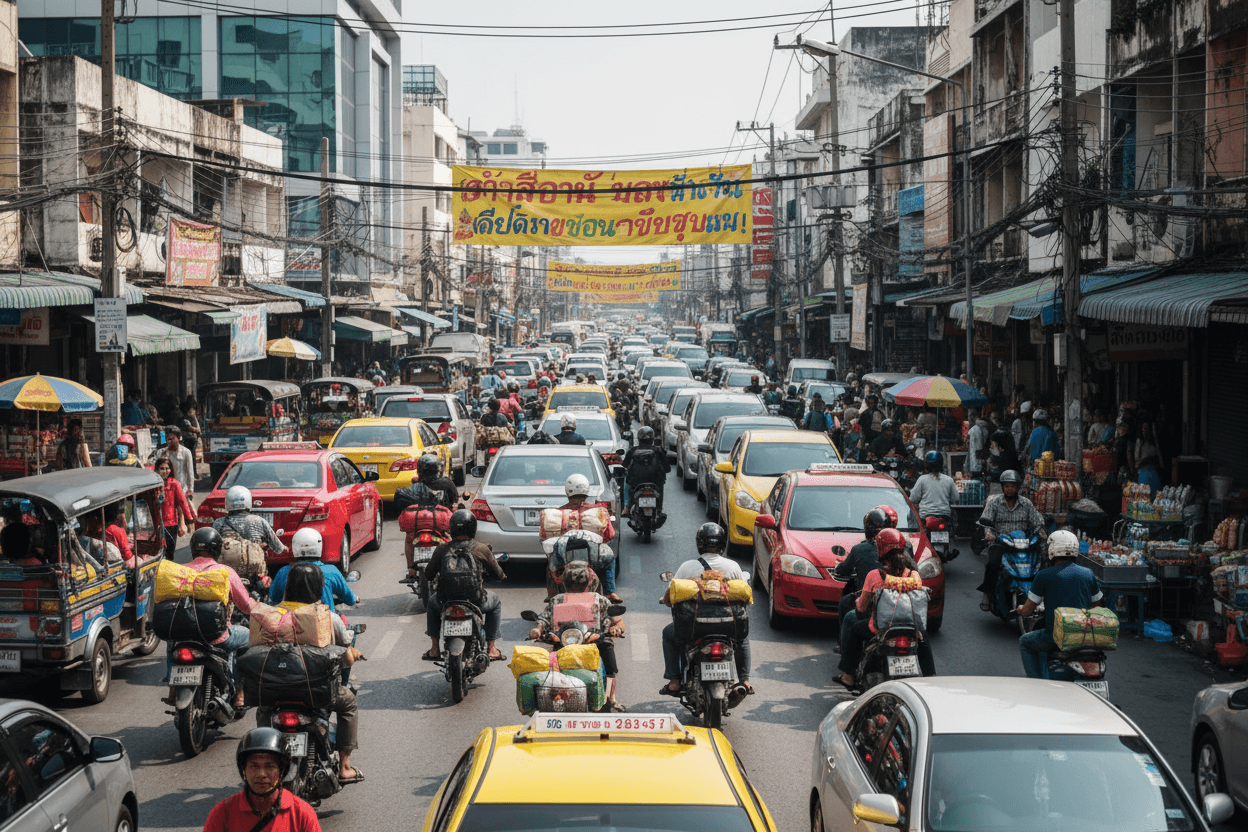
Thailand motorbike safety New Year practice differs from the rest of the year in three ways: more Royal Thai Police checkpoints, stricter alcohol enforcement, and worse rental-fleet leftovers for last-minute walk-ins. The "Seven Dangerous Days" road-safety campaign (Dec 29 to Jan 4) sees motorbike crashes account for 82% of all road accidents nationwide, with 24-hour checkpoints running across Phuket, Pattaya, Chiang Mai, and Bangkok. Helmet enforcement tightens, the legal blood-alcohol threshold of 50 mg/100 ml is breath-tested at every stop, and rental fleets sell out two to three weeks before the holiday. This 2026 guide covers checkpoint behavior, the New Year's Eve danger window (10 PM to 4 AM), pre-ride mechanical inspection, and the rental-shop traps that spike during peak holiday demand.
Key Takeaways
- Seven Dangerous Days: the official Royal Thai Police road-safety operation runs Dec 29 to Jan 4. During recent years authorities reported 82% of road incidents involving motorbikes and roughly 400 fatalities across the 7-10 day window.
- Blood-alcohol limit: 50 mg/100 ml (0.05% BAC), enforced via breathalyzer at the majority of holiday checkpoints. The threshold is stricter than the US (0.08%) and Australia (0.05%) and is identical to the UK and Germany.
- Helmet law: mandatory for both rider and pillion; on-the-spot fines run 500-1,000 THB. Enforcement is universal during the campaign window in Phuket, Pattaya, Chiang Mai, Koh Samui, and Bangkok.
- NYE midnight cut-off: avoid riding 10 PM to 4 AM on Dec 31 to Jan 1. The danger window concentrates intoxicated riders, road-closure detours, and impromptu street parties.
- Booking lead time: vetted 125cc rental inventory in Patong, Pai, and Koh Phangan typically sells out 2-3 weeks before the holiday. Walk-ins after Dec 24 are funnelled to the worst-maintained leftovers in the fleet.
Why are Thailand's "Seven Dangerous Days" so dangerous for riders?
Thailand's "Seven Dangerous Days" (Dec 29 to Jan 4) is the Royal Thai Police road-safety operation that targets the New Year crash surge, when alcohol-related motorbike fatalities historically spike 30-40% above the national baseline. Two-wheelers account for roughly 82% of holiday road incidents per Thai Health Promotion Foundation and WHO Thailand road-safety statistics; the underlying drivers are long-distance migration to home provinces, late-night provincial parties, and millions of tourists who have never ridden a scooter before.
The campaign is older than the name suggests. Authorities have run a labelled "dangerous days" road-safety push every Western New Year and every Songkran (April 13-15) since the early 2000s. Motorbike share of fatalities is the constant: 80%+ year on year. The Western New Year window concentrates the risk into 7 days because Thai Buddhist tradition observes Songkran as the actual cultural new year, while Dec 29 - Jan 4 is the secular holiday plus weekend. Both periods generate the same enforcement playbook (24-hour checkpoints, breath-testing, helmet sweeps) but the December campaign sees heavier tourist-rider involvement.
What changes for a rider during the campaign: every major province runs additional manned checkpoints from sunset to sunrise; rural roads see the same enforcement as Phuket Patong and Pattaya Beach Road; and the alcohol-deferred-prosecution norm of off-season weeks gets replaced by immediate detention for blood-alcohol over 50 mg/100 ml. Hospitals in Bangkok, Chiang Mai, and the southern islands publicly post crash-trauma counts daily during the campaign.
How does the Royal Thai Police checkpoint protocol work during the holidays?
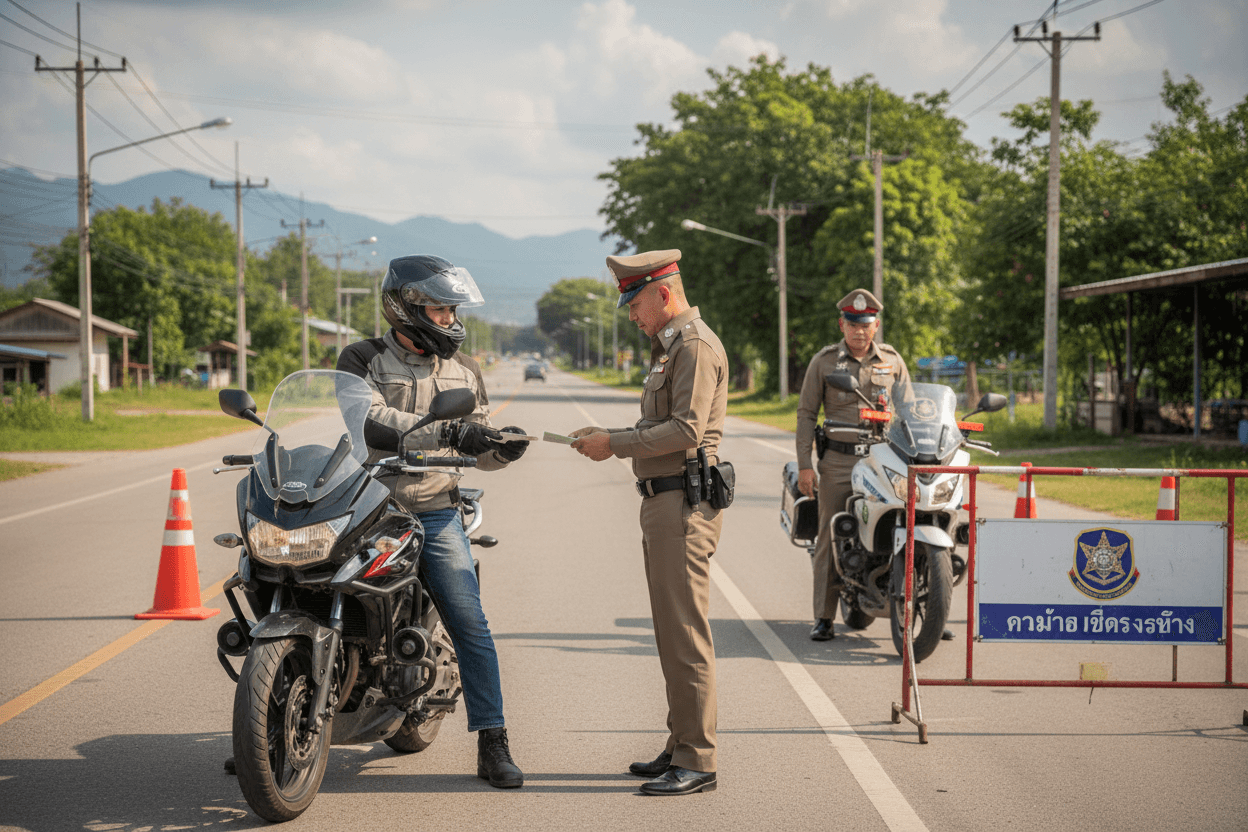
Royal Thai Police checkpoints during the Seven Dangerous Days campaign operate 24 hours a day on every major tourist artery, with manned stops typically spaced every 5-10 km on Phuket's Bypass Road, Pattaya's Sukhumvit and Thappraya roads, the Chiang Mai Old City moat, and the entry roads to Koh Samui's Chaweng. Officers screen for three things in this order: blood-alcohol level (breathalyzer), helmet compliance (rider and pillion), and license validity (motorcycle endorsement on your IDP plus original home-country license).
Behavior at a checkpoint matters. When waved over, slow down well before the cones, kill the engine on the kickstand, remove your helmet and sunglasses, and present your documents passively. Politeness shortens the stop; argument extends it. Officers occasionally request to see the bike's tax sticker (a coloured square decal on the front) and registration "Green Book." Both belong with the rental shop, not you, so phone the shop on the spot if pressed (a vetted Byklo partner shop will pick up).
The fines for the three most common holiday violations are payable on the spot. The legal-but-not-recommended pathway is to pay at a designated police station within 7 days; in practice during the campaign window, on-the-spot cash settlement (with a paper receipt) is the norm. If you are asked to pay without a receipt, request one explicitly. The Pattaya Motorbike Rental Safety and Scams guide covers the fake-checkpoint variant that occasionally surfaces in tourist zones.
What scams target tourists during the holiday surge?
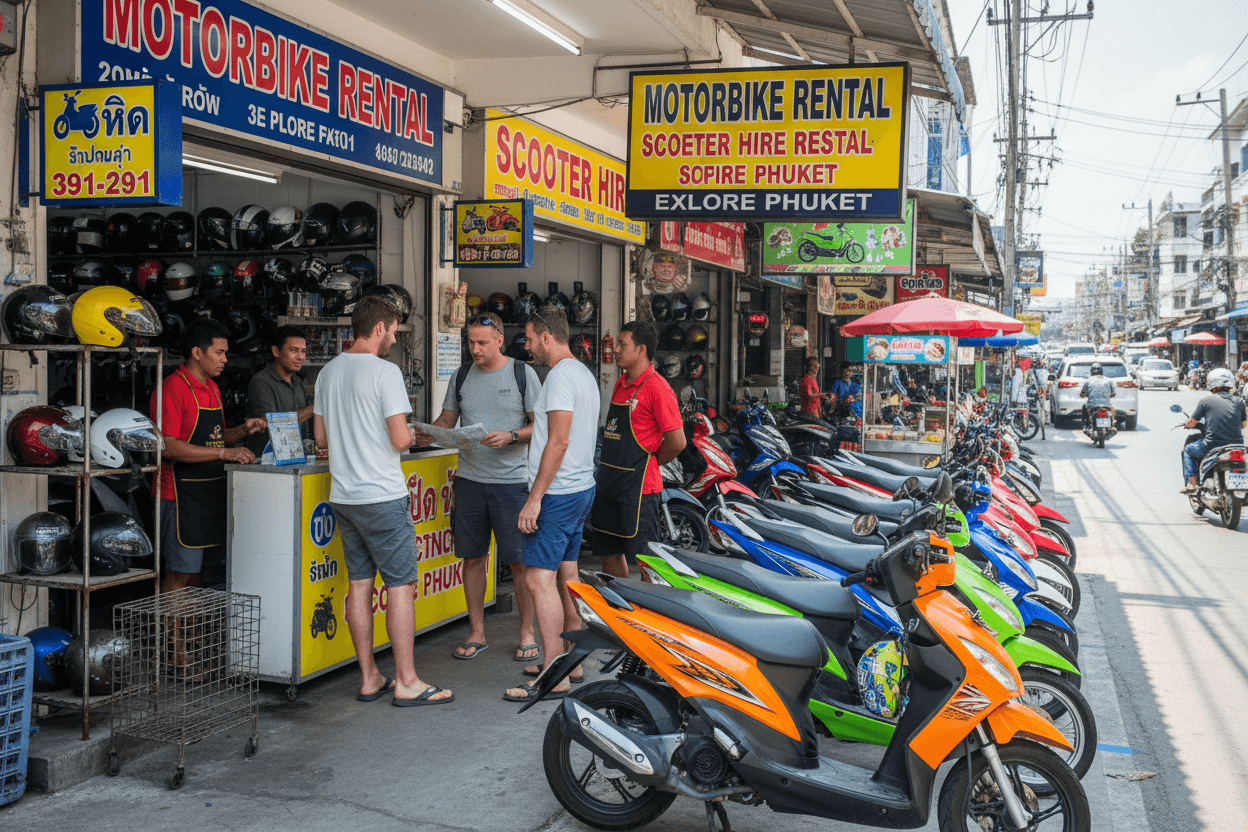
Thailand's New Year week amplifies five rental-shop traps that exist year-round but compound when inventory is scarce: the scratch scam, the stolen-bike scheme, the passport-hostage deposit, expired-paperwork fines passed to the renter, and the fake-checkpoint shakedown. The pressure of rented-out fleets pushes tourists toward shops that lean on these patterns; recognising them at the agreement stage is cheaper than disputing them at return.
The scratch scam is the most common across Patong, Pattaya Beach Road, and Bangla Road in Phuket. The shop rents you a bike with pre-existing scuffs, doesn't document them, then on return points at one of those scuffs and demands 3,000-8,000 THB for "repair." During the holiday it spikes because turnover is faster and shop owners have less reason to be flexible with a tourist they will never see again. The counter-action is a 60-second video walk-around recorded on your phone before keys change hands, with the shop owner visible in frame acknowledging the bike's condition. The Thailand motorbike rental scams guide names the five specific patterns and where they cluster.
The passport-hostage deposit cluster is the second-largest holiday risk. Cheap shops insist on the original passport (not a copy) as deposit, then refuse to return it unless you pay any fee they decide to invent. Thai law treats your passport as the property of your government; once a shop holds it, you have no leverage. The No-passport-deposit rental guide walks through the legal basis and the vetted alternatives. Reputable shops accept a 1,000-2,000 THB cash deposit plus a passport copy.
When should you absolutely not ride during New Year's Eve?
The 6-hour window from 10 PM on Dec 31 to 4 AM on Jan 1 is the most dangerous riding period of the entire year in Thailand, with intoxicated rider concentrations 5-10x higher than baseline weekends and informal road closures in tourist zones (Patong's Bangla Road, Pattaya's Walking Street, Haad Rin on Koh Phangan, Nimman Road in Chiang Mai). Both Royal Thai Police checkpoints and the underlying crash risk peak in this window; sober, helmeted riders are still struck by drunk drivers more often during these 6 hours than during the rest of the year combined.
The simplest rule is to park the bike before sunset on Dec 31 and not pick it up until after sunrise on Jan 1. If you absolutely must move during the window, use a car-based alternative: Grab is the dominant ride-hailing app in Bangkok, Phuket, and Chiang Mai; Bolt is a viable secondary choice; songthaews (red shared pickup-truck buses) cover the islands and Chiang Mai's Old City for 30-50 THB per ride. Treat the bike like a parked second-home asset for the night, not a way to get between parties.
If you are riding earlier in the evening of Dec 31 to a dinner or single venue, three precautions matter. Park in a paid lot (40-80 THB) rather than streetside in a party zone where drunk pedestrians knock bikes over by the dozen; lock the steering and chain-lock to a fixed object (drunk "borrowing" of unattended bikes is the dominant overnight-loss claim during the holiday); and assume road surfaces will deteriorate after 9 PM (water from cleaning, spilled drinks, sand washed from feet at beach venues all reduce traction unpredictably).
How do I book a safe rental during peak holiday demand?
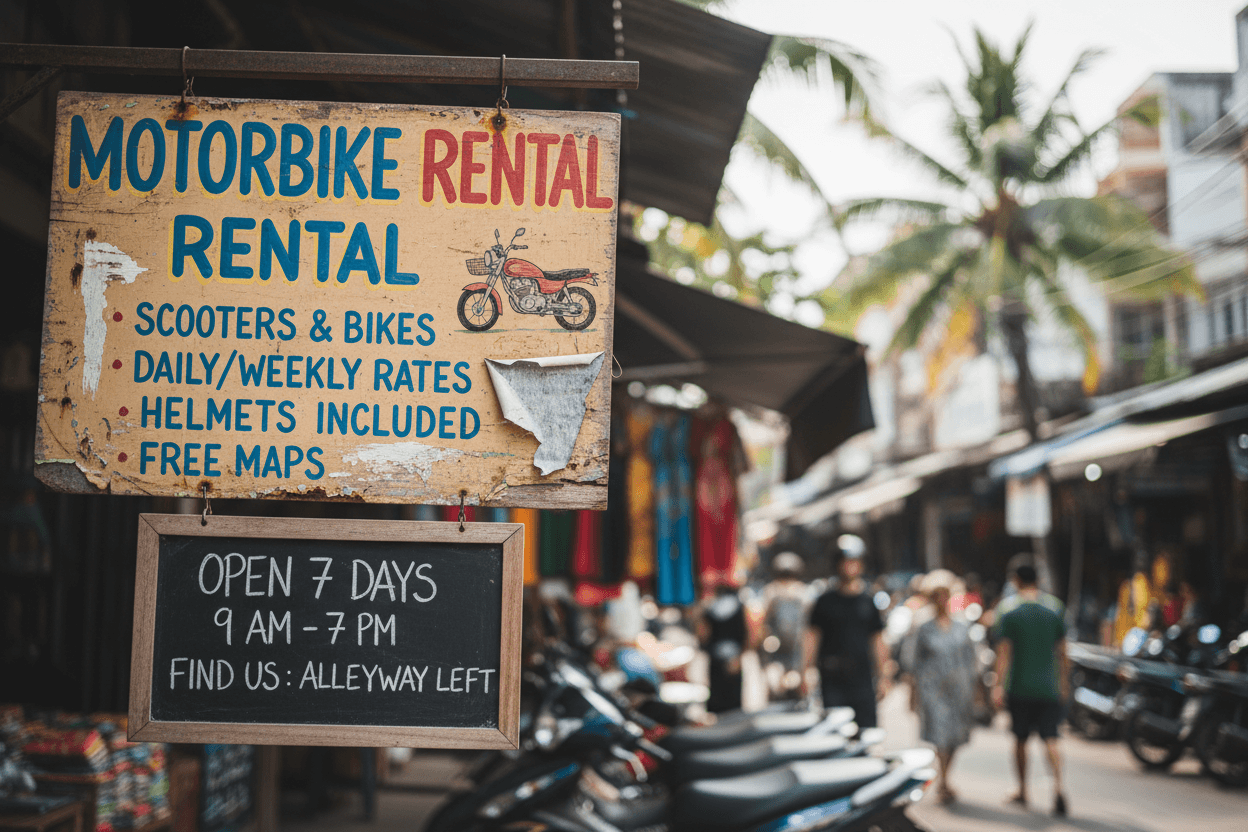
Vetted rental inventory in Phuket Patong, Pai's Walking Street, and Koh Phangan typically sells out 2-3 weeks before Dec 29, leaving walk-ins to compete for the leftover bikes that the same shops set aside for last-minute tourists. The leftovers are systematically the worst-maintained fleet (bald tires, brake pads near the wear indicator, expired tax stickers); a 200-300 THB/day premium during the holiday window is the difference between a maintained bike and a vehicle the shop's better customers already passed on.
Booking lead times vary by city. Bangkok and Chiang Mai have enough rental supply that 1-2 weeks ahead is acceptable; Phuket Patong and Pattaya Beach Road require 2-3 weeks; the southern islands (Koh Samui, Koh Phangan, Koh Lanta) and Pai need 3-4 weeks because supply is constrained by ferry-import logistics and the fleet doesn't expand seasonally. The Motorbike Rental Thailand Guide covers the city-by-city booking calendar; the Thailand Scooter Rental Cost guide has the canonical 125cc daily ranges per city.
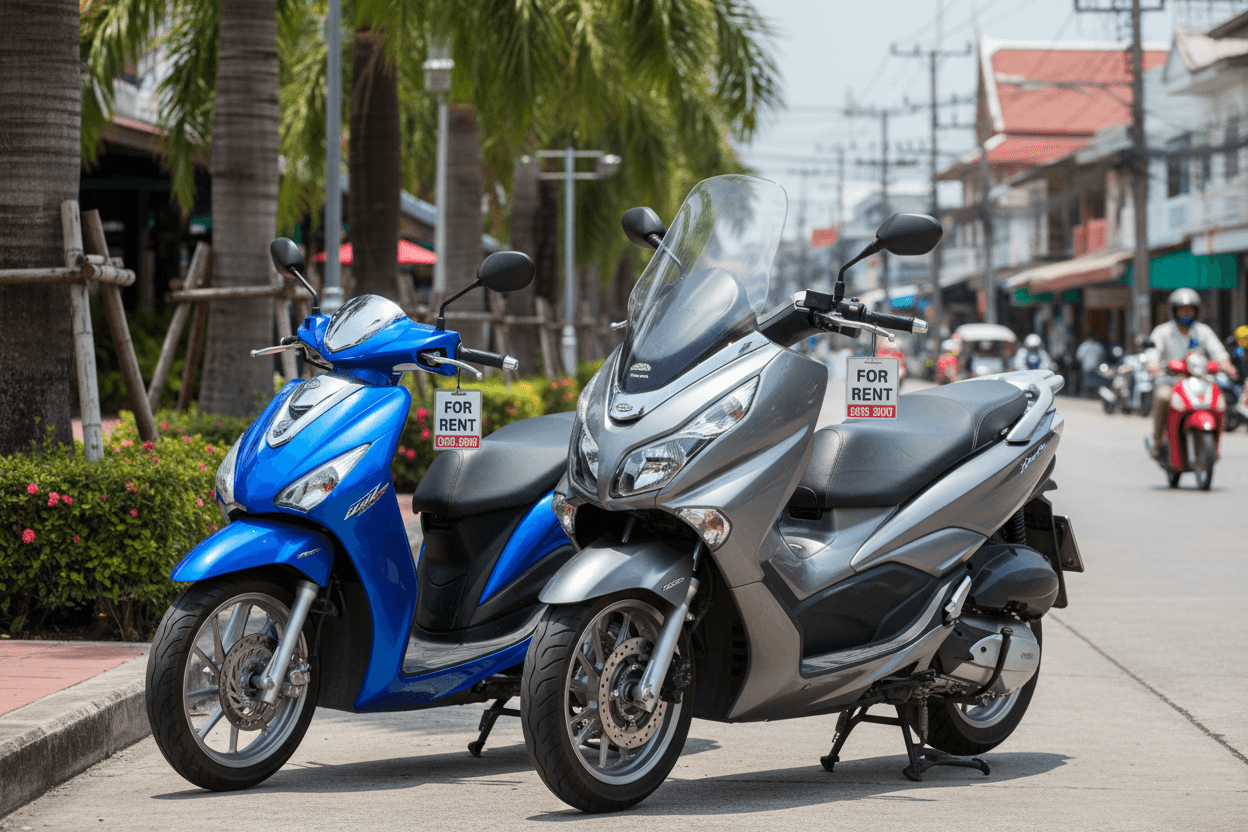
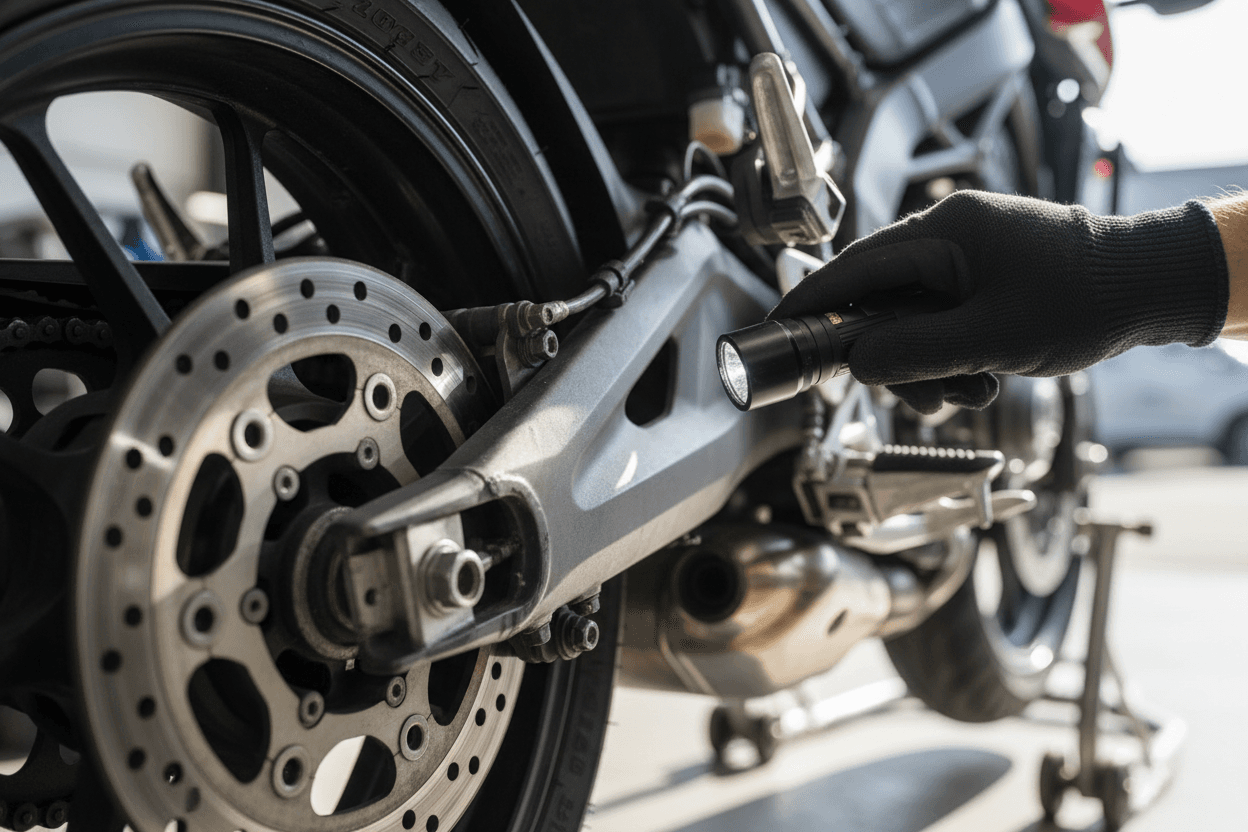
The mechanical inspection at pickup is non-negotiable, especially when fleets are turning over fast. The Thailand rental pre-ride checklist walks through the year-round version; the 5-minute holiday-specific cut that catches 90% of dangerous bikes before you sign:
- Tires: tread depth visible across the full width (no center-bald patches), no dry-rot cracks on the sidewalls, no embedded objects.
- Brakes: both levers firm, not spongy. Sit on the bike and try to roll it forward with both brakes squeezed; the wheels should lock immediately.
- Lights and horn: high beam, low beam, brake light, both indicator pairs, and horn all functional. A dead brake light is a holiday-checkpoint guarantee.
- Mirrors: both fitted and adjustable. Missing mirrors are a 200-500 THB on-the-spot fine and a checkpoint magnet.
- Tax sticker and registration: tax sticker on the front cowling shows a date inside the current year. The Green Book stays with the shop; ask for a photo if uncertain.
Frequently Asked Questions
Is it safe to ride a motorbike in Thailand during the New Year period?
The Seven Dangerous Days window (Dec 29 to Jan 4) is the highest-risk riding period of the year, with motorbike fatalities historically running 30-40% above baseline. It can still be done safely if you book a vetted bike weeks ahead, ride sober and helmeted, avoid the 10 PM to 4 AM NYE window, and treat every checkpoint with patience. Most crashes involve alcohol, no helmet, or both.
Where exactly are the Royal Thai Police checkpoints during the holiday?
Manned 24-hour checkpoints during the campaign typically sit on Phuket's Bypass Road and Patong-Karon corridor, Pattaya's Sukhumvit and Thappraya intersections, the Chiang Mai Old City moat (especially Tha Phae Gate), Koh Samui's Chaweng entry road, and Koh Phangan's Thong Sala-Haad Rin route. Bangkok runs checkpoints across Sukhumvit, Silom, and the Khao San Road perimeter. Plan routes that cross checkpoints during daylight if possible.
What is the legal blood-alcohol limit for motorbike riders in Thailand?
Thailand's Department of Land Transport sets the legal threshold at 50 mg of alcohol per 100 ml of blood (0.05% BAC), measured by breathalyzer at checkpoints. The threshold drops to 20 mg/100 ml (0.02% BAC) for new drivers in their 2-year probationary first license, and is effectively zero for under-20 riders. A failed test results in immediate detention, fines from 5,000-20,000 THB, and a mandatory court appearance.
Will my travel insurance cover a New Year's Eve crash?
Only if you are legally licensed (home-country motorcycle license + IDP with the "A" motorcycle endorsement, or a valid Thai motorbike license), wearing a helmet, and sober (under 50 mg/100 ml). Insurers reflexively check these three on every claim. A New Year's Eve crash without any one of the three triggers immediate denial; medical bills then run 100,000-300,000 THB out of pocket. The rental shop cover ladder walkthrough covers the four insurance tiers and what each excludes; the Top 10 Motorbike Safety Tips for Thailand post explains the underlying safety behaviours insurers reflexively cross-check on every claim.
Should I book my motorbike rental weeks ahead for December?
Yes. Vetted 125cc inventory in Phuket Patong, Pai, Koh Phangan, and Koh Lanta typically sells out 2-3 weeks before the holiday; Bangkok and Chiang Mai sell out roughly 1 week ahead. Walk-ins after Dec 24 are routinely funnelled toward the worst-maintained bikes in each fleet, with bald tires and expired tax stickers among the most common issues. A 200-300 THB/day premium for an early booking buys mechanical reliability.
What documents do I actually need at a holiday checkpoint?
Three documents minimum: your original passport (or, in many provinces, a high-quality colour copy), your home-country motorcycle license, and an International Driving Permit with the "A" motorcycle endorsement explicitly stamped. A car-only IDP is functionally the same as no licence at a Thai checkpoint. The Thai Driving License Requirements post covers the document set in full.
Does Songkran (Thai New Year in April) carry the same risks?
Yes, with one twist. Songkran (April 13-15) is the cultural Thai New Year and triggers an identical "Seven Dangerous Days" police campaign with the same checkpoint protocol and crash statistics. The water-fight tradition adds a unique hazard: roads are wet, electrical systems on bikes can short, and visibility drops in heavy water-throwing zones (Khao San Road, Chiang Mai's old moat, Phuket Patong). Park the bike for the three core Songkran days and ride only outside town.
Plan a safer holiday ride before you land
The Seven Dangerous Days campaign runs the same playbook every year: more checkpoints, stricter alcohol enforcement, faster fleet turnover, and worse mechanical leftovers for last-minute walk-ins. The 200-300 THB/day premium between a Bangla Road street rental and a vetted Byklo.rent partner buys a maintained bike, a cash-deposit policy that respects your passport, and a written agreement before keys change hands. Compare verified shops in Phuket, Chiang Mai, Pattaya, Bangkok, Pai, Koh Samui, and Koh Phangan; lock in your bike 2-3 weeks before Dec 29; and keep the original passport in your hotel safe where it belongs.