The international driving license Thailand riders need (an International Driving Permit, or IDP) for 2026 takes a 6-step process completed in your home country: confirm your home motorcycle license is valid, apply through your country's official issuing body (AAA in the United States, CAA in Canada, the Post Office in the United Kingdom, the AA in Australia), submit two passport photos, pay $20-40, and receive the paper permit within 10 business days. The IDP is a translation, not a license, so you must carry it alongside your original home-country license. Validity is one year. The IDP cannot be issued in-country and is required at police checkpoints across Phuket, Krabi, Pattaya, and Chiang Mai.

Key Takeaways
- What an IDP actually is: a multilingual translation of your home-country license, recognized under the 1949 and 1968 Geneva Conventions on Road Traffic. Always carry it with your original home license; the IDP alone is not valid.
- Motorcycle endorsement is required: your IDP must show the "A" (motorcycle) class. A car-only "B" IDP does not authorize scooter riding in Thailand.
- Apply before you fly: IDPs are issued only by your home-country automobile association before you travel. The Royal Thai Embassy explicitly cannot issue one in-country.
- Cost: $20-40 USD through AAA / CAA / UK Post Office / AA Australia. Avoid online "international license" mills; only the official national associations issue valid IDPs.
- Validity: 1 year from issue, or until your home license expires (whichever comes first).
- Police-checkpoint fines for missing or invalid IDPs run 500-1,000 THB on the spot in Patong, the Old City moat, and similar tourist zones. Worse, your travel insurance is voided in any accident where you weren't legally licensed.
What an IDP is, and what it is not
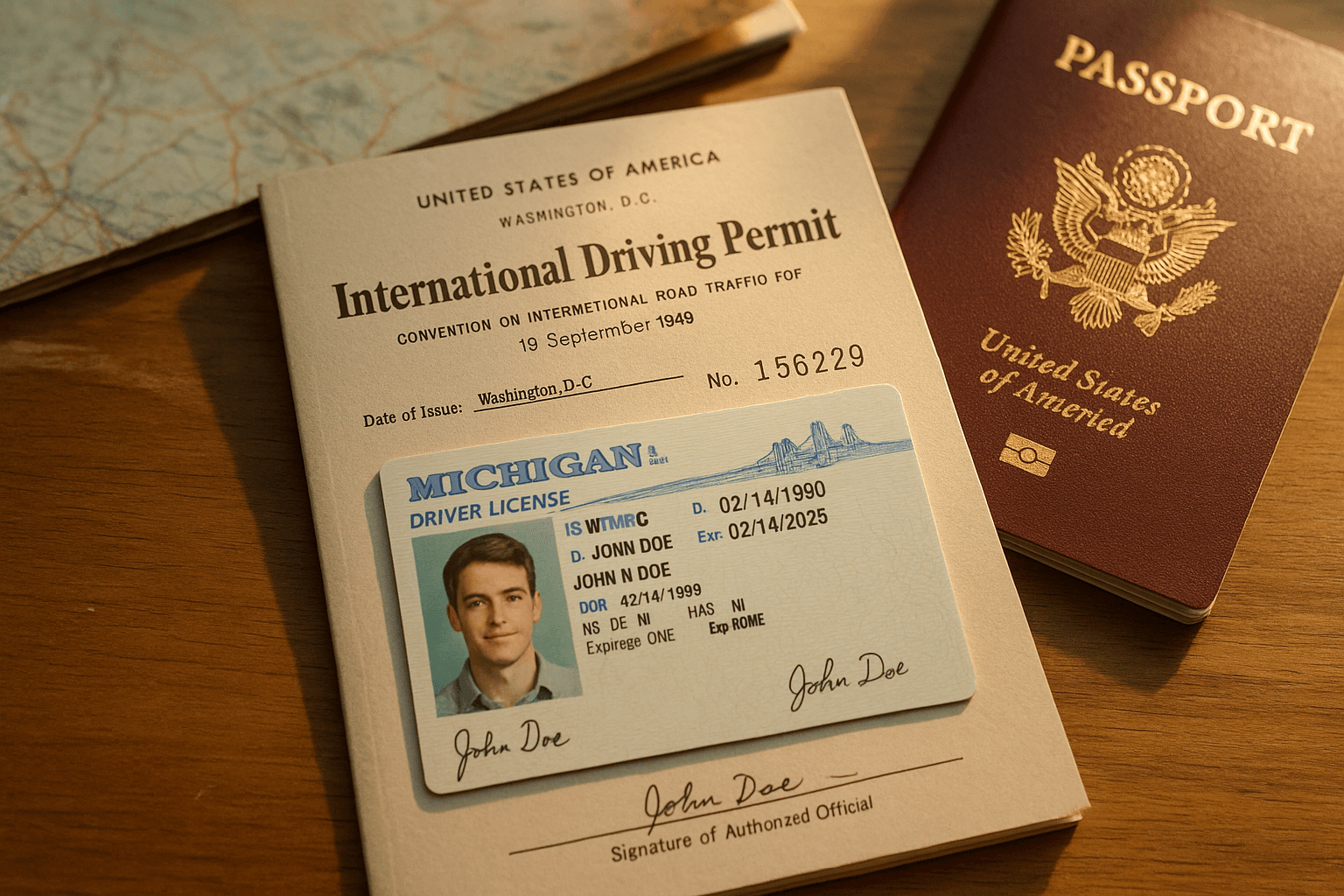
An International Driving Permit is a UN-sanctioned translation of your existing home-country license, governed by the 1949 and 1968 Geneva Conventions on Road Traffic. It does not grant any new driving privileges; it makes your home license readable to Thai authorities and rental shops in 12 languages. The "license" you actually need to drive in Thailand is your home-country license; the IDP is the supplementary document Thai law requires you to carry alongside it.
The IDP-only confusion catches travelers every year. Showing a Thai police officer just an IDP without your original home license is the same as showing nothing: the officer has no original-language document to verify, and the IDP itself disclaims standalone authority. Thailand also does not recognize "international driving licenses" sold online by non-government issuers; only IDPs from your home country's official automobile association count. The Royal Thai Embassy guidance lists the recognized issuing bodies and the legally accepted IDP classes.
The motorcycle endorsement is the single most-overlooked detail. UK and EU licenses commonly issue a car-only ("B") IDP as the default; the motorcycle ("A") endorsement is a separate stamp that must appear on both your home license AND your IDP. UK riders especially: check the back of your license card for the motorcycle category before you apply for the IDP.
Tourist vs resident: who needs an IDP, and who needs a Thai license?
Thai licensing law splits foreign riders by visa class. Tourists on a tourist visa (visa-exempt or TR) ride on the IDP-plus-home-license combination. Foreign residents on non-immigrant visas (work, retirement, marriage, education, long-stay) are required to convert to a Thai motorbike license once their visa stamp shifts; the IDP becomes a stopgap rather than a long-term solution.
The line is the visa class, not the trip length. A tourist on a 90-day multi-entry visa keeps using the IDP every time they enter, while a non-immigrant resident needs the Thai license from day one of residency. Tourist visa holders cannot apply for a Thai license at most major DLT offices, so the IDP is genuinely the only legal pathway for short-stay riders.
For long-stay applicants, the resident document checklist covers passport, residence certificate, and medical-certificate paperwork in full, and the 6-step DLT process for motorbikes breaks down the on-the-day application flow. The Thai-license route also turns out to be cheaper across multi-year stays: a 5-year Thai license costs under 1,000 THB total, while annual IDP renewals at $20-40 each add up.
How to get an International Driving Permit for Thailand: 6 steps
The IDP application is a one-day mail or in-person process in your home country. Plan 7-10 business days from application to receipt. The six steps below describe the standard pathway through AAA in the United States, CAA in Canada, the UK Post Office, and AA Australia; other Geneva Convention signatories follow the same shape.
Step 1: Confirm your home motorcycle license is valid. The IDP is a translation of your home license, so the home license must be valid for the entire intended Thailand trip. Provisional or learner licenses do not count. UK and EU riders: confirm the motorcycle ("A") category is on your card.
Step 2: Identify your country's official issuer. In the United States, AAA and AATA. In Canada, CAA. In the United Kingdom, the Post Office. In Australia, the AA. Thailand's accepted IDPs come exclusively from these national associations under the 1949 and 1968 Geneva Conventions. Online "international driver's license" sellers are scams; their documents have no legal standing in Thailand.
Step 3: Gather the required documents. Application form (download from the issuer), front-and-back photocopy of your home license, two passport-size photos (specifications vary by issuer), passport photo-page copy, and the application fee.
Step 4: Apply by mail or in person. AAA accepts walk-ins at most US branches with same-day issuance. The UK Post Office issues same-day at participating branches. Canada and Australia typically require mail-in. Process time: same day to 10 business days.
Step 5: Pay the fee. AAA charges $20 USD; CAA charges around CAD 25; the UK Post Office charges £5.50; the AA charges around AUD 42. Avoid sites charging $50+; those are typically resellers or scammers.
Step 6: Receive and pack the IDP. The IDP is a physical paper booklet, not a card. Pack it with your passport and home license. Test that the motorcycle category is clearly stamped before you fly; some issuers default to car-only unless you explicitly request the motorcycle endorsement.
At the rental shop: what staff verify, what you should provide
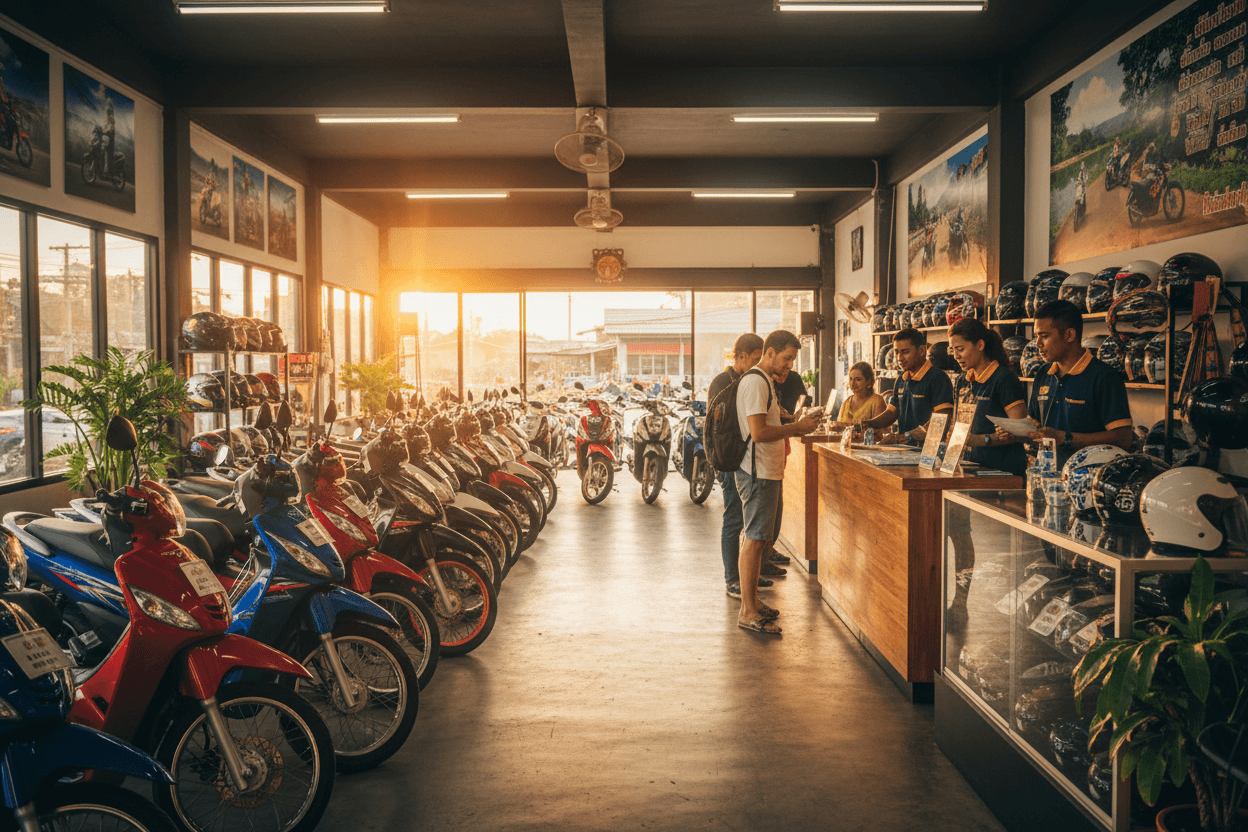
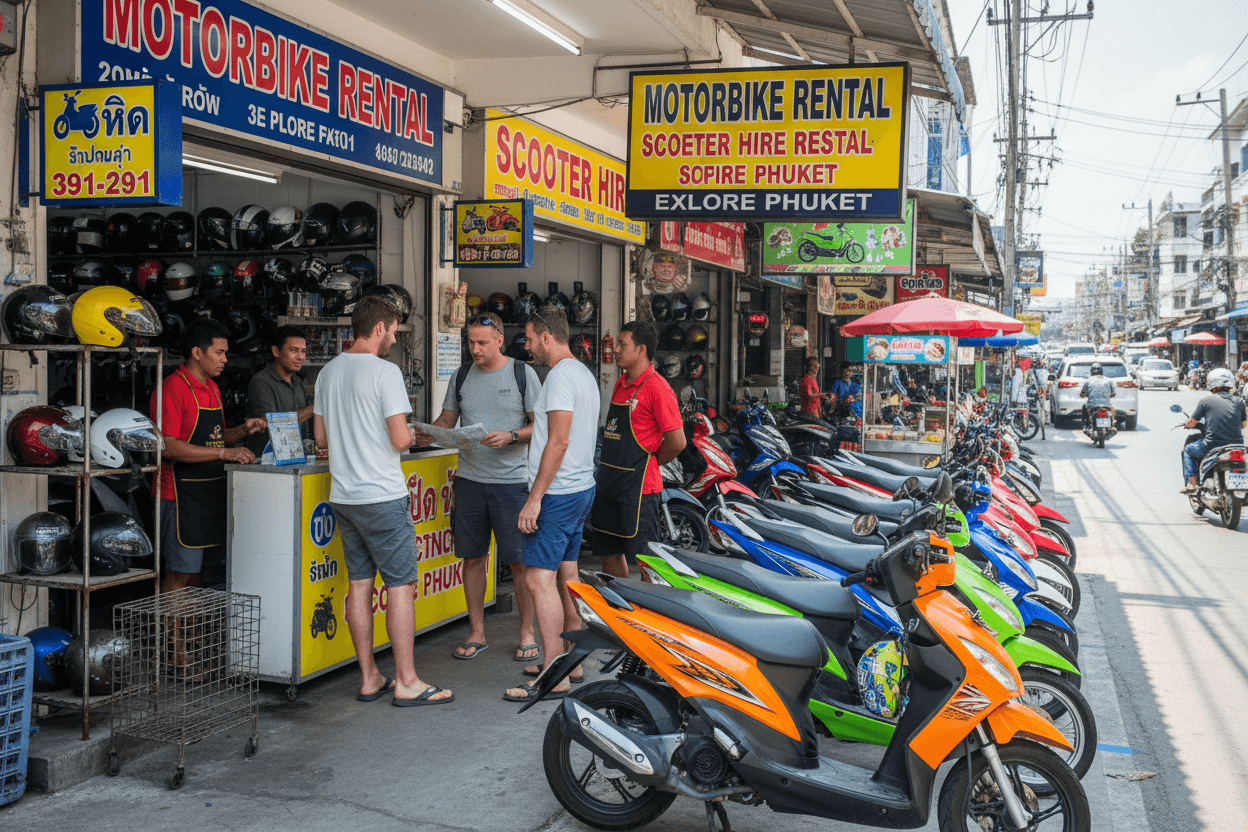
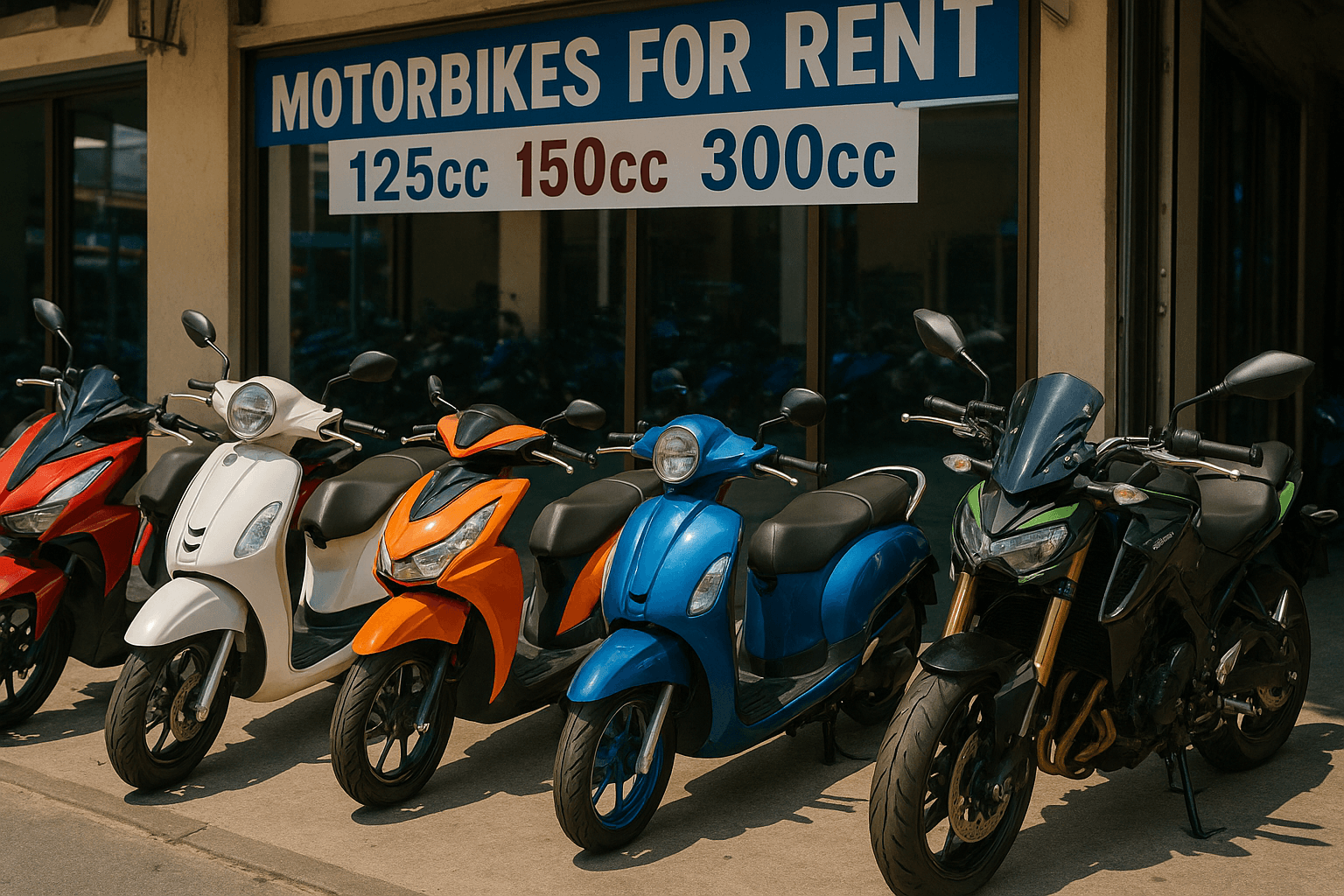
A reputable rental shop checks three documents before handing over a bike: passport (for identity and visa class), home-country motorcycle license (must include the motorcycle category), and the IDP with the matching motorcycle "A" stamp. The shop verifies that all three are valid for the rental period. Shops that skip these checks are exactly the shops most likely to also keep your passport hostage and run the scratch-fee scam later.
Deposits are the next checkpoint. Standard practice in 2026 is a 500-2,000 THB cash deposit OR a passport copy; never the original passport. Shops that demand the original passport are flagging themselves as the wrong shop. The No Passport Deposit Rental Guide walks through how vetted shops handle deposits without the passport-hostage risk.
Insurance is the under-discussed third leg. Compulsory Por.Ror.Bor coverage attaches to the bike (third-party bodily injury only). Comprehensive coverage and theft cover are typically separate, sometimes via the shop and sometimes via your travel insurance. Crucially, every standard travel insurance policy voids coverage when the rider is unlicensed; without your IDP and home license, an accident bill is yours. The Thailand Motorbike Insurance Guide covers the four insurance tiers.
Police checkpoints and on-the-spot fines
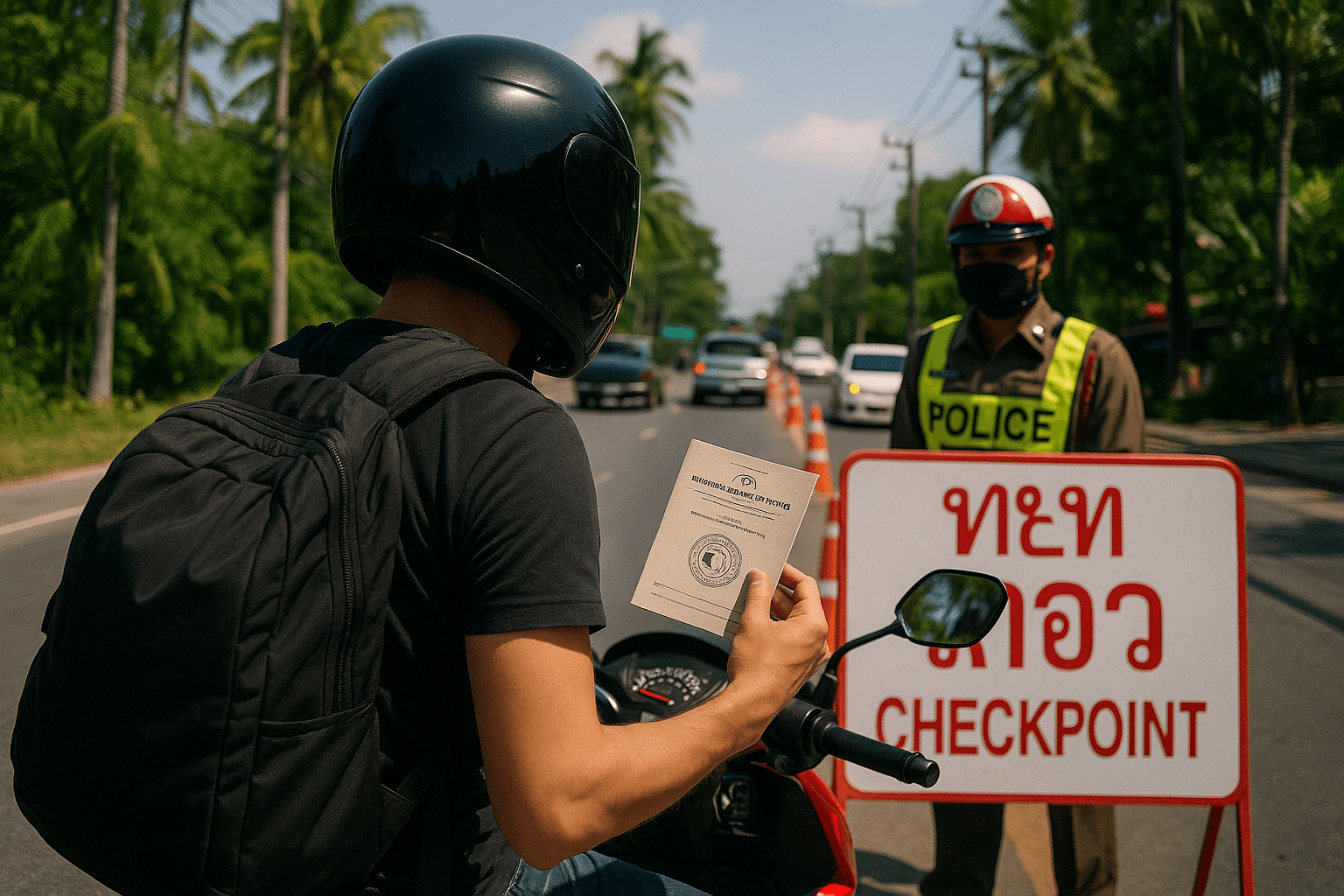
Police-checkpoint enforcement in Thailand is concentrated in tourist hubs and follows a predictable rhythm. The Patong-to-Karon road in Phuket, the Old City moat in Chiang Mai, the Soi Buakhao and Beach Road junctions in Pattaya, and the Ao Nang strip in Krabi all run morning and afternoon checkpoints in peak season. Checkpoints look for two things: helmet (mandatory for both rider and pillion) and license (Thai license OR IDP-plus-home-license).
The fine structure in 2026:
- No helmet: 500-1,000 THB on the spot, both rider and pillion charged separately.
- No IDP / invalid IDP class: 500-1,000 THB for the license violation, plus the bike may be detained until you produce valid documents.
- Riding above your IDP class (e.g., 250cc bike with a car-only IDP): 1,000-2,000 THB plus possible bike confiscation.
- No license at all: 1,000-2,000 THB plus vehicle detention. Insurance for any subsequent accident is voided.
A polite, document-ready stop is fast: typically 2-3 minutes with no fine when your papers are correct. Bring your passport, your home license, and the IDP; pull over calmly; have the documents ready before the officer reaches your bike. Always ask for an official ticket if a fine is issued, the receipt protects you against off-the-books shakedowns and gives you a paper trail for any insurance claim.
Long-stay riders facing repeated checkpoint stops should compare the annual IDP-renewal cost ($20-40 every year) against converting to a Thai motorbike license (under 1,000 THB total, valid 5 years). For the broader paperwork picture, see the DLT requirements walkthrough.
Frequently Asked Questions
How long is an International Driving Permit valid in Thailand?
The IDP is valid for one year from the date of issue, or until your home country license expires, whichever comes first. The expiry date is printed on the front of the IDP booklet. Riding on an expired IDP is treated the same as riding without one at all: 500-1,000 THB fine and voided insurance. Foreign residents on non-immigrant visas should compare against the 5-year Thai motorbike license at the first IDP renewal.
Can I get an IDP after I arrive in Thailand?
No. The IDP must be issued by your home country's official automobile association (AAA, CAA, Post Office, or AA) before you travel. The Royal Thai Embassy and the major motoring associations all confirm this; in-country issuance is not available. Online sellers offering Thailand-issued IDPs are operating scams.
Does my motorcycle endorsement at home automatically appear on the IDP?
Not always. UK, EU, and Australian licenses commonly default to car-only IDPs unless you explicitly request the motorcycle ("A") endorsement at application time. Check your IDP for the motorcycle stamp before you fly; if it's missing, your IDP is car-only and won't authorize scooter riding in Thailand.
What's the difference between an "International Driving Permit" and an "International Driving License"?
There is no legal difference; both terms refer to the same Geneva-Convention-authorized document. The technically correct term is "permit," because it translates your existing license rather than authorizing new driving privileges. Online sellers using the term "license" are often selling worthless documents; only the AAA, CAA, Post Office, and AA equivalents issue valid permits.
Can I use my home-country license alone without an IDP?
No. Thai law requires the IDP-plus-home-license combination for foreign riders. Some ASEAN-country licenses are accepted under bilateral agreements, but for non-ASEAN tourists (American, European, Australian, Canadian) the IDP is mandatory. Police checkpoints reject the home license alone.
What happens if I rent a motorbike without proper documentation?
Rental shops vary in how strict they are; many street-corner shops will rent without checking, but the legal exposure shifts entirely to you. Police-checkpoint fines run 500-2,000 THB; vehicle detention is possible; insurance for any accident is void; and the rental contract may itself be unenforceable in your favor if there's a dispute. The Thailand Motorbike Rental Scams guide covers what shops do when they realize you have no legal recourse.
How long does it take to receive an IDP after applying?
AAA and the UK Post Office issue same-day for in-person applications at participating branches. CAA and the AA Australia typically take 7-10 business days for mail-in applications. International rush options exist at premium rates. Plan to apply at least two weeks before your departure.
Lock in your bike before the IDP arrives
The IDP application clock runs in your home country, but you can move on the bike side in parallel. While the IDP is in process, browse and pre-book a vetted scooter or motorbike for your arrival in Thailand at Byklo.rent. Cash deposits, passport copies accepted (never the original), and free hotel or airport delivery in 15 cities. Once your IDP arrives in the post, you're ready to collect the bike on day one.