The Golden Triangle motorcycle adventure in 2026 is a 2-day, roughly 250 km border-zone loop from Chiang Rai north on Highway 1 to the Mae Sai Thailand-Myanmar checkpoint, east on Route 1290 along the Mekong River to the Sop Ruak tri-border viewpoint where Thailand, Laos, and Myanmar meet, then back via Chiang Saen, Doi Tung Royal Villa on Route 1149, and the Doi Mae Salong Yunnanese tea ridge. A 150-160cc Honda PCX 160 (250-450 THB per day from Chiang Rai or 150-300 THB from Old City Chiang Mai) handles the fully paved circuit; a 250-300cc Honda CRF300 Rally is the comfortable choice for two-up touring and the Doi Mae Salong descent. This guide covers day-by-day stops with kilometres and ride times, the Mae Sai border-zone customs, and how the Golden Triangle differs from the 600 km loop and the Nan Loop.
Key Takeaways
- Total distance: roughly 250 km over 2 days, Chiang Rai → Mae Sai (Highway 1, 65 km) → Sop Ruak via Route 1290 along the Mekong (35 km) → Chiang Saen (5 km) → Doi Tung on Route 1149 → Doi Mae Salong → Chiang Rai. The Mae Sai-Sop Ruak-Chiang Saen leg is the tri-border riverside core.
- Rental base: pick up in Chiang Rai (closer at 125-300 THB per day for a 125cc) or in Old City Chiang Mai (deeper fleet, 150-300 THB per day, plus a 200 km transit on Highway 118). Chiang Rai inventory is sparser than Chiang Mai's; book 1-2 weeks ahead.
- Bike-class recommendation: a 150-160cc Honda PCX 160 or Yamaha NMAX is the workable minimum for the paved loop; a 250-300cc Honda CRF300 Rally or Kawasaki Versys-X 300 is the comfortable pick for the Doi Mae Salong climb and two-up touring. The 110-125cc Honda Click handles the flatlands but struggles on the Doi Mae Salong gradient.
- Best season: mid-November to mid-February. Daytime highs run 18-25 C in the valleys and 10-15 C at the Doi Mae Salong ridge; the Mekong sunrise from Sop Ruak is reliably clear. Avoid March-April for burning-season PM2.5 haze and June-October for monsoon road damage on Route 1149.
- License rule: home-country motorcycle license PLUS a Geneva-Convention IDP carrying the "A" motorcycle endorsement. A car-only IDP is treated as no license at any of the Highway 1 or Route 1290 checkpoints near the Mae Sai border zone.
- Marquee stops: Sop Ruak tri-border viewpoint, Hall of Opium in Chiang Saen district, Mae Sai border market, Doi Tung Royal Villa, Doi Mae Salong tea plantations, Wat Rong Khun (the White Temple) and Wat Rong Suea Ten (the Blue Temple) in Chiang Rai town.
Why ride the Golden Triangle instead of Mae Hong Son or Nan?
The Golden Triangle is Thailand's only border-zone motorcycle loop where you can stand at the actual point on the Mekong River where three countries meet, look directly into Myanmar at the Mae Sai checkpoint, and ride a single 250 km circuit that connects the Sop Ruak tri-border viewpoint with the Hall of Opium museum, Doi Tung Royal Villa, and the Yunnanese tea ridge at Doi Mae Salong. Unlike the 1,864-curve route (600 km of mountain riding on Routes 1095 and 108) or the Nan Loop (eastern Lanna, the Doi Phu Kha pass), the Golden Triangle's defining hook is the geography of the border itself: the Mekong as a hard line between Thailand and Laos, the Sai River as the Thai-Myanmar boundary at Mae Sai, and the opium-trade history that gave the region its name.
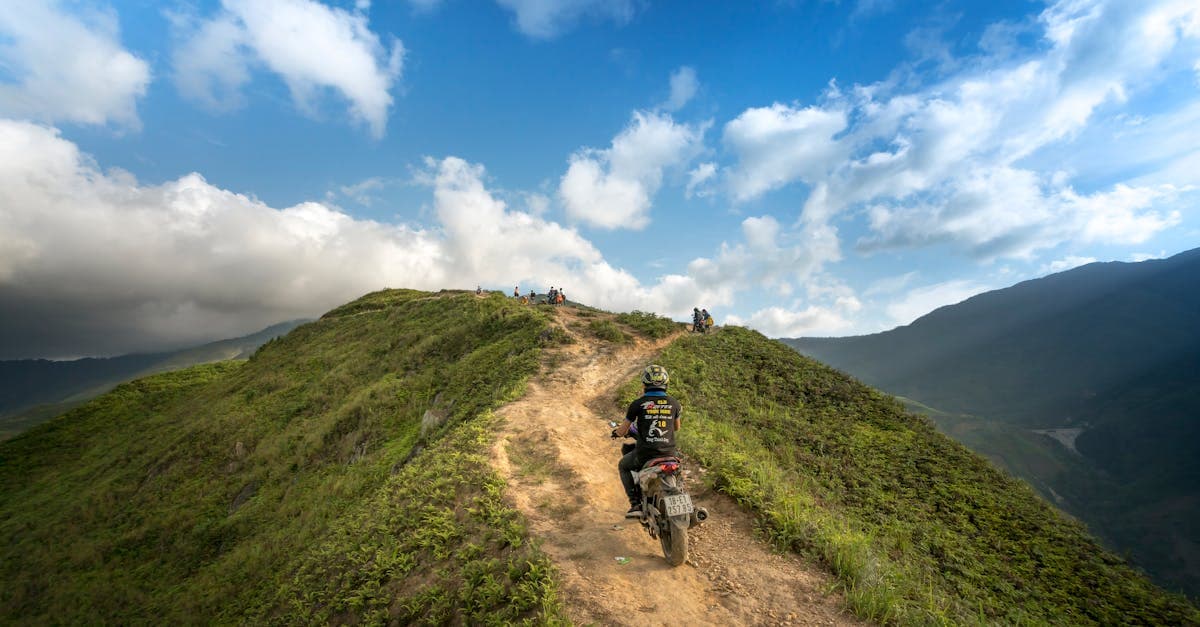
The riding character is gentler than Mae Hong Son's. The core 100 km Mae Sai-Sop Ruak-Chiang Saen-Chiang Rai stretch on Highway 1 and Route 1290 is fully paved riverside cruising, with rice paddies, limestone karsts, and the Mekong on your left for the eastern half. The Doi Mae Salong climb on Route 1234 / 1130 is the loop's only technical section, and even it stays paved with manageable switchbacks rather than the 12% Pai gradients. That makes the Golden Triangle the right pick for first-time Thailand riders, two-up couples, and anyone who wants the headline northern-Thailand experience without committing to four nights and 1,864 curves.
The cultural layer is also distinct. Mae Hong Son trades on Karen and Shan villages, the Nan Loop on Lua and Mlabri salt-well economies; the Golden Triangle's signature is the Yunnanese-Thai community at Doi Mae Salong (descendants of Kuomintang soldiers who arrived in 1949, growing oolong tea on the ridge above the Mekong) and the Hall of Opium's fully curated history of the region's narcotics trade. For a deeper Chiang Rai-base perspective on the same routes, the Chiang Rai motorbike tours guide covers the area's three signature loops.
How does the Golden Triangle break down day by day?
The Golden Triangle is best ridden as a 2-day loop with one overnight at Doi Mae Salong or Chiang Saen, covering 120-140 km on each riding day with 4-5 hours of saddle time at scenic-ride pace. Day 1 runs the Chiang Rai-Mae Sai-Sop Ruak-Chiang Saen border-and-river leg on Highway 1 and Route 1290, hitting the Mae Sai border market, the Sop Ruak tri-border viewpoint, and the Hall of Opium before the Chiang Saen overnight. Day 2 climbs west into the Doi Tung Royal Villa park on Route 1149, crosses to the Doi Mae Salong tea ridge for tea and a noodle-soup lunch, and returns to Chiang Rai via Wat Rong Khun (the White Temple) on the southbound run.
A 1-day compressed version exists: skip Doi Mae Salong, run a tight Chiang Rai → Mae Sai → Sop Ruak → Chiang Saen → Chiang Rai loop in roughly 6-7 hours of saddle time. It works, but it cuts the loop's signature ridge climb and reduces the tri-border viewpoint to a 20-minute photo stop. A 3-day version adds a second night near Doi Tung, which lets you actually visit the Royal Villa interior and the Mae Fah Luang Garden without rushing.
Compared to the four-day Mae Hong Son ride's 4-5 day commitment and the Nan Loop's 4-day Doi Phu Kha-anchored circuit, the Golden Triangle's 2-day footprint is the lightest of the three northern loops. It is the right ride if you have a long weekend rather than a week, or if you want to bolt a Mekong-and-borders day onto a longer Chiang Mai trip. The Golden Triangle is the borderlands chapter of Thailand's Northern routes, and the full bike-class and region-pairing advice sits in the routes-by-region pillar.
What is the best bike for the Golden Triangle?
The best bike for the Golden Triangle is a 150-160cc Honda PCX 160 or Yamaha NMAX (250-450 THB per day from Chiang Rai or Old City Chiang Mai) for solo riders running the full 2-day loop, or a 250-300cc Honda CRF300 Rally or Kawasaki Versys-X 300 (500-1,200 THB per day) for two-up couples and riders who want engine braking on the Doi Mae Salong descent. A 110-125cc Honda Click (150-300 THB per day) handles the Highway 1 and Route 1290 flatlands fine, but the climb up to Doi Mae Salong on Route 1234 / 1130 maxes out a Click's torque at 30-40 km/h while pickup trucks queue behind, and the descent back into the valley fades CVT brakes faster than most renters expect.
Engine size matters less here than it does on Mae Hong Son's Route 1095 because the Golden Triangle's gradients are gentler and the unpaved sections are essentially zero. The decision tree is closer to two-up loading and rider comfort: a 150cc PCX gives a solo rider all the headroom needed; a 250-300cc CRF300 Rally is what couples reach for; and the 500cc-class Honda CB500X (1,200-2,000 THB per day) is overkill on this circuit but appears in big-bike rental Chiang Mai fleets if you are bundling the Golden Triangle with a longer northern-Thailand circuit.
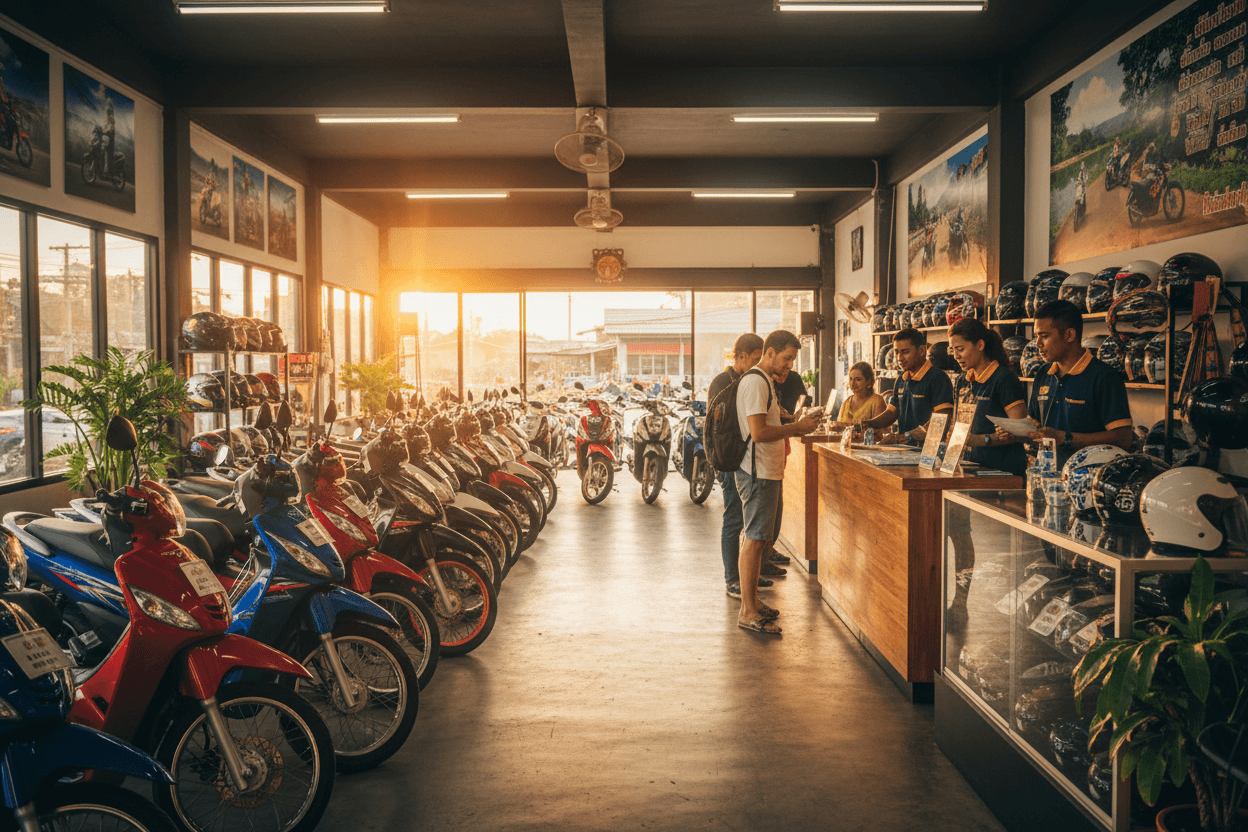
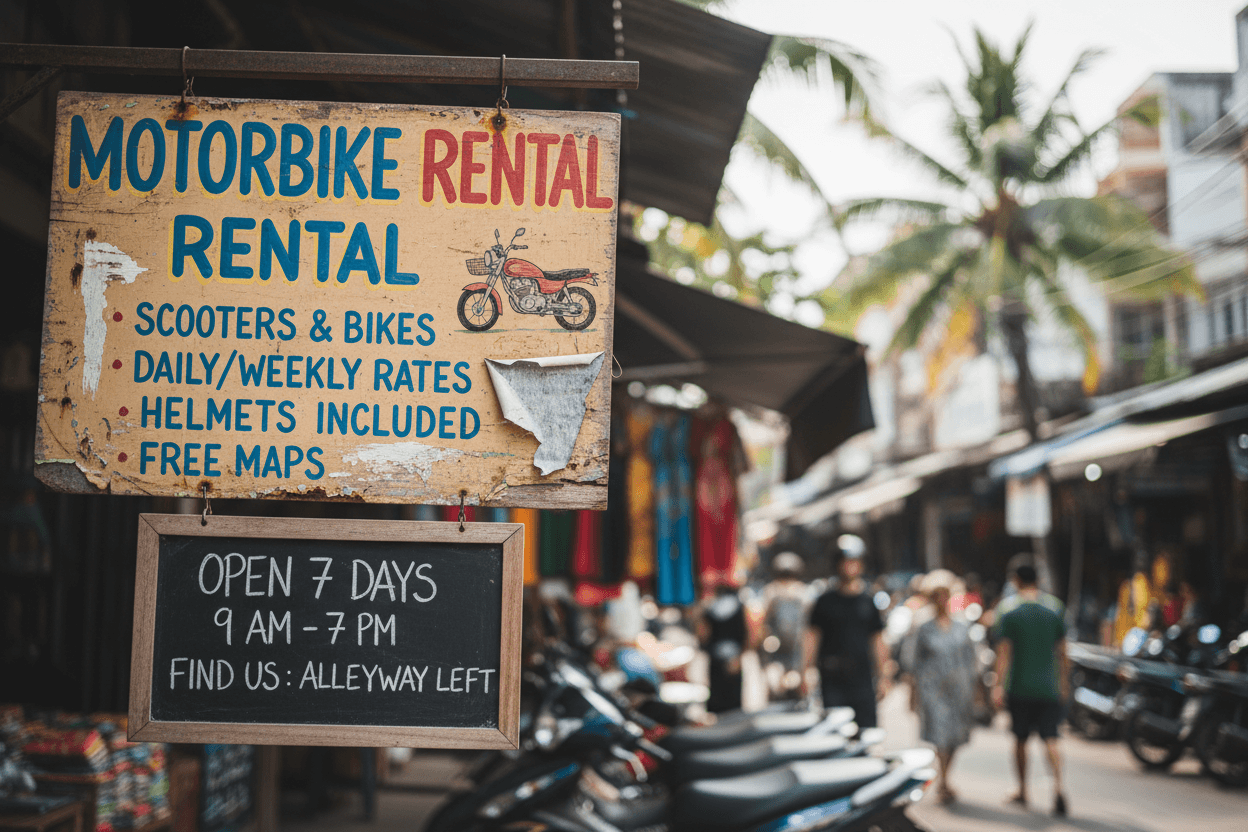
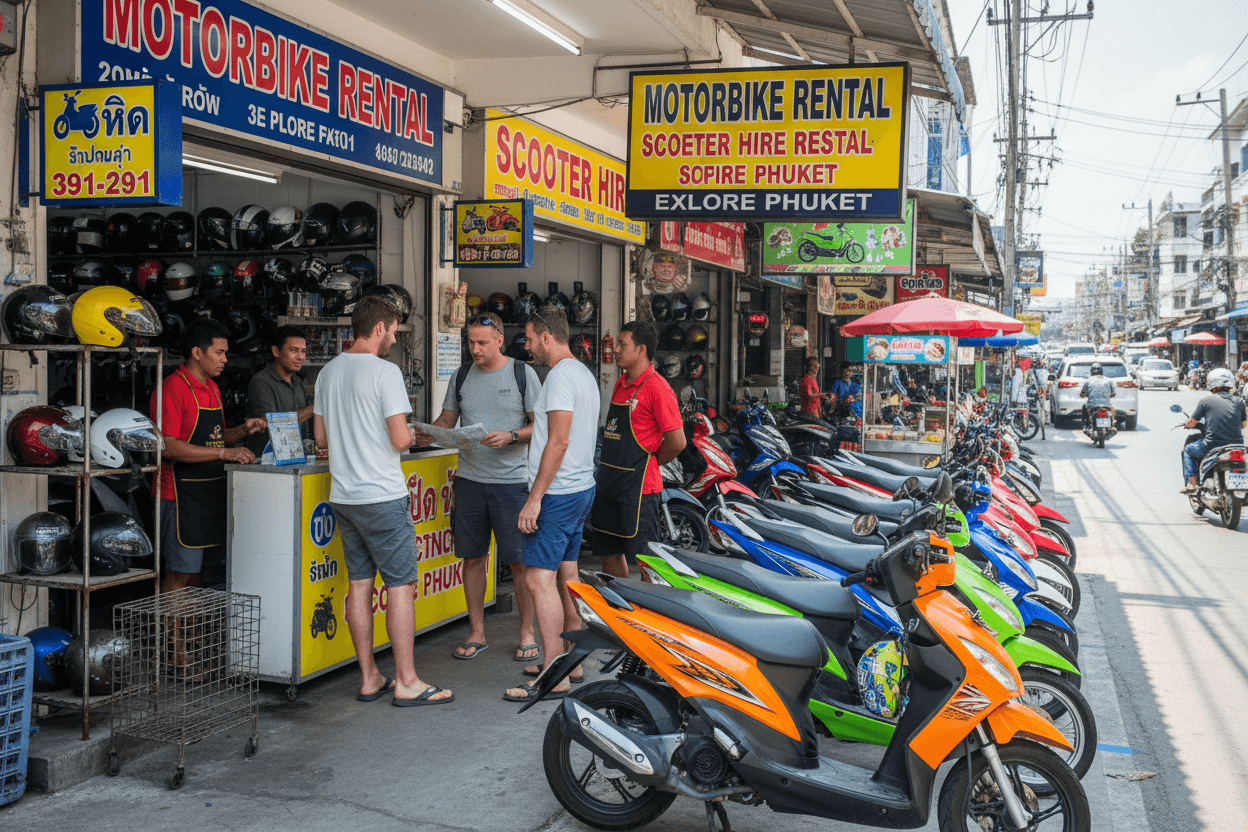
For renters basing in Chiang Rai, the local fleet is shallower than Old City Chiang Mai's, and the price floor sits around 125-300 THB per day for a 125cc, slightly cheaper than Chiang Mai's 150-300 THB. The trade-off is inventory depth: a Chiang Mai pickup gives you the deeper 250-400cc and 500-650cc rack, but adds a roughly 200 km transit on Highway 118 to reach Chiang Rai. Walk away from any shop demanding the original passport; that is the passport-hostage scam and a copy is the only acceptable hold.
When is the best season to ride the Golden Triangle?
The best season for the Golden Triangle is mid-November to mid-February, with daytime highs of 22-28 C in the Mekong valley and 10-15 C at the Doi Mae Salong ridge, dry tarmac on Highway 1 and Route 1290, and reliable visibility for the Sop Ruak tri-border viewpoint at sunrise. December and January are peak; book the bike 1-2 weeks ahead because Chiang Rai's smaller rental fleet sells out faster than Chiang Mai's during the festival window. Mid-February to mid-April is the burning season, when farmers across northern Thailand and the neighbouring Shan State burn crop residue and PM2.5 readings spike well above 200; the Mekong views disappear into haze and the lung load is real. The Tourism Authority of Thailand regional advisories note the air-quality risk explicitly for Chiang Rai and Mae Sai during March-April.
The May-October monsoon is rideable on the paved core (Highway 1, Route 1290, Chiang Saen) but turns Route 1149 into Doi Tung and the Doi Mae Salong shoulders into a different proposition: cloud cover at the ridge drops visibility under 50 metres, the wet-tarmac switchbacks reward smooth braking only, and small-bike riders should expect to skip the Doi Mae Salong climb entirely in heavy weather. The advantage of monsoon riding is the Mekong itself: the river runs higher, the long-tail boat traffic at Sop Ruak picks up, and the rice paddies between Chiang Rai and Mae Sai turn fluorescent green.
The Songkran water-festival window (April 13-15) is a hard avoid: the full water-throwing in Chiang Rai, Mae Sai, and Chiang Saen routinely drowns CVT systems and electrical harnesses on rental scooters, and the 8,000-20,000 THB water-damage repair bills come out of your deposit. The Yi Peng and Loy Krathong lantern festivals in November are the bookend that works in your favour: rental availability tightens for the festival week itself, but the post-festival mid-November window is the loop's clearest riding fortnight of the year.
What are the named stops along the Golden Triangle?
The Golden Triangle's named stops cluster in three groups: the Chiang Rai exit (Wat Rong Khun and Wat Rong Suea Ten), the Mae Sai-Sop Ruak-Chiang Saen border-and-river core (Mae Sai border market, the tri-border viewpoint, the Hall of Opium), and the western return loop (Doi Tung Royal Villa, Mae Fah Luang Garden, the Doi Mae Salong tea plantations). Each stop has a specific motorbike-parking situation and a specific time-of-day window that rewards getting it right.
Wat Rong Khun, the White Temple by artist Chalermchai Kositpipat, is 13 km south of Chiang Rai town on Highway 1 and the loop's most-photographed temple stop; entry is 100 THB for foreign riders, motorbike parking is free in the main lot, and pre-09:00 arrival beats the tour-bus window. Wat Rong Suea Ten, the Blue Temple, sits 4 km north of Chiang Rai on Route 1207 and is free; the cobalt-blue interior is a 20-minute stop. Mae Sai is Thailand's northernmost town, 65 km north of Chiang Rai on Highway 1 at the Sai River bridge marking the Myanmar border; the border market sells Burmese textiles, longyi sarongs, and cheap electronics, with motorbike parking beside the customs lot for 20 THB.
The Sop Ruak tri-border viewpoint is the loop's signature stop: a hilltop platform above the confluence of the Ruak and Mekong rivers where the Thailand-Laos-Myanmar borders meet, marked by a large golden Buddha and a row of riverside cafes. The Hall of Opium museum, 1 km east of Sop Ruak in the same district, is the curated counterpart: a state-funded exhibit on the regional opium and heroin trade from the 19th century to present, opening hours 08:30-16:00 daily except Mondays, 200 THB foreign entry. Chiang Saen, 10 km south on the Mekong, is the quietest of the three stops and the natural day-1 overnight, with Lanna-era brick stupas, the riverside Wat Phra That Pha Ngao, and a small night market.
The western return runs through Doi Tung on Route 1149 (a Royal Project mountain reforested in the 1980s, with the Royal Villa, Mae Fah Luang Garden, and Doi Tung coffee farms), then crosses to Doi Mae Salong on Route 1234. Doi Mae Salong's tea plantations cluster between km 8 and km 14 on the ridge road; the Wang Put Tan Tea Plantation and the 101 Tea Plantation are the two most-visited stops, both with cafe seating, oolong tea by the 50-100 THB pot, and motorbike parking inside the gates.
Frequently Asked Questions
How many days do I need for the Golden Triangle motorcycle loop?
Two days is the standard pace, with one overnight at Chiang Saen or Doi Mae Salong, covering 120-140 km per riding day with 4-5 hours of saddle time. A 1-day compressed version (Chiang Rai → Mae Sai → Sop Ruak → Chiang Saen → Chiang Rai, roughly 150 km) skips Doi Mae Salong and the Doi Tung Royal Villa. Three days lets you visit the Royal Villa interior and the Mae Fah Luang Garden properly.
Can I cross into Myanmar at Mae Sai on a Thai rental motorbike?
No. The Mae Sai-Tachileik border crossing is for foot traffic and Thai or Burmese nationals; a Thai rental motorcycle cannot legally enter Myanmar without prior permits, vehicle papers, and an arranged fixer on the Burmese side. Walk the bridge for the photo, browse the border market, eat lunch in Mae Sai, then ride east on Route 1290 to the Sop Ruak tri-border viewpoint.
Where is the actual Golden Triangle viewpoint?
The actual tri-border point is at Sop Ruak, 35 km east of Mae Sai on Route 1290 and 10 km north of Chiang Saen, where the Ruak River flows into the Mekong and the Thailand-Laos-Myanmar borders meet on the water. The hilltop platform above the confluence is marked by a large golden Buddha; the Hall of Opium museum sits 1 km east. Sunrise and late afternoon give the cleanest river-and-three-countries photo.
Do I need an International Driving Permit for the Golden Triangle?
Yes. Thai law requires a valid home-country motorcycle licence PLUS the motorcycle 'A' endorsement IDP (Geneva-Convention IDP with the "A" motorcycle endorsement). Royal Thai Police checkpoints on Highway 1 between Chiang Rai and Mae Sai check IDP class explicitly. The IDP cannot be issued in Thailand; apply through your home country's automobile association before flying in. A car-only IDP at any checkpoint is treated as no licence.
Is the Golden Triangle harder than the Mae Hong Son Loop?
No. The Golden Triangle is the easier of the three northern loops. Its 250 km of mostly paved riverside cruising on Highway 1 and Route 1290 has gentler gradients than the Mae Hong Son Loop's Route 1095 (12% switchbacks) and shorter daily distances than the Nan Loop's Doi Phu Kha pass. The only real climb is Doi Mae Salong's 8-10% gradient on Route 1234 / 1130.
Should I rent in Chiang Rai or Chiang Mai for the loop?
Either works. Chiang Rai rentals start at 125-300 THB per day for a 125cc and the closer base saves a 200 km transit, but the local fleet is shallower than Old City Chiang Mai's 150-300 THB Honda Click and 500-1,200 THB CRF300 Rally inventory. For 250-400cc manuals or 500-650cc big bikes, a Chiang Mai pickup is the better fleet choice; for a quick 2-day loop on a Honda PCX 160, Chiang Rai is the lighter logistics.
What does the Golden Triangle motorcycle loop cost in 2026?
A 2-day Golden Triangle loop on a Honda PCX 160 costs roughly 3,500-6,500 THB total: 500-900 THB for the bike rental, 400-600 THB for fuel, 1,000-2,500 THB for one mid-range overnight in Chiang Saen or Doi Mae Salong, 600-900 THB for food, and 200-400 THB for entries (Wat Rong Khun 100 THB, Hall of Opium 200 THB, Doi Tung Royal Villa 90 THB). On a 250cc CRF300 Rally the same trip runs 5,000-9,000 THB.
Plan your Golden Triangle ride from Chiang Rai or Chiang Mai
The Golden Triangle rewards a 2-day plan with the right bike and the right overnight: a Honda PCX 160 at 250-450 THB per day for the comfort-conscious solo rider, a Honda CRF300 Rally at 500-1,200 THB per day for two-up couples, an overnight at Chiang Saen on the Mekong or Doi Mae Salong on the tea ridge, and an IDP-with-A-endorsement on your person before the first Highway 1 checkpoint. Chiang Rai is the closer base; Chiang Mai is the deeper fleet (and the natural starting point if you are bundling the Golden Triangle with northern Thailand's headline loop or the Nan Loop). For city-level rental detail, see the Chiang Mai motorbike rental guide and the Chiang Rai motorbike tours guide. Compare verified shops, lock in the right bike for the loop, and reserve free hotel delivery at Byklo.rent.