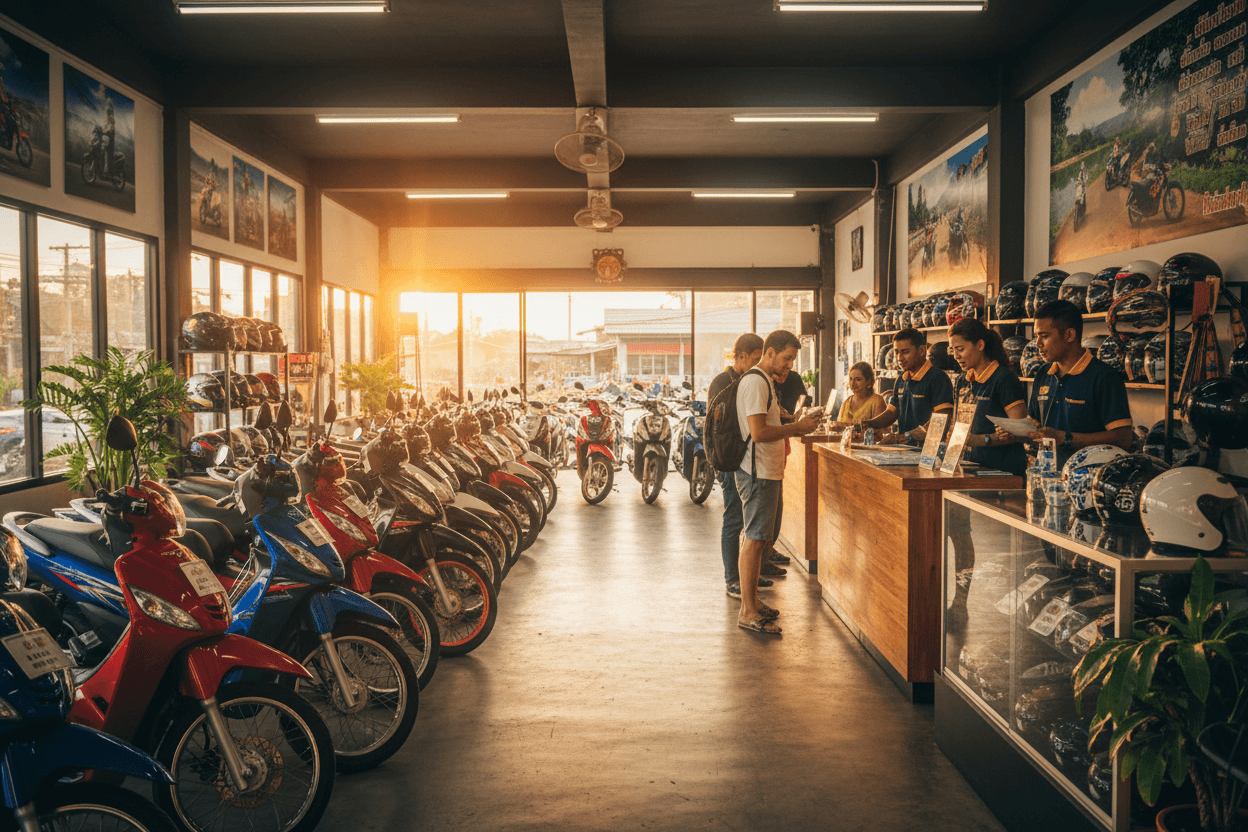
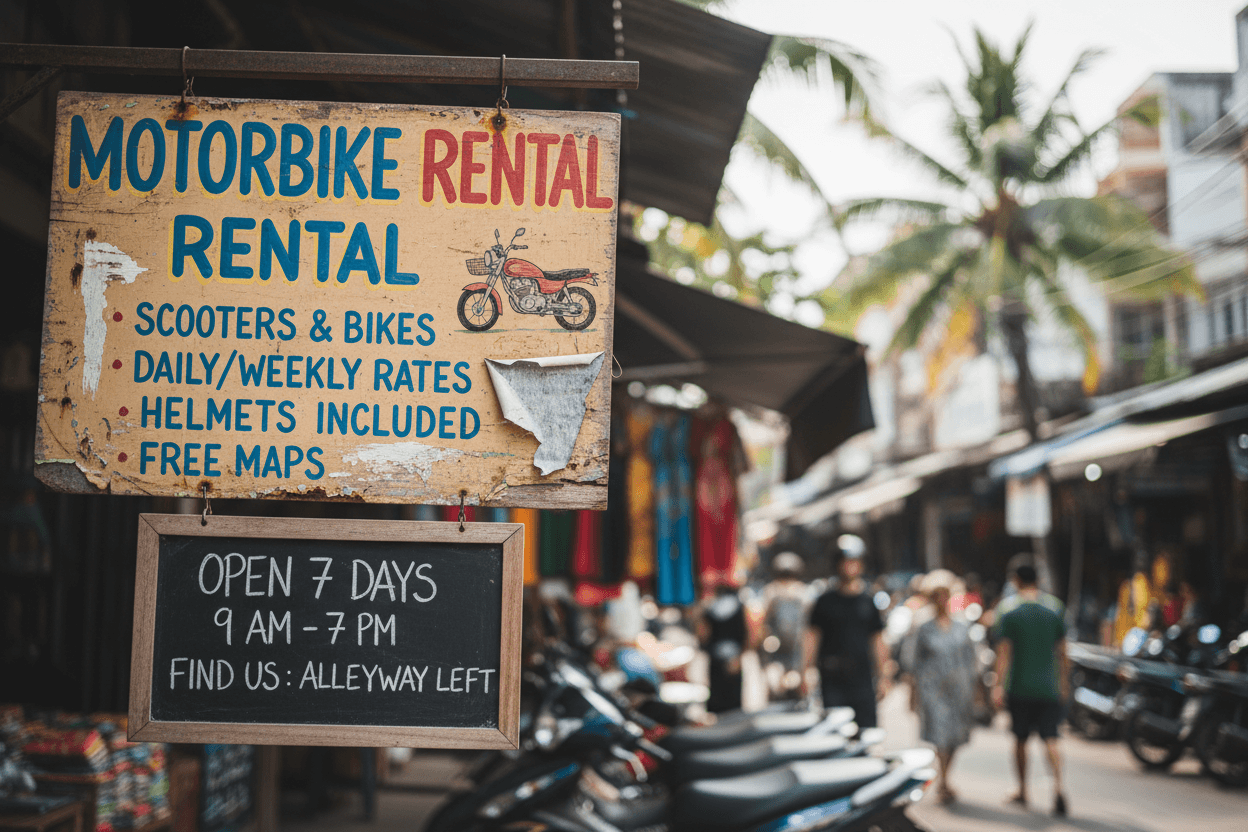
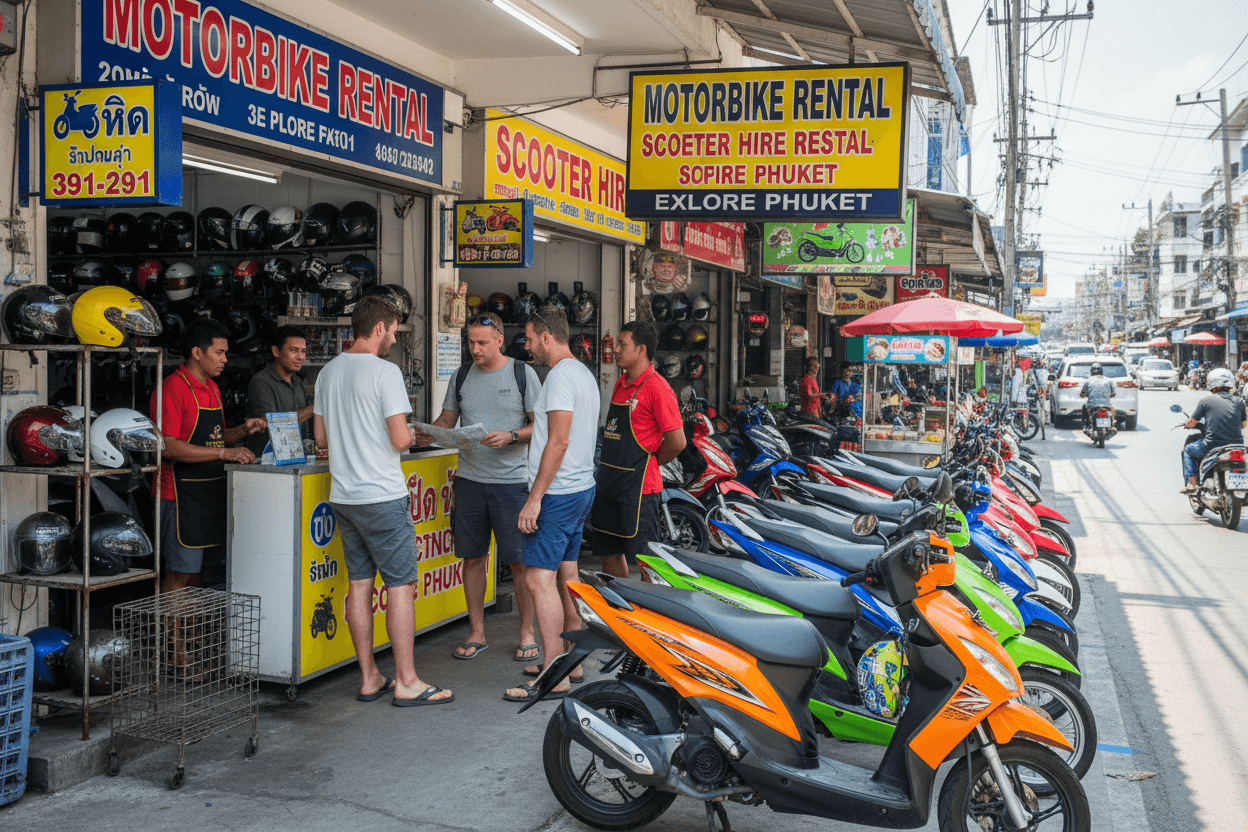
Thailand logged more than 14,000 motorcyclist fatalities in 2024 and motorbikes account for roughly 74% of all road deaths per World Health Organization and Thai Health Promotion Foundation data. These top 10 Thailand motorbike safety tips, ordered by impact on actual crash outcomes, cover the four enforced rules (helmet, blood-alcohol under 50 mg/100 ml, IDP with the "A" endorsement, valid licence) and six practiced habits that drop a foreign rider's exposure by 70-80%. Save Tourist Police 1155 and medical 1669 before you turn the key.
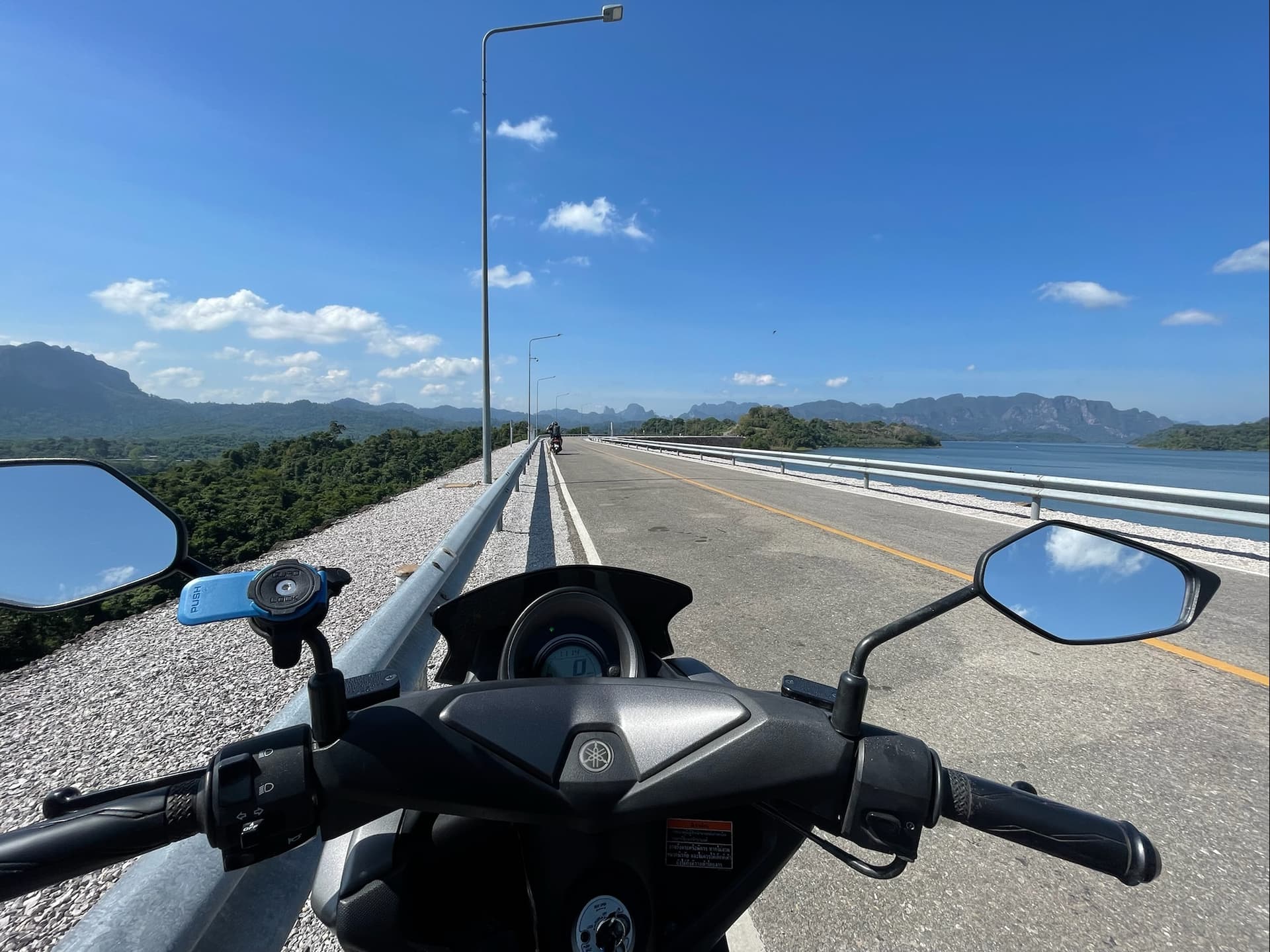
Key Takeaways
- Helmet law: mandatory for both rider and pillion under the Land Traffic Act (Section 122). On-the-spot fines run 500-1,000 THB per head at every Royal Thai Police checkpoint, including Bangla Road, Beach Road Pattaya, and Tha Phae Gate.
- Blood-alcohol limit: 50 mg/100 ml (0.05% BAC). Failed breathalyzer triggers immediate detention, 5,000-20,000 THB fine, and automatic travel-insurance void on any subsequent crash.
- Document set: home-country motorcycle licence + International Driving Permit with the "A" (motorcycle) endorsement. A car-only IDP is treated as no licence at every checkpoint.
- Two emergency numbers: Tourist Police 1155 (English-speaking) and medical 1669. Save both before your first ride; pin Bangkok Hospital, Bangkok Hospital Phuket, or Chiang Mai Ram on Google Maps.
- Three peak-risk windows: the December "Seven Dangerous Days" (Dec 29 to Jan 4), Songkran (April 13-15), and the first 10 minutes after any monsoon downpour.
- Bike inspection: a 5-minute T-CLOCS check (tires, brakes, lights, mirrors, tax sticker) at pickup catches 90% of dangerous fleet leftovers before keys change hands.
Pre-ride: 4 tips that lock in legality and gear
Four pre-ride decisions account for the bulk of every preventable Thai motorbike crash: the helmet you put on, the licence in your wallet, the documentation of the bike's existing damage, and the shoes on your feet. Skip any one and the on-road tips below cannot rescue the outcome. Royal Thai Police checkpoint enforcement, travel-insurance underwriting, and trauma-clinic intake all converge on these four pre-ride choices; getting them right is the cheapest 5 minutes of the entire trip.
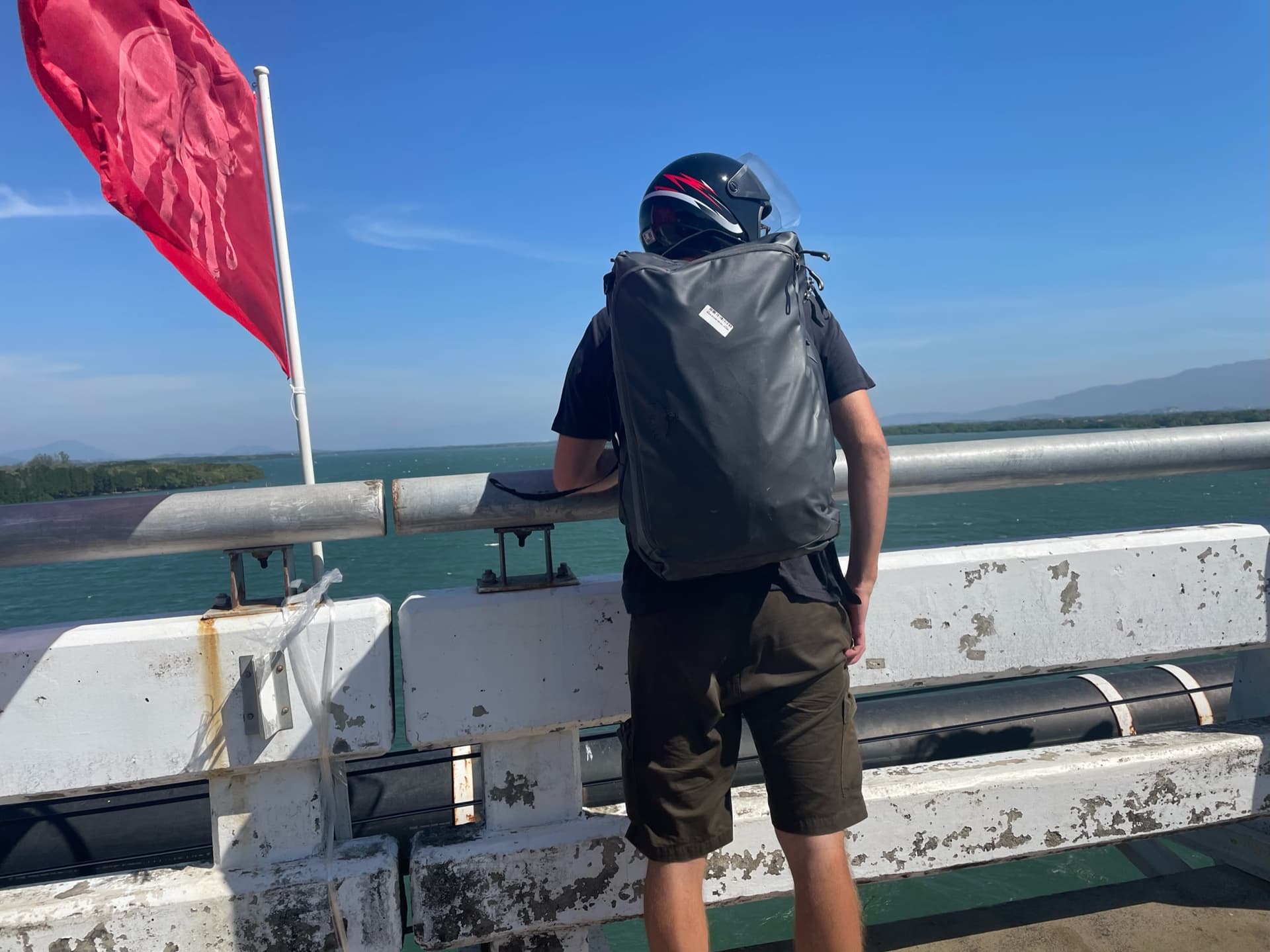
1. Helmet on, every time, even for the 100 m ride to 7-Eleven
A DOT, ECE 22.05/22.06, Snell, or TISI-certified helmet with the chin strap fastened is the single highest-leverage safety choice on every ride in Thailand, regardless of distance or speed. Royal Thai Police sweep helmet compliance daily on Bangla Road in Phuket, Beach Road in Pattaya, the Tha Phae Gate moat in Chiang Mai, and the Sukhumvit and Silom corridors in Bangkok. On-the-spot fines run 500-1,000 THB per head and rider plus pillion fines compound on a single stop. Over 70% of Thai motorbike fatalities involve a rider without proper headgear; the helmet is also a non-negotiable condition on every UK, EU, US, and Australian travel-insurance policy.
2. IDP with the "A" endorsement, organised before you fly
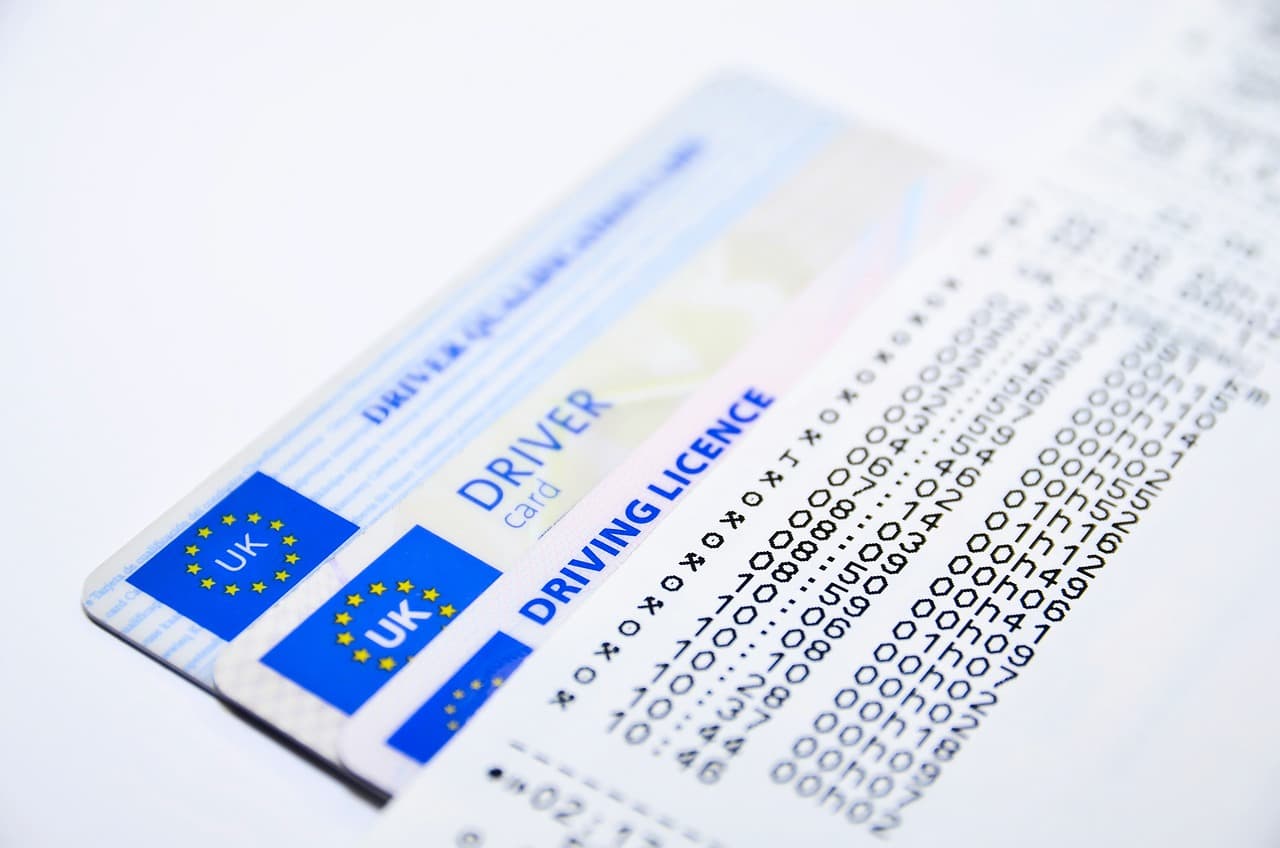
A home-country motorcycle licence plus an International Driving Permit with the motorcycle "A" endorsement explicitly stamped is the legal minimum for any tourist rider in Thailand. UK, EU, and Australian permit issuers commonly default to a car-only "B" endorsement, and a car-only IDP at a Thai checkpoint is functionally identical to no licence: 500-1,000 THB fine plus voided travel insurance in any subsequent crash. Apply through AAA (US), CAA (Canada), or UK Post Office at least two weeks before flying; same-day issue is possible but document errors are not.
3. Photo-walkaround the bike before the keys change hands
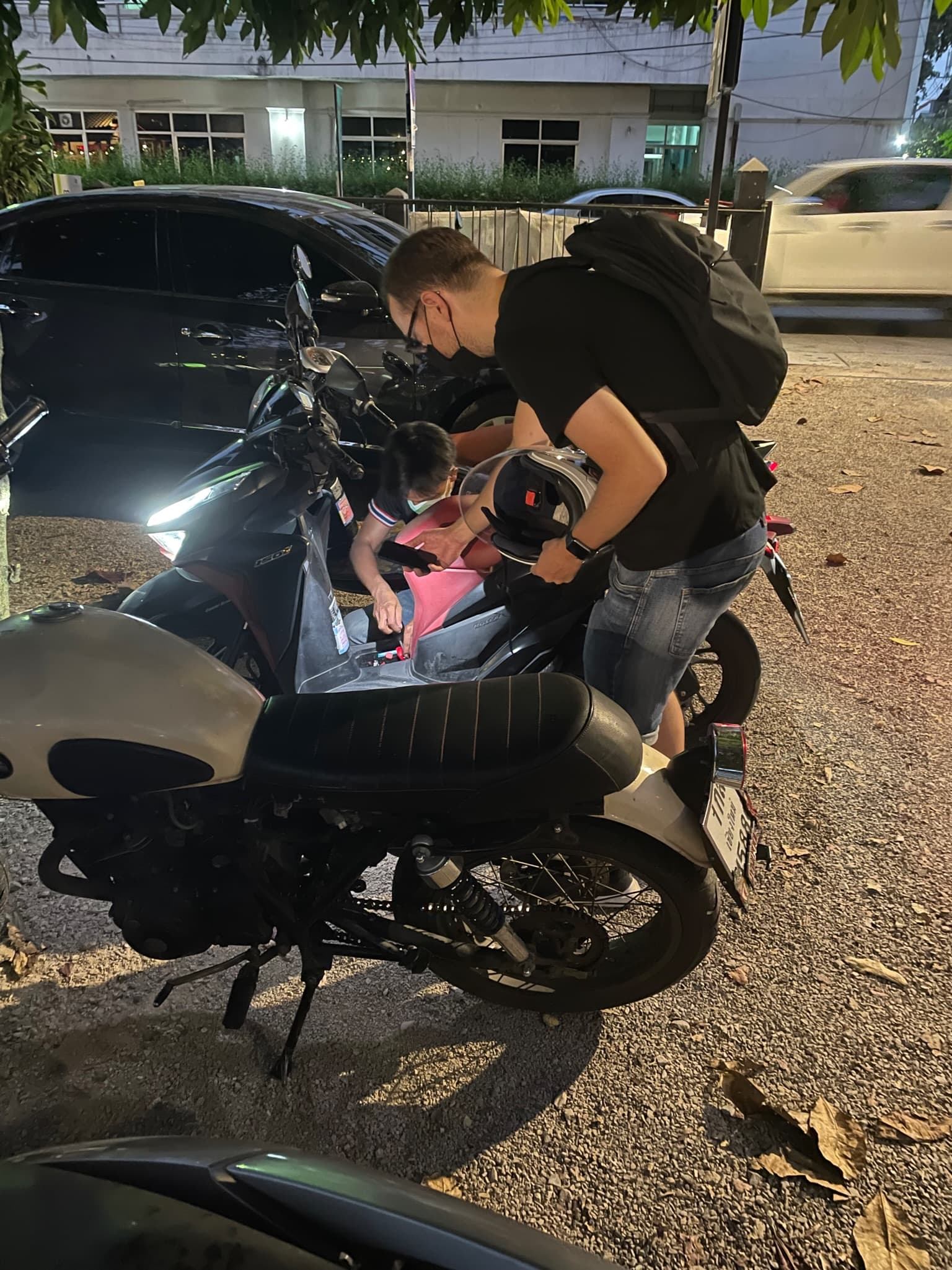
A 60-90 second timestamped video walkaround of the bike at pickup, with the rental shop owner visible in frame, is the single most effective scratch-scam defence in Thailand. The pattern across Patong's Bangla Road, Pattaya's Beach Road, and Phuket's Karon strip is identical: shops point at a pre-existing scuff on return and demand 3,000-15,000 THB for "repair." A narrated video naming every existing scratch, dent, and chip collapses the dispute on the spot. Capture the licence plate first so the timestamp is provable, then all four sides plus the seat, undercarriage, and instrument panel. The Thailand motorbike rental scams guide details the five named patterns.
4. Closed shoes, never flip-flops
Closed-toe shoes (sneakers minimum, over-the-ankle boots ideal) are non-negotiable for any Thai ride. The exhaust on a 110-160cc scooter sits at calf height and reaches 200-300°C within five minutes of ignition; a flip-flop slip puts bare skin against that pipe. Thai trauma clinics in Phuket and Krabi treat third-degree exhaust burns weekly during peak tourist months, and the wound takes 4-8 weeks to heal. Flip-flops also fall off in a low-speed slide and leave the foot to drag along asphalt at 30-40 km/h. Sandals with heel straps are marginal; closed shoes plus jeans or motorcycle trousers are the practical minimum.
On the road: 4 tips that prevent the crashes that actually happen
The four highest-frequency on-road crash patterns in Thailand are alcohol-impaired riding, mid-block left-turn collisions, wet-road slips on first-rain oil films, and night-time rural strikes. Each maps to a specific habit that drops the risk substantially. None of these are exotic motorcycle skills; all four are missing from the average tourist's first ride out of Patong, Pai, or Ao Nang. Pair them with the pre-ride four and your crash exposure tracks closer to a Thai daily commuter than to a first-week tourist.
5. Don't ride drunk: 50 mg/100 ml, breathalyzer at every checkpoint
Thailand's legal blood-alcohol limit for motorbike riders is 50 mg per 100 ml of blood (0.05% BAC), identical to the UK and Germany and stricter than the US 0.08%. One large Singha bottle (about 24 g of ethanol) lifts a 70 kg adult over the threshold inside an hour. Royal Thai Police breathalyze at every Seven Dangerous Days and Songkran checkpoint and at random checkpoints all year. A failed test means immediate detention, a 5,000-20,000 THB fine, mandatory court appearance, and reflexive travel-insurance denial. Roughly 35-40% of Thailand's fatal motorbike crashes involve alcohol per Thai Health Promotion Foundation tracking; the only safe number on a riding day is zero.
6. Watch for the left-turn-from-the-right-lane manoeuvre
Thai drivers commonly turn left across two or three lanes from a right-hand starting position without indicating, especially on Sukhumvit Road in Bangkok, the Patong-Kata stretch in Phuket, and the Old City moat in Chiang Mai. The defensive habit is to assume any car or songthaew on your right could begin a left turn at any intersection and to never sit directly in the inside-lane "cut-across" zone at lights. Hold a 3-second following distance, scan 12-15 seconds ahead, and ride one full lane width away from any vehicle whose driver you cannot make eye contact with through their wing mirror. Lane discipline in Thailand is fluid; the rider has to be the one doing the seeing.
7. The first 10 minutes of any rain are the most dangerous
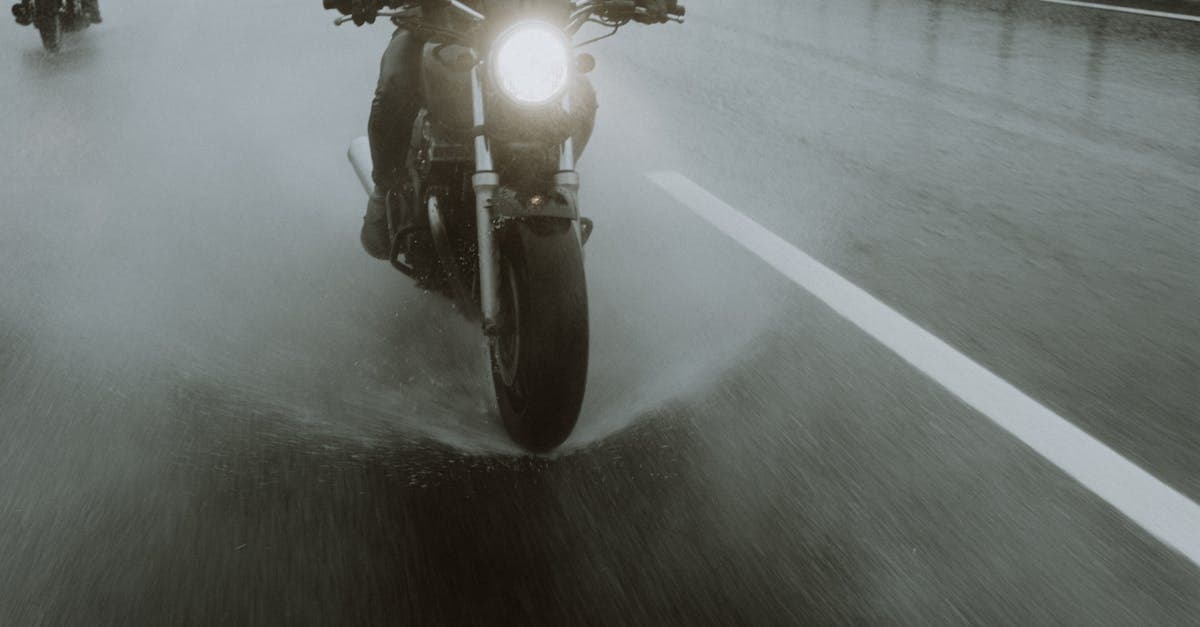
Thailand's southwest monsoon (May to October) flips dry asphalt to standing water inside 10 minutes during cloudbursts, and the first 10 minutes of every rain are the most dangerous on the entire calendar. Weeks of accumulated diesel, oil, and rubber dust rise off the asphalt and reduce traction to near-ice levels at intersections, where painted lane lines are also slick. Halve your normal cruising speed, double the following distance from 3 seconds to 6, and ride in the dry tracks left by car tires (the centre and edge of a lane are wettest). Cover the front brake; in 1-2 cm of standing water, hard front-braking on most rental tires loses traction instantly. Pull over and shelter for 15 minutes if the rain is heavy.
8. Ride defensively at night: unlit roads, dark clothing, dogs
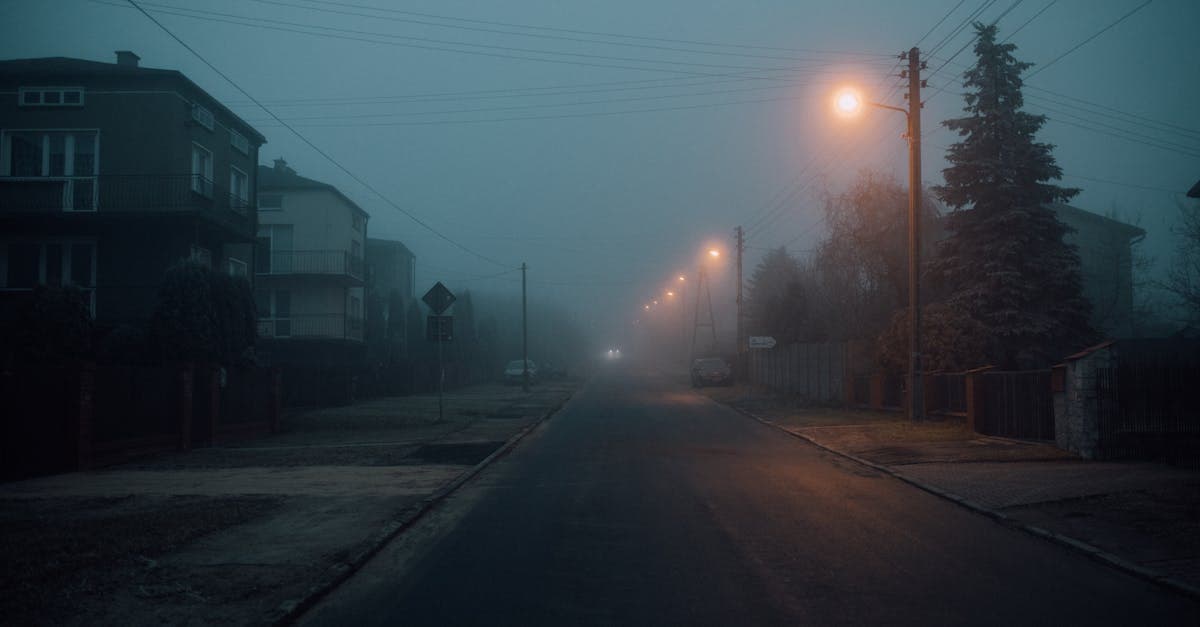
Thai rural roads carry no street lighting between provincial towns, dark-clothed pedestrians and cyclists routinely share the carriageway, and stray dogs sleep on warm asphalt after sunset. Nighttime visibility on Highway 4 between Phuket and Krabi, on Route 1095 through Pai, and on the cross-island Koh Lanta and Koh Phangan loops drops below the headlight reach of most rental scooters. The defensive frame: avoid rural rides after dusk altogether, default to high-visibility clothing if you must ride at night in Bangkok or Pattaya, stick to well-lit main arteries, and slow to 50-60 km/h on any unlit stretch. The thailand motorbike safety new year post covers the December campaign window where 24-hour Royal Thai Police checkpoints multiply.
When something goes wrong: 2 tips that change outcomes
The first 60 seconds at a Thai motorbike crash scene determine whether a survivable injury becomes a fatality, and the rules are the same in Bangkok, Krabi, or rural Pai. The two tips below cover the pre-saved emergency numbers that get you the right ambulance and the right English-speaking officer, and the on-scene scam to refuse before any "helpful" tow truck shows up. Both belong on your phone before you turn the key, not added during the panic of a crash.
9. Don't follow Google Maps onto the off-road shortcut
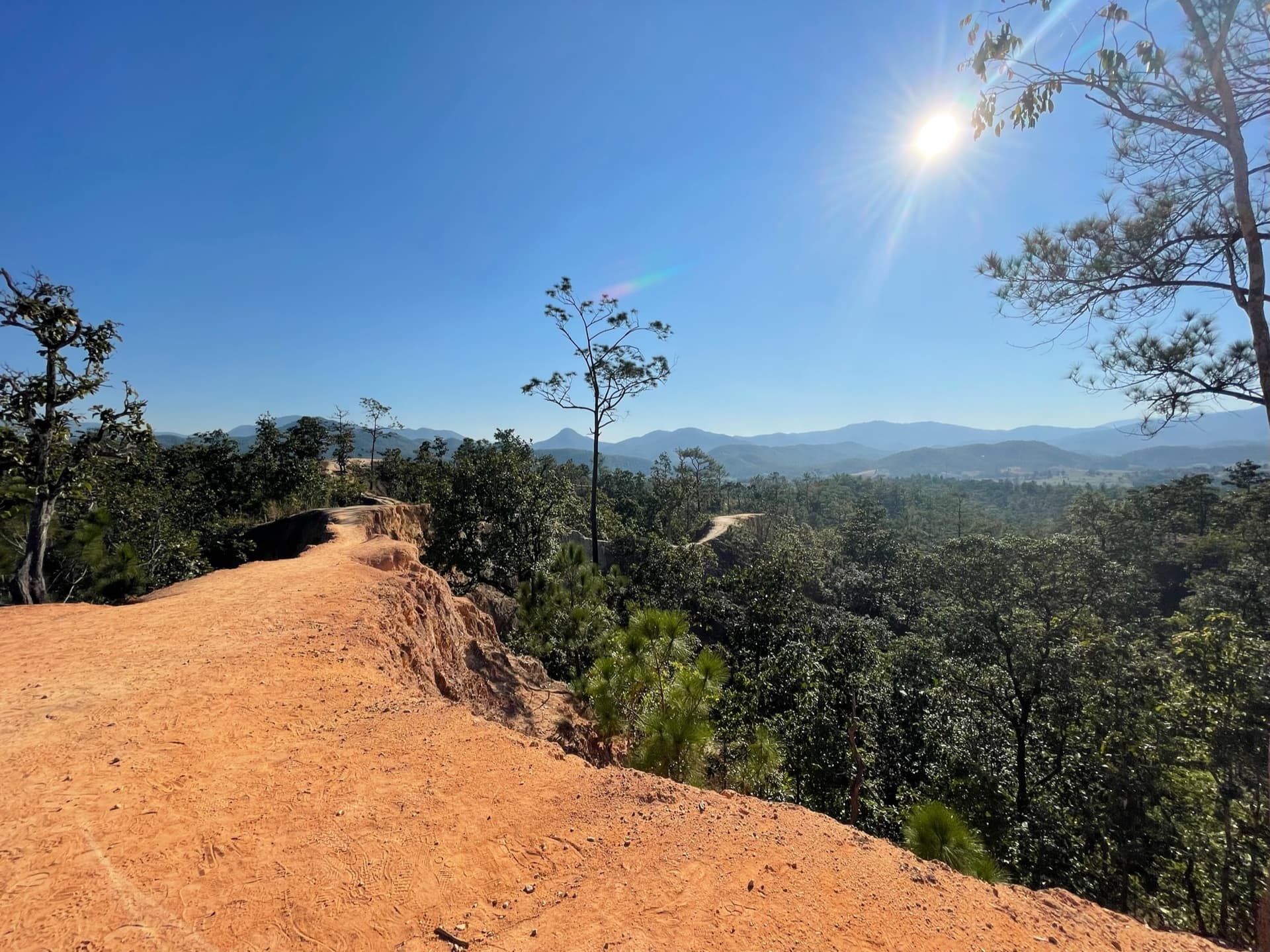
Google Maps in Thailand routinely routes scooters onto unpaved farm tracks, gravel mountain bypasses, and seasonal river-bed shortcuts that the algorithm rates as "quickest" but that 110-125cc rental tires cannot ride safely. The pattern shows up most on Mae Hong Son Loop detours, the inland Krabi backroads to Tup Kaek, and any "shortcut" between Chiang Mai and Pai that bypasses Route 1095. Override the route preview before turning if it shows unpaved sections, and trust signposted highways over the navigation app for any rural ride. A 250-400cc dual-sport handles gravel; a Honda Click 125 with road tires does not, and the loss claim runs 60,000-150,000 THB.
10. Carry Tourist Police 1155 and medical 1669 in your phone
Two numbers cover almost every Thai motorbike emergency: 1669 dials the medical ambulance and rescue line, and 1155 dials the English-speaking Tourist Police. Both belong on your home screen before you ride. The 1669 dispatcher in tourist provinces speaks basic English and will route an ambulance to a hospital with English-speaking ER staff if asked. The 1155 line is the single most useful contact for any rental dispute, scam encounter, or accident involving a foreigner; officers are bilingual and trained on tourist bureaucracy. Add 191 (general Royal Thai Police) and 199 (fire) for completeness, and pin Bangkok Hospital (+66 2 310 3000), Bangkok Hospital Phuket (+66 76 254 425), or Chiang Mai Ram (+66 53 920 300) on Google Maps.
Frequently Asked Questions
Is riding a motorbike in Thailand actually safe for a tourist?
Riding in Thailand carries roughly 10x the per-kilometre fatality risk of riding in the UK or Australia, but the four enforced rules (helmet, BAC under 50 mg/100 ml, IDP with the "A" endorsement, valid licence) plus six practiced habits (no alcohol on riding days, headlight always on, 3-second following distance, 12-15 second scan, ride one click below skill ceiling, daylight on rural routes) reduce a foreign rider's exposure by roughly 70-80% per Thai Health Promotion Foundation crash-data analysis.
What helmet certification do Thai police actually accept?
Thai checkpoints accept any helmet with a fastened chin strap at the police-stop level, but DOT (US), ECE 22.05/22.06 (Europe), Snell, or TISI (Thai Industrial Standards Institute) certification is the medical and insurance minimum. The unbranded "show helmets" some rental shops hand out clear the police-check but fail every real-impact test. Buy a 1,500-3,000 THB ECE-certified helmet at any Tesco Lotus or roadside moto-shop and keep it for the trip.
What is Thailand's legal blood-alcohol limit for motorbike riders?
Thailand's legal threshold is 50 mg of alcohol per 100 ml of blood (0.05% BAC), measured by breathalyzer at every police checkpoint. The threshold drops to 20 mg/100 ml (0.02% BAC) for drivers in their 2-year probationary first-licence window and is effectively zero for under-20 riders. A failed test triggers immediate detention, a 5,000-20,000 THB fine, mandatory court appearance, and automatic travel-insurance void on any subsequent crash.
Do I really need an International Driving Permit to rent in Thailand?
Yes. Tourist riders in Thailand need a home-country motorcycle licence plus an International Driving Permit with the "A" (motorcycle) endorsement explicitly stamped. A car-only IDP is treated as no licence at Thai checkpoints: 500-1,000 THB on-the-spot fine plus voided travel insurance in any subsequent crash. AAA, CAA, and the UK Post Office issue IDPs in roughly 1-2 weeks.
Which emergency numbers do I dial after a crash?
Two numbers cover almost every situation: 1669 for the medical ambulance and rescue line (basic English in tourist provinces), and 1155 for the English-speaking Tourist Police, the most useful single contact for any foreign rider. Save both before the first ride and pin the nearest internationally-accredited hospital (Bangkok Hospital, Bangkok Hospital Phuket, Chiang Mai Ram) on Google Maps. The general police line is 191; fire is 199.
Is it safe to ride during Thailand's monsoon season?
Riding from May to October is acceptable with adjusted habits but adds measurable risk. Halve your normal cruising speed, double the 3-second following distance, avoid the first 10 minutes of any rain (oil rises off the asphalt and traction collapses), and ride only in daylight on coastal routes like Highway 4 or mountain routes like Route 1095. September and October bring the heaviest single-day rainfall totals of the year.
What should I do if a fake police officer demands cash on the road?
Real Royal Thai Police checkpoints sit at fixed pull-over zones with cones, multiple uniformed officers with rank insignia, marked patrol vehicles, and a printed ticket book; legitimate fines are 500-1,000 THB per offence on a numbered slip. Fake stops are solo, mobile, half-uniformed, and demand cash on the spot for an invented offence with no paperwork. A polite request for the officer's rank, station, and printed ticket usually resolves it; offer to follow them to the station to pay there.
Plan a safer Thailand ride before you turn the key
Thailand's motorbike risk profile is real and measurable, but every dimension of it has a known counter-action: helmet on under the Land Traffic Act, blood-alcohol at zero on riding days, IDP plus home licence in the wallet, the four emergency numbers (1669, 1155, 191, 199) saved in advance, and a vetted bike from a partner shop. Pair these 10 tips with the motorbike safety thailand tips prose reference for the deeper rule-by-rule walkthrough, the thailand motorbike rental scams guide for the five named rental traps, and the thailand motorbike safety new year post for the December and Songkran campaign windows. Compare verified shops at Byklo.rent across Bangkok, Chiang Mai, Phuket, Krabi, Pattaya, Hua Hin, Pai, and the southern islands; cash deposit only, passport copy, ECE/DOT helmet, written contract before keys change hands.