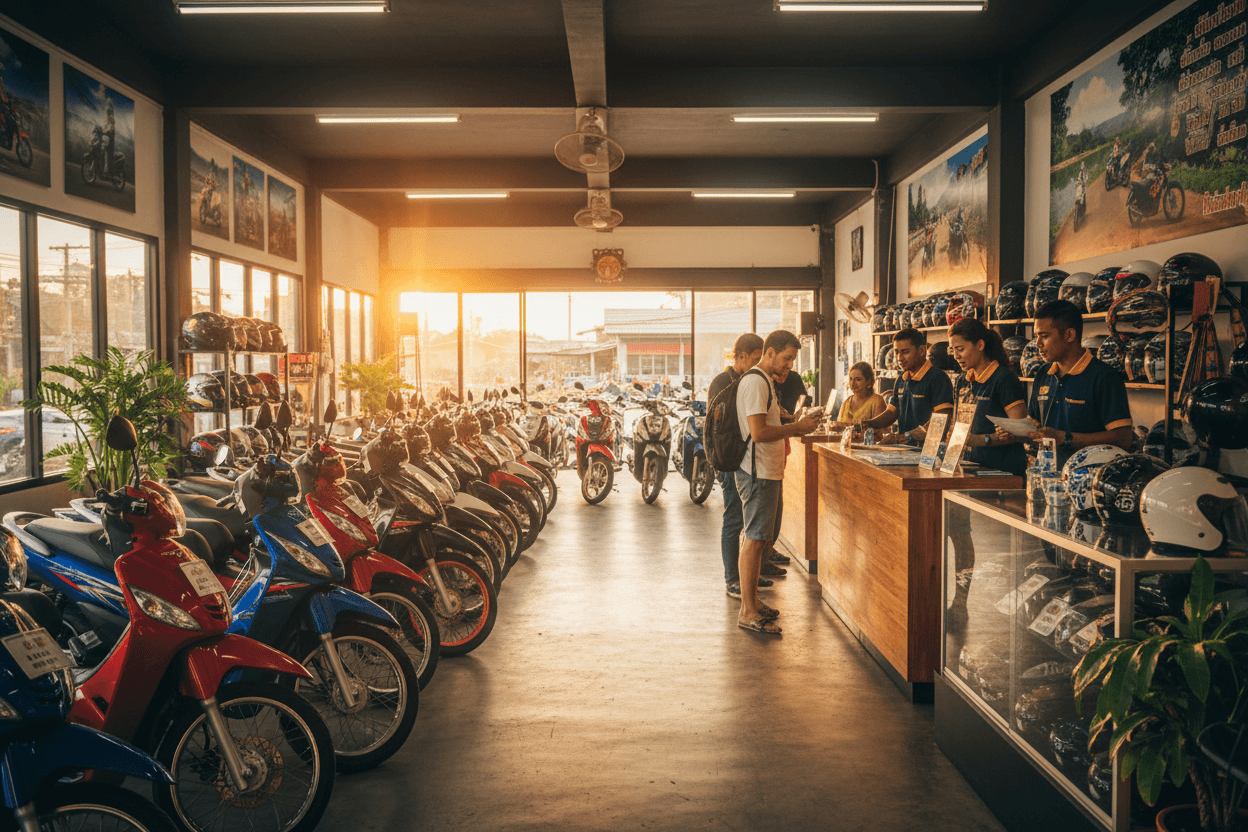
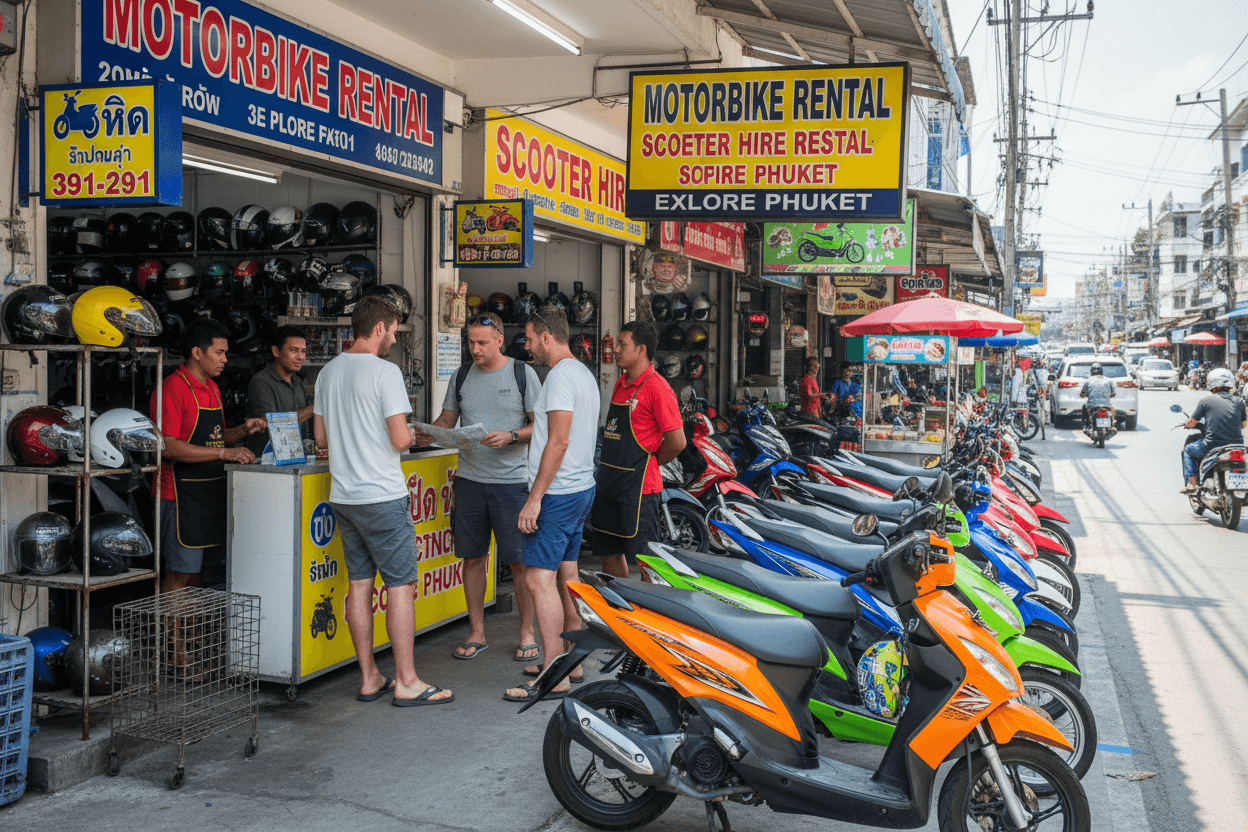
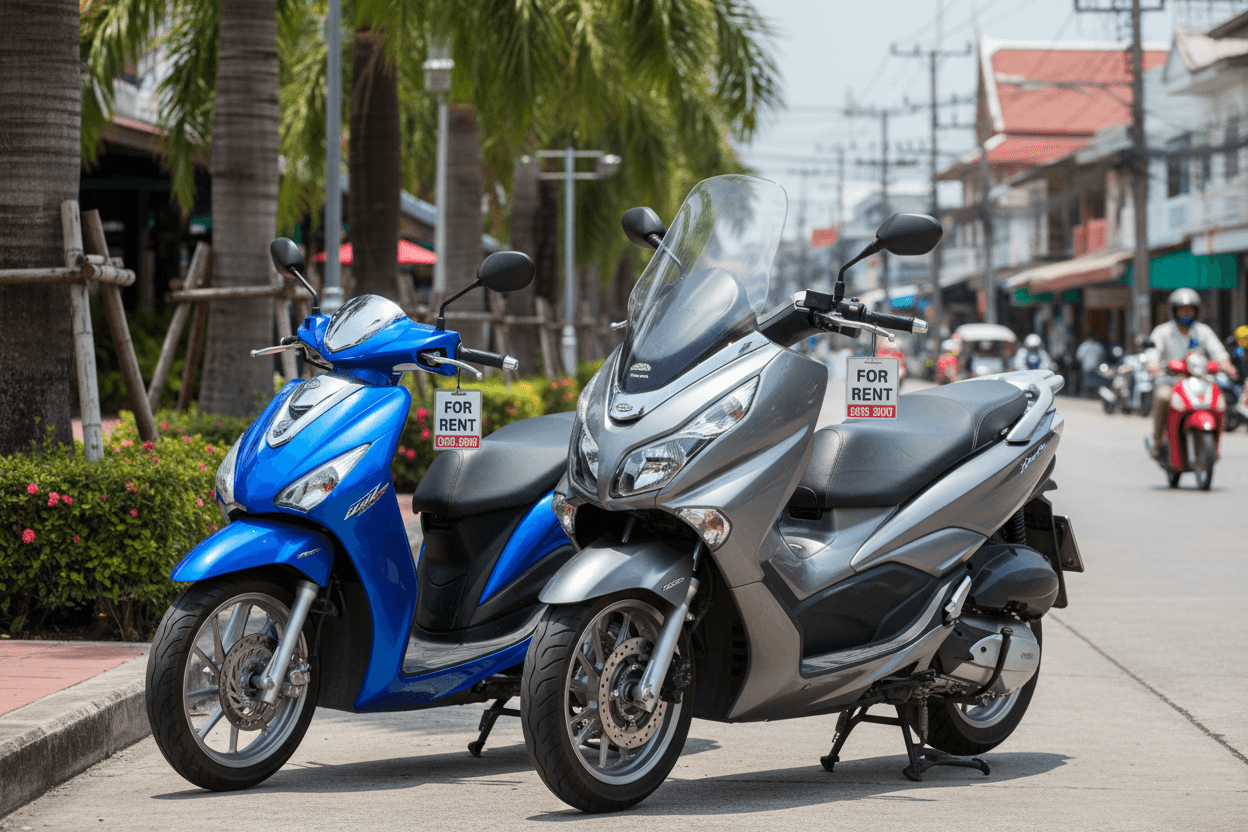
A no passport deposit rental in Thailand in 2026 is standard at vetted shops: a 500-5,000 THB cash deposit or a credit-card pre-authorisation replaces your physical passport, and a clear passport copy plus your driver's licence covers the shop's identity check. Holding a foreigner's original passport as collateral is widely treated as unlawful in Thailand, and it is the leverage that powers the scratch scam, the breakdown scam, and the airport-day extortion scam clustered along Bangla Road in Phuket, Beach Road in Pattaya, and Walking Street in Pai.
Key Takeaways
- Standard 2026 deposit: 500-5,000 THB cash, depending on the bike. A passport copy is acceptable; the original passport never is.
- Passport retention is unlawful in practice: a Thai passport belongs to the issuing government, not the renter. The Royal Thai Embassy and most home-country travel advisories tell foreigners not to surrender it.
- Three named scams need leverage: the scratch scam (3,000-15,000 THB phantom damage), the breakdown scam (rider blamed for a pre-existing fault), and the airport-day shakedown rely on holding your passport so you cannot walk away.
- Legitimate alternatives: cash deposit, credit-card pre-authorisation, passport copy plus driver's licence, or full digital ID verification. Two or three of these together is professional shop standard.
- Pre-arrival action: video the bike on pickup (mirrors, fairings, exhaust, tyres, brakes) and have the agent acknowledge any existing scratch on the rental sheet before keys change hands.
- Police checkpoint reality: you need your passport for hotel check-ins, SIM purchases, and police checkpoints. A passport sitting in a rental-shop drawer paralyses the rest of your trip.
Why is leaving your passport at a Thai rental shop dangerous?
Leaving your original passport at a Thai motorbike rental shop is dangerous in 2026 because it converts every minor disagreement into an extortion negotiation, and because the passport is a Thai-government-recognised document that the shop has no clear legal right to detain. The Royal Thai Embassy in Washington publishes traveller guidance reminding foreign nationals that the passport remains the issuer's property; the UK Foreign, Commonwealth & Development Office issues the same warning under its Thailand travel advice. Both sources advise refusing rental shops that demand the original.
The mechanical risks are real even when the shop is well intentioned. A drawer fire, a break-in, a coffee spill, or a forgetful owner who put your passport "somewhere safe" in 2024 and cannot find it in 2026 ends your trip. Replacement is processed through your home embassy, typically the US Embassy in Bangkok for American citizens or the UK Embassy in Bangkok for UK passport holders. Emergency replacements take 3-10 working days and cost USD 145 (US) or GBP 100 (UK), plus the missed flights and the rebook fees layered on top. The administrative version of the disaster is just as ruinous as the malicious one.
The malicious risks come next, and they are the structural reason every Thailand motorbike scam keeps working. Without the original passport, the Thailand motorbike rental scams guide and the motorbike rental problems Thailand guide document scams that simply do not function: the scratch shop has no leverage to invent damage, the fake-breakdown shop has no leverage to invoice you for a worn part, the airport-day shakedown has no leverage to demand 10,000 THB while your boarding pass clock ticks. Take the passport out of the room and the scam evaporates.
Legitimate deposit alternatives in Thailand
Legitimate Thai motorbike shops in 2026 use one of four deposit alternatives, often two of them stacked: a cash deposit of 500-5,000 THB, a credit-card pre-authorisation hold, a passport copy plus driver's licence, or full digital ID verification through a booking platform. The cash-deposit-plus-copy combination is the single most common professional setup, and it is the deposit norm coded into the Byklo deposit canon and adopted by every Byklo-vetted partner shop.
Cash deposits sit at the low end (500-1,000 THB) for daily-rate Honda Click 125s in Chiang Mai's Old City and Pai, and rise toward the upper end (3,000-5,000 THB) for Yamaha NMAX, Honda PCX 160, and 300cc-and-above bikes in Phuket and Bangkok. The deposit is fully refundable on return when the bike is returned in the same condition. Credit-card pre-authorisation is the international-chain equivalent: the shop freezes a USD 100-200 balance on a Visa or Mastercard, releases the hold on return, and never converts it to a charge unless damage is documented.
The passport-copy alternative trades a physical document for a verifiable one. A high-resolution passport photo plus your home-country driver's licence and your International Driving Permit gives the shop everything it needs for a police report or insurance claim if the bike is stolen, without putting you in a position where the shop can withhold your right to leave the country. The Thai motorbike licence guide covers what the IDP must show: a motorcycle "A" endorsement plus your home-country licence number.
The pattern across the table: every legitimate deposit type is reversible (cash returned, hold released, copy ignored), every illegitimate one is not. If a shop only accepts the original passport or the original driving licence, that is a self-disclosure that the shop's business model depends on the renter being unable to walk away.
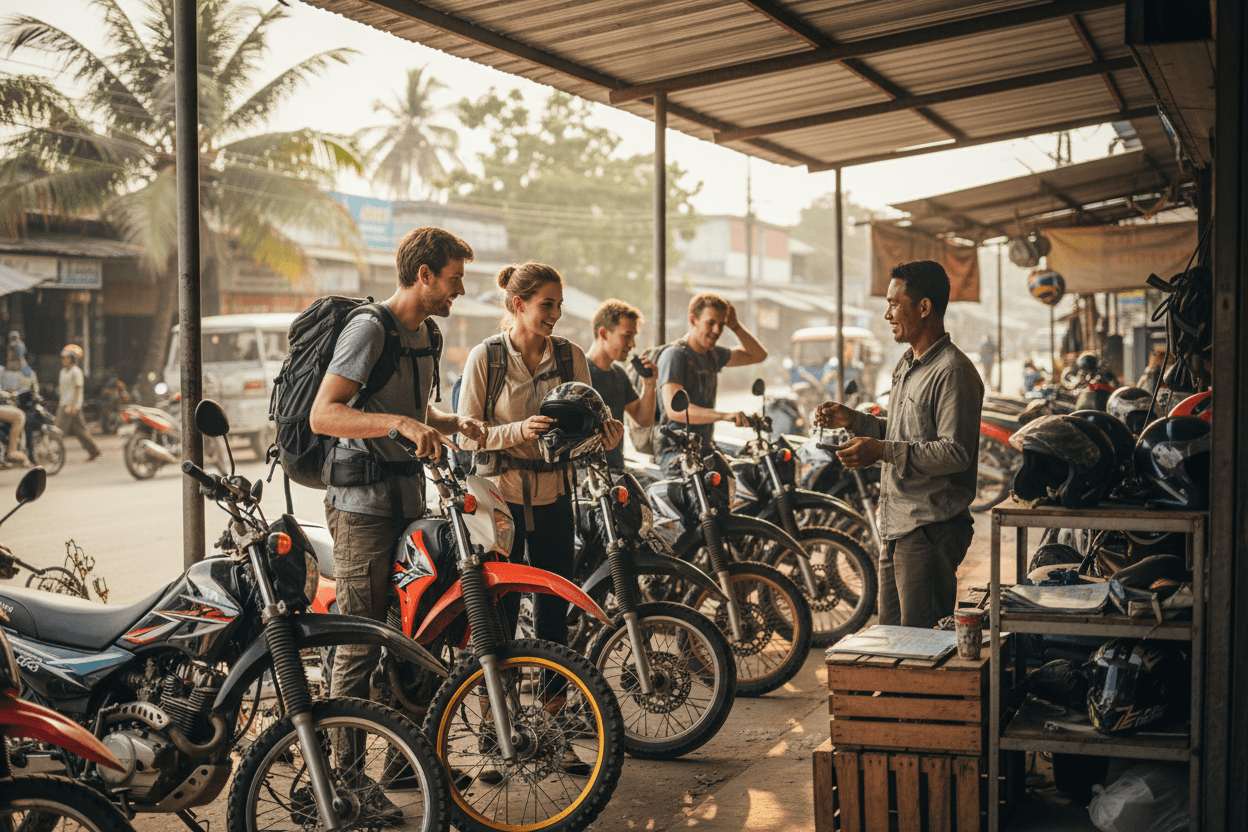
Five-step playbook to rent without surrendering your passport
The five-step playbook to rent a motorbike in Thailand without surrendering your passport, in 2026, runs: pre-book through a vetted platform, complete digital identity verification before pickup, pay a cash or card deposit at the shop, film the bike walkaround, and ride away with the original passport in your pocket. Each step closes off one of the named scams; missing a step reopens the leverage point.
Step 1: Pre-book through a vetted platform. Avoid the airport-tarmac negotiation. Booking through Byklo.rent, the Motorbike Rental Thailand guide cluster, or a comparable vetted marketplace gives you fixed pricing, a written rental agreement, and a documented dispute path before the bike is in your hands. The Byklo partner network covers Bangkok, Chiang Mai, Phuket, Krabi, Pattaya, Hua Hin, Pai, Koh Samui, Koh Lanta, and ten other cities; pickup at hotels and airports is free.
Step 2: Complete digital identity verification before pickup. Upload the passport scan, the home-country driving licence, and the International Driving Permit through the platform's secure portal from your hotel or before you fly. The platform stores the verification; the shop sees the verification token. The original passport never leaves the safe. The how to rent a scooter in Chiang Mai walkthrough covers the verification flow as it runs in the Old City and Nimman.
Step 3: Pay a cash or card deposit at pickup, not a passport. When you arrive at the pickup point, the deposit conversation should be 500-5,000 THB cash or a USD 100-200 card hold. If the shop opens with "we hold your passport," you have three options: ask for the cash-deposit alternative (most shops will take it), call the platform's dispute desk, or walk away to the next shop. Do not negotiate; do not "just leave it for an hour." Each of those concessions is the entry move of the scams.
Step 4: Film the bike walkaround before keys change hands. Open the phone camera, switch to video, and walk the perimeter of the bike: front fairing, mirrors, headlight, fuel cap, both side panels, exhaust, rear panels, tyres, brake levers, and the seat. Narrate any pre-existing scratch out loud and zoom on it for two seconds. The motorbike rental inspection checklist gives the full sequence, but a phone video covers 90% of the legal value. Show the agent the video and have them initial each scratch on the rental sheet.
Step 5: Ride away with the passport in your pocket. Helmet on (Thai law requires a helmet for both rider and pillion; the top 10 motorbike safety tips cover the helmet and IDP rules), passport in your secure pocket or back at the hotel safe, IDP and home-country licence on you for police checkpoints. The thai motorbike licence guide and the international driving licence Thailand post explain the licensing classes and the 500-1,000 THB checkpoint fines for missing IDP or helmet.

Where the passport-hostage scam clusters geographically
The passport-hostage scam in Thailand clusters along three commercial strips in 2026: Bangla Road and Patong's beachfront in Phuket, Beach Road and Walking Street in Pattaya, and the Walking Street in Pai plus the Saladan strip on Koh Lanta. Each strip combines high-volume, low-repeat tourist traffic with low shop accountability; each is the geographic source of the named TripAdvisor and Google Maps complaint patterns the Pattaya motorbike rental safety and scams guide catalogues by name.
Phuket's Bangla Road and the surrounding Patong-to-Karon stretch is the densest concentration of street-shop motorbike rentals in southern Thailand and the densest concentration of TripAdvisor reports involving original-passport retention. The pattern names recur across reviews: "they kept my passport," "I had to pay 10,000 baht to get my passport back," and "Tourist Police got my passport returned." For travellers in Phuket who want to avoid the Bangla cluster entirely, the scooter rental Phuket guide shifts pickup to Phuket Town and the Kata-Karon zone, where vetted shops run cash-only deposits.
Pattaya's Beach Road and the Walking Street block share Phuket's structural problem: 50+ shops competing on price, low-repeat tourist traffic, and rental agreements often written in Thai only. Koh Lanta's Saladan ferry-terminal cluster is a smaller version of the same: walk off the ferry, rent a scooter from the closest shop, hand over the passport because "everyone does it here," and then find the bike has a 3,000 THB scratch invoice waiting on return. The how to rent a scooter Koh Lanta guide routes pickup to vetted Saladan shops that accept cash deposits.
Northern Thailand has fewer reported cases, partly because Chiang Mai and Pai run on long-stay nomad clientele who spread scam reports through monthly-rental forums and partly because the motorbike rental Chiang Mai guide cluster of vetted shops dominates the Old City and Nimman supply. Krabi sits between the two extremes, with Ao Nang's tourist-strip shops occasionally testing passport demands and Krabi Town's quieter shops generally not; the scooter rental requirements Krabi breakdown explains the local norm.
What to do if a shop already has your passport
If a Thai motorbike rental shop is already holding your original passport in a dispute, in 2026, the immediate sequence is: stop negotiating on the disputed fee, photograph the rental agreement and your bike inspection video, call the Tourist Police on 1155, and contact your home-country embassy if the dispute escalates within 24 hours of a flight. The Tourist Police hotline operates 24/7, runs in English, and routinely dispatches officers to rental-shop disputes in Phuket, Pattaya, Bangkok, and Chiang Mai.
The Tourist Police are the right first call for two reasons. They have the authority to compel a shop to release a passport without paying a disputed fee, and they have the linguistic capacity to take statements from both sides in English. Local district police are sometimes the second-best option; some districts have closer informal relationships with rental-shop owners than tourists assume, and the Tourist Police were specifically created (under the Royal Thai Police's tourism mandate) to neutralise that bias. Note the rental shop's address, the bike's licence plate, and the disputed amount before calling.
Embassy escalation is the right path when the dispute clock runs against a flight or when the Tourist Police response stalls past 24 hours. The US Embassy Bangkok consular section and the UK Embassy Bangkok consular section both maintain emergency assistance lines for citizens who have been deprived of travel documents. Both have run cases that ended with a phone call from the consular officer to the local police chief, after which the passport was released within hours. The embassy is not a payment desk; it is a leverage equaliser.
After the passport is back, file a formal report. The motorbike rental problems Thailand guide and the common rental scams catalogue explain the documentation chain that helps the next renter: a Tourist Police report, a TripAdvisor or Google Maps review naming the shop and the dispute amount, and a note to the booking platform if the shop is on one. The structural fix to the Thai street-rental scam economy is information density: the more named, dated reports each scam shop carries, the harder the next scam becomes to land.
Frequently Asked Questions
Is leaving a passport as deposit standard practice for motorbike rental in Thailand?
It was standard for many years and is still common at street-corner shops in Phuket's Bangla Road and Pattaya's Beach Road, but it is not standard at vetted shops in 2026. The Royal Thai Embassy and most home-country travel advisories warn against it, and Tourist Police 1155 routinely intervenes in disputes that turn on retained passports. Cash deposits of 500-5,000 THB and credit-card pre-authorisations are the safe alternatives.
How much is a typical cash deposit for a Thai scooter rental?
Cash deposits in 2026 run 500-5,000 THB depending on the bike. Honda Click 125s and other 110-125cc automatic scooters typically take 500-1,000 THB. Yamaha NMAX, Honda PCX 160, and other 150cc-class scooters take 1,500-3,000 THB. 250cc-and-above bikes, big-bike rentals, and fleet bikes from international chains take 3,000-5,000 THB or a credit-card pre-authorisation hold instead.
Can I rent a motorbike in Thailand without any deposit?
Generally, no. Some form of security is universal because a Thai-rental motorbike represents 30,000-150,000 THB of the shop owner's working capital. The substitutable security is what matters: cash, card hold, copy plus licence, or platform-mediated digital ID. The line you draw is at handing over the original passport. Refuse that and most vetted shops will accept one of the alternatives without further argument.
Is it actually illegal for a Thai shop to hold my original passport?
Holding a foreign national's original passport as deposit sits in a grey area under the Thai Immigration Act and is widely treated as outside what a private business can legally enforce. The passport remains the property of the issuing government. Tourist Police 1155 routinely orders shops to release retained passports. Practical advice: refuse to surrender the original at pickup; if a shop already holds one, call 1155 rather than paying the disputed fee.
What happens if I damage the rental scooter?
If you cause damage to the rental, the shop deducts the repair cost from your security deposit (cash or card hold) up to the deposit amount. Beyond that, you negotiate with the shop or your travel insurer. The pre-rental video walkaround is the single most important document in any damage dispute: it establishes the bike's pre-rental condition and shifts the burden of proof from your word to the time-stamped footage.
Do I need an International Driving Permit to use the no-passport alternatives?
The no-passport-deposit alternatives are about deposit security, not about licensing. You still need a valid home-country motorcycle licence plus an International Driving Permit with the motorcycle "A" endorsement, regardless of how the deposit is structured. The international driving licence Thailand post covers the IDP requirement and where to apply (AAA in the US, the UK Post Office in the UK, CAA in Canada).
What if a shop refuses every alternative I offer?
Walk away. Thailand has 5,000-plus motorbike rental shops across its tourist hubs; the next one will quote a cash deposit. A shop that refuses every legitimate alternative is signalling that its business model needs the leverage of the original passport. That is the scam-shop fingerprint, and it is the single best filter for which shop to skip on a given street.
Rent without the passport, ride with the freedom
A 2026 Thai motorbike rental that respects your passport is the difference between a clean three-week trip and an embassy-day disaster. The structural fix is small: skip the shops that demand the original passport, accept a 500-5,000 THB cash deposit or a credit-card hold, video the bike, and keep the document where it belongs. Booking through Byklo.rent routes you to vetted partner shops in 15 Thai cities (Bangkok, Chiang Mai, Phuket, Krabi, Pattaya, Hua Hin, Pai, Koh Samui, Koh Lanta and more), with cash deposits, written agreements in English, and free hotel and airport delivery on every rental.