Getting a Thai motorbike license in 2026 costs under 1,000 THB total and is valid 5 years (after a 2-year probationary first license). The 6-step process at the Department of Land Transport: book through the DLT Smart Queue app, pass the aptitude pre-tests, watch the 5-hour road-safety video, score 45 of 50 on the theory test, complete the practical (slalom, plank, stop), then pay the card fee. Foreigners need a non-immigrant visa, residence certificate, and 30-day-valid medical certificate to apply. Short-term tourists ride on an International Driving Permit instead.
Key Takeaways
- Tourists under 90 days: home-country motorcycle license + International Driving Permit with the "A" (motorcycle) endorsement. Car-only IDP does not cover scooters.
- Foreign residents on non-immigrant visas: must convert to a Thai motorbike license; the IDP is not a long-term substitute.
- Total cost under 1,000 THB: 105 THB DLT card fee + 100-300 THB medical certificate + 300-500 THB residence certificate (Immigration office) + photos and copies.
- No 50cc exemption: Thailand does not have a small-engine carve-out. Honda Click 110cc, Wave 110, Scoopy 110: all require a full motorcycle license and helmet.
- 2025 rule update (still in force in 2026): foreigners must pass the Thai theory test even when converting a valid foreign license; the old paper-swap pathway is gone.
- Helmet law: mandatory for both rider and pillion. Police-checkpoint fines for no helmet or no IDP run 500-1,000 THB on the spot.
Tourist vs resident: which license do you actually need?
Thailand's Traffic Act splits foreign motorbike riders by visa class, not by trip length. Tourists on a tourist visa (visa-exempt or TR) can ride on a valid home-country motorcycle license plus an International Driving Permit with the motorcycle "A" endorsement. Foreign residents on non-immigrant visas (work, retirement, marriage, education, long-stay) are required to convert to a Thai motorbike license once their visa stamp shifts; the IDP is a legal short-term bandage, not a permanent solution.
The crucial gotcha for tourists is the IDP class. UK, EU, and Australian licenses commonly issue a car-only ("B") IDP by default; the motorcycle ("A") endorsement is a separate stamp. Police checkpoints in tourist hubs (Bangla Road in Phuket, Beach Road in Pattaya, the Old City moat in Chiang Mai) check the IDP class explicitly. A car-only IDP at a checkpoint is the same as no license: 500-1,000 THB on-the-spot fine plus voided travel insurance in any subsequent accident. The Royal Thai Embassy publishes official guidance on which license classes Thailand recognizes.
The Thai license route, for those who need it, is also the cheaper long-term path. Tourists on multiple-entry visas pay AAA or CAA roughly $20-40 per IDP renewal each year, while a Thai 5-year license is one fixed under-1,000-THB outlay. For long-stay riders, the Thai license also unlocks bike-class eligibility above 110cc that some IDP variants don't cover. The Thai license conversion process covers the document checklist in full; this guide focuses on the application walkthrough.
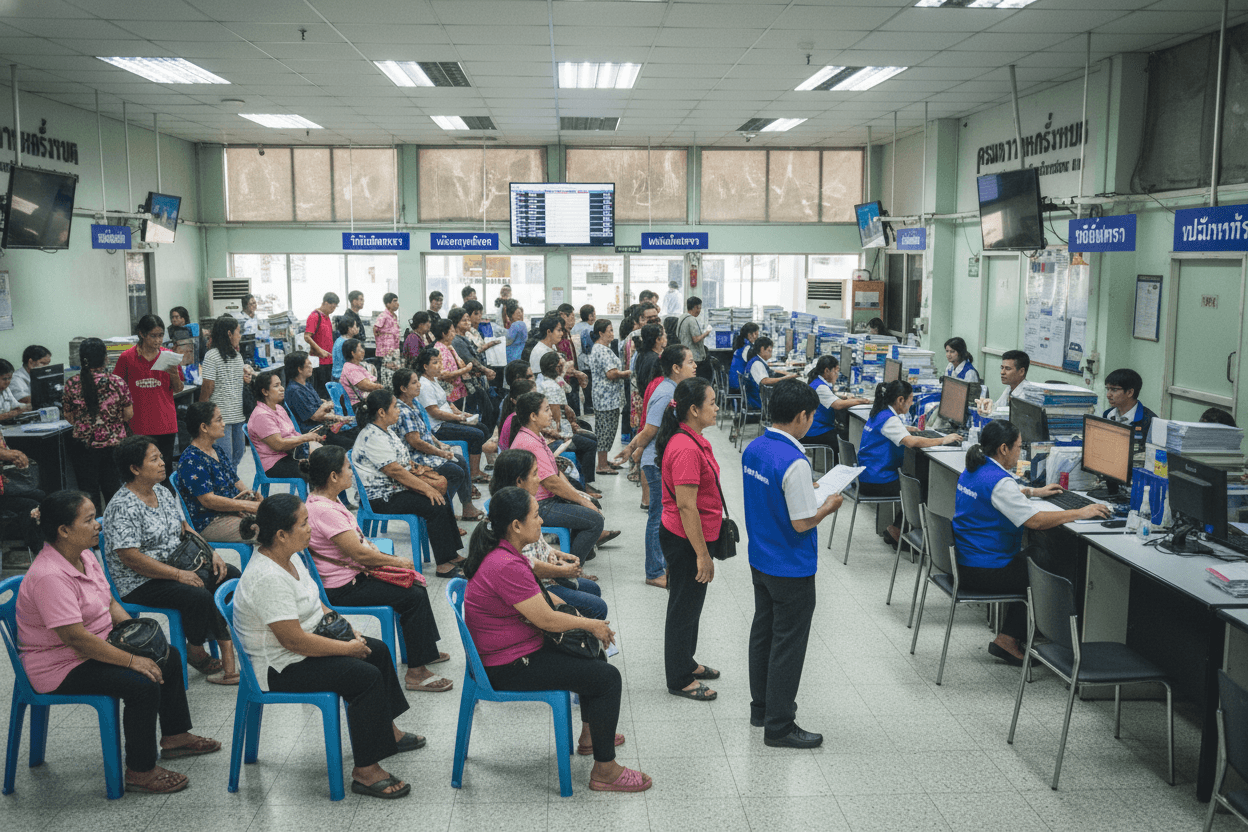
The 6-step Thai motorbike license application (DLT walkthrough)
The Department of Land Transport application takes one full day at the DLT plus 1-3 days of document preparation beforehand. The six steps below are the on-the-day flow at any major DLT office (Bangkok, Chiang Mai, Phuket, Pattaya, Krabi); smaller provincial offices follow the same sequence with longer waits.
Step 1: Book through the DLT Smart Queue app. Walk-ins are turned away at busy DLT offices. Download the official DLT Smart Queue app (iOS and Android), register with your passport details, and book a "New Driver's License" appointment. In Bangkok and Chiang Mai the next available slot can be 2-4 weeks out; book early. The official portal at dlt.go.th lists the offices and hours per province.
Step 2: Aptitude pre-tests at the DLT. The morning of your appointment, dress respectfully (shoulders and knees covered) and arrive 30 minutes early. The DLT runs four physical aptitude tests in 15-20 minutes: color blindness (identify red, yellow, green), peripheral vision (call out edge-of-view light colors), depth perception (align two pins in a small box), and reaction time (brake within ~1 second of a green-to-red light). Glasses-wearers should bring them.
Step 3: The 5-hour road-safety video. Mandatory for first-time applicants. Some DLT offices allow you to watch this online before the test day via the Smart Queue portal; others require in-person viewing. Pay attention: the theory-test questions are pulled from this video.
Step 4: The theory test (50 questions, 90% pass mark). Computer-delivered multiple-choice, available in English at major DLT offices. The pass mark is 45 of 50, so margin for error is small. The English translations are sometimes awkward; read each question twice. Failures rebook for a few days later (theory only, document set still valid).
Step 5: The practical motorbike test on the closed course. Three skills: weave through a slalom of cones, ride a narrow elevated plank without putting your feet down, and stop precisely at a marked stop sign. Most DLT offices rent a 110cc Honda Wave or Click for the test (50-100 THB); you can bring your own bike if you have one with current Por.Ror.Bor insurance. The test is basic-competency level, not Moto GP.
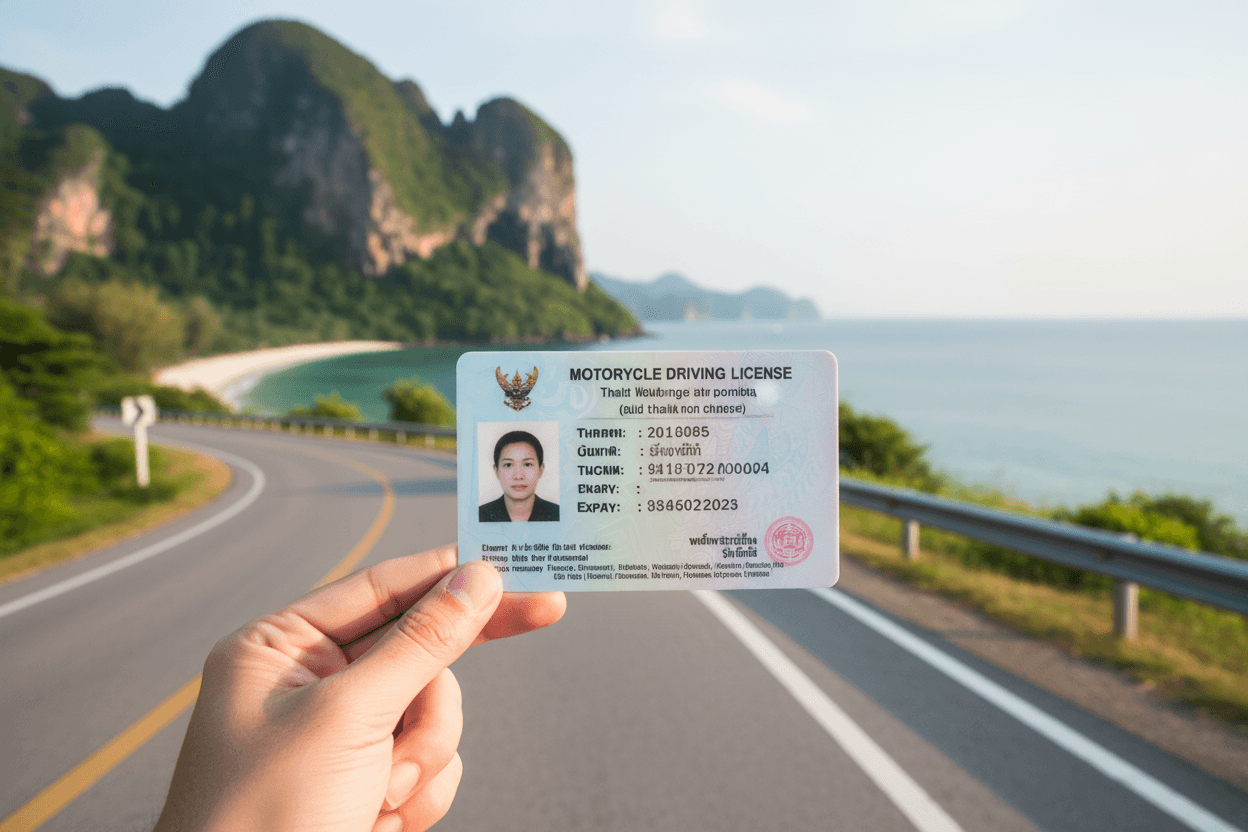
Step 6: Photo, fee, and same-day card. After passing both tests, the DLT photographs you, prints the plastic smart-card license, and hands it over the same day. The DLT QR License app gives you a digital backup linked to the physical card.
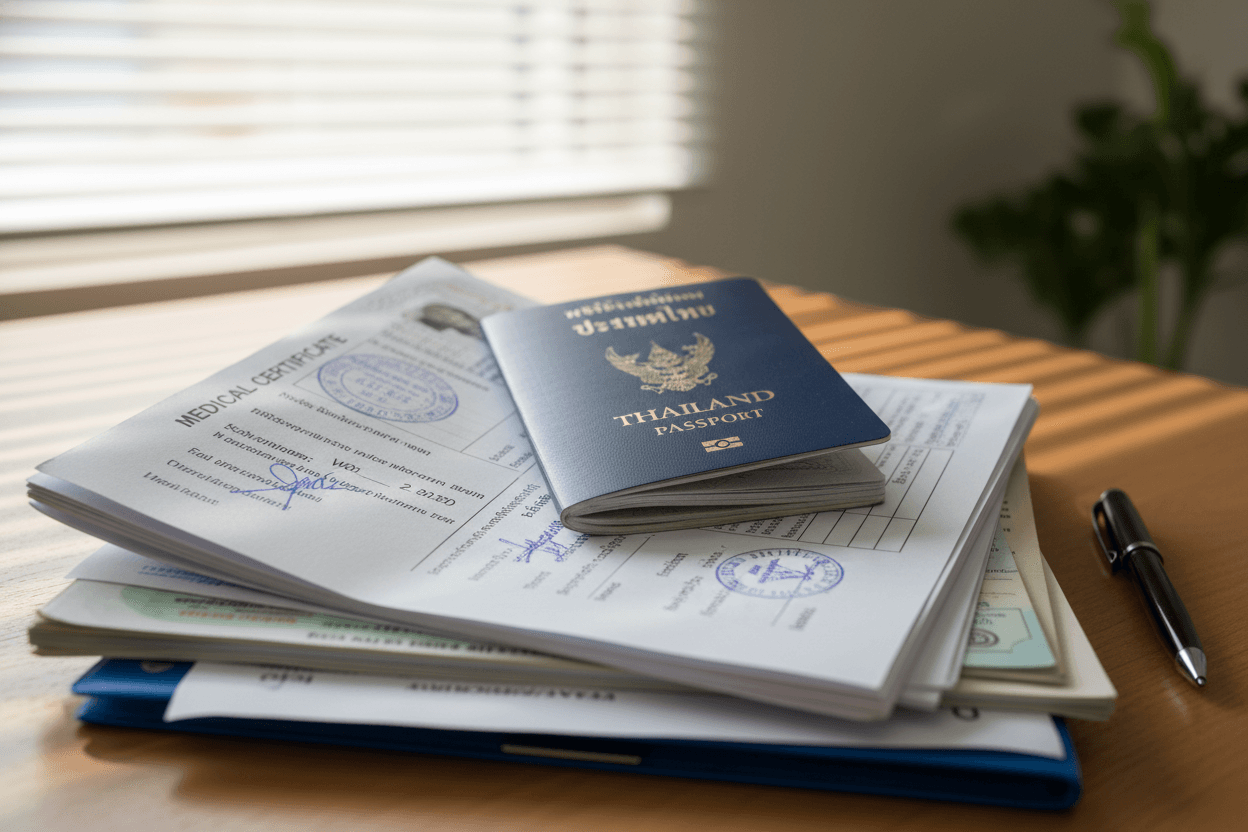
Total cost: under 1,000 THB plus realistic alternatives
Total cost of a first Thai motorbike license is 605-1,005 THB depending on whether you get the residence certificate from Immigration or your embassy, and whether you rent a test bike or bring your own. Compared with the cost of repeated police-checkpoint fines (500-1,000 THB per offense, often weekly in tourist zones), the license pays for itself within two avoided checkpoints.
Compare this to the alternative: ride without a license, pay 500-2,000 THB per police checkpoint, and risk a denied insurance claim if you're in an accident. Hospital costs in Thailand for a serious motorbike injury run 100,000-300,000+ THB; the Thailand Motorbike Insurance Guide covers the four insurance tiers and what an unlicensed crash costs.
Common myths about Thai motorbike licensing
The "Thai scooter license rules" topic generates more bar-stool myth than any other Thailand-rider question. The three most expensive misunderstandings, all wrong:
Myth 1: "My car license covers a scooter." Wrong. A Category B license certifies you to drive a Toyota Vios, not a Honda Click. If you crash a scooter with only a car license, your travel insurance denies the claim immediately on the basis of "incorrect license category." The Thai DLT issues motorbike and car licenses as separate cards. Tourists who arrived with a car-only IDP face the same denial; see the IDP-class details for the motorcycle "A" endorsement rules.
Myth 2: "50cc scooters are exempt." Wrong. Thailand has no 50cc exemption; it doesn't even have a 50cc rental category (rental fleets start at 110cc). Every motorbike on the road, including the smallest scooter, requires a full motorbike license.
Myth 3: "I'll just pay the fine if I get caught." Possibly viable as a budget calculation if you only get caught once. Police checkpoints in tourist zones run multiple times per day in peak season; weekly stops are common in Patong, Pattaya, and the Old City moat. Each stop is 500-1,000 THB. Across a 30-day stay, that adds up to 5,000+ THB plus the time wasted at every checkpoint.
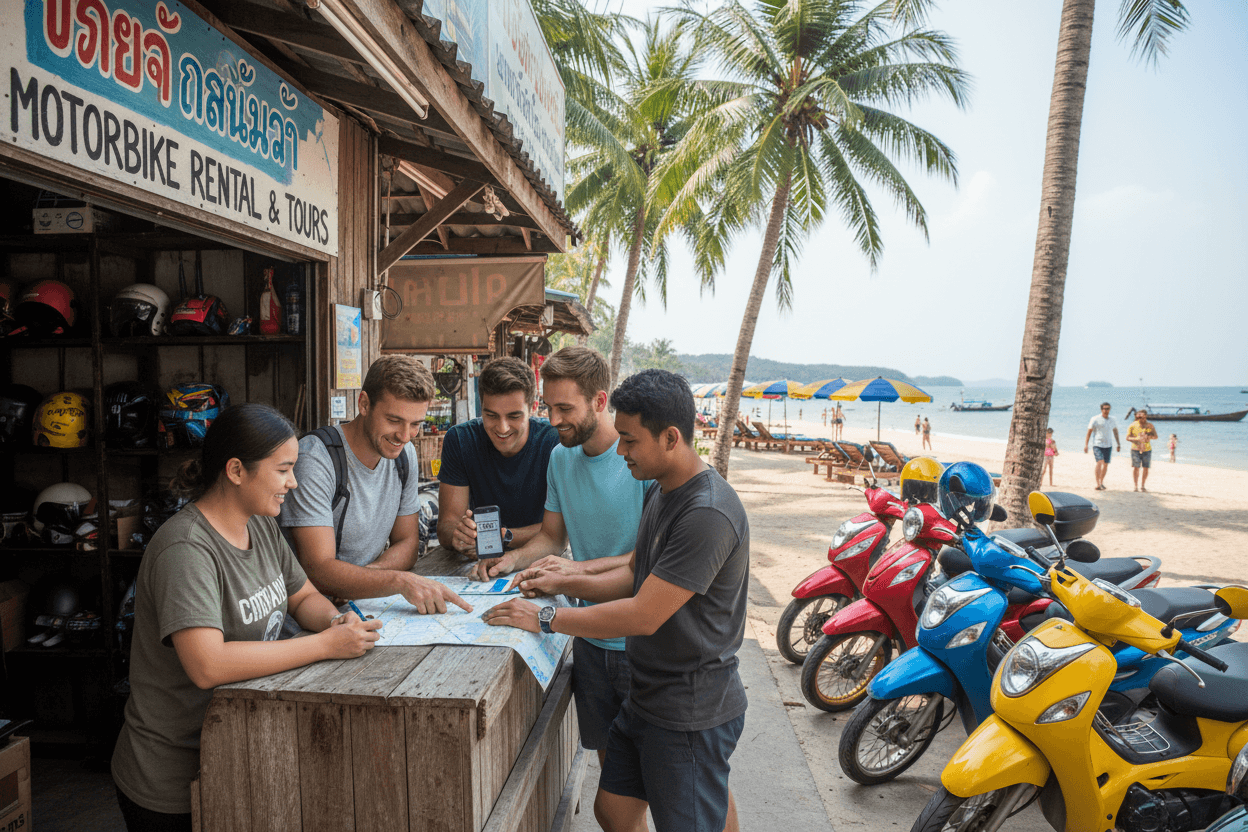
After the test: choosing a rental shop that won't undermine your effort
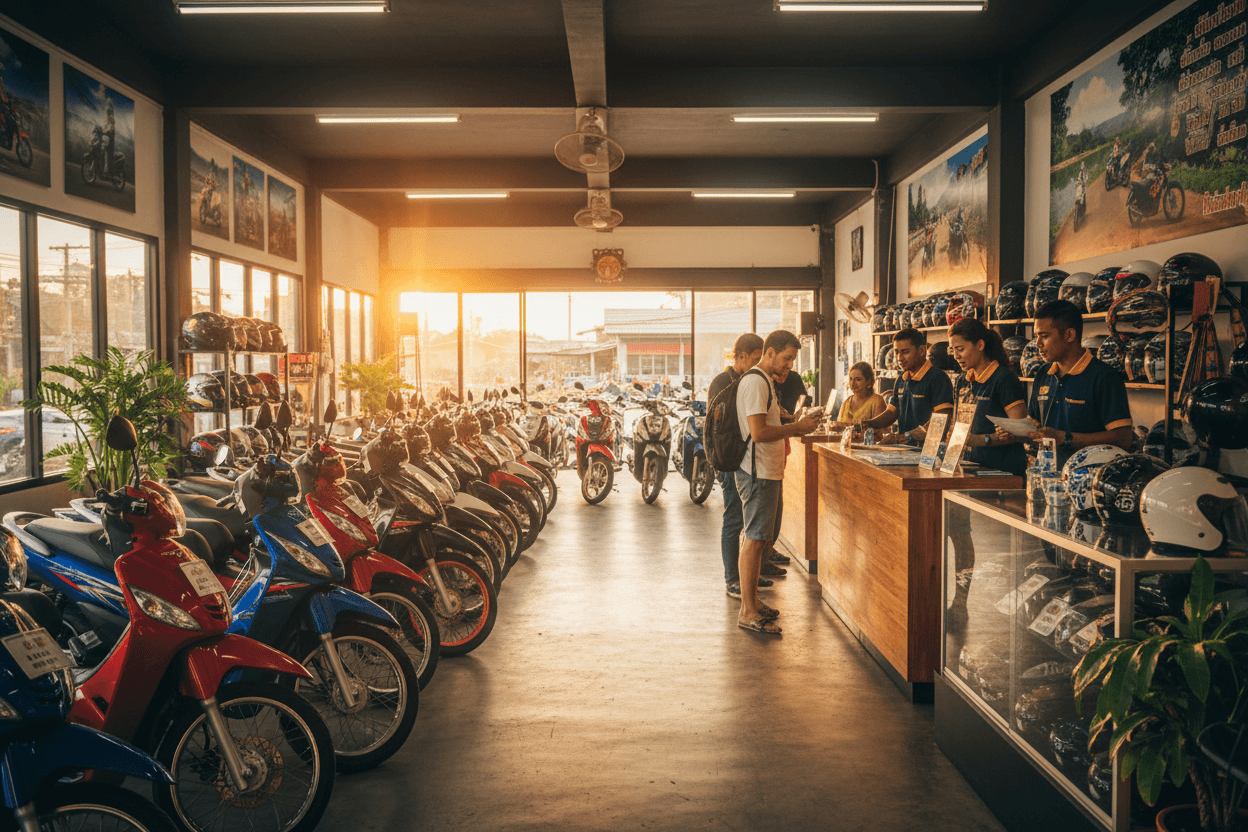
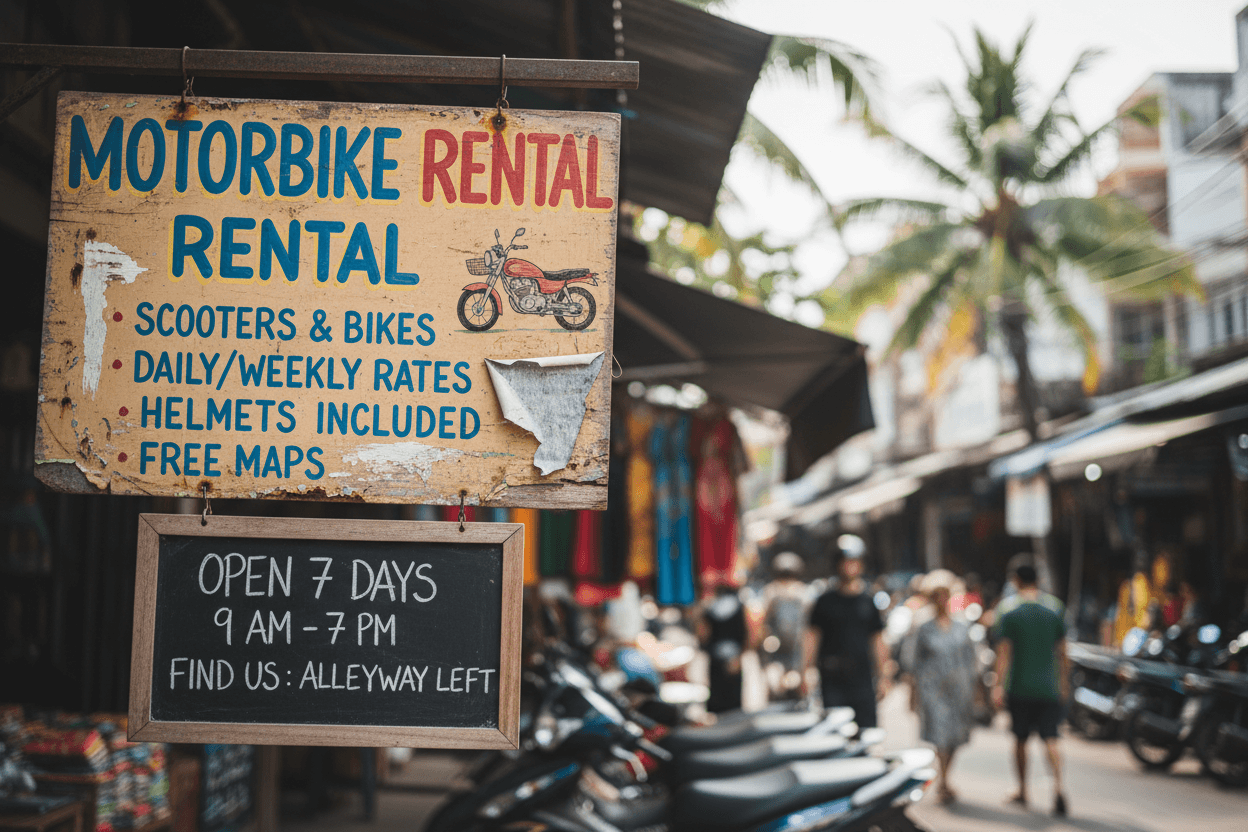
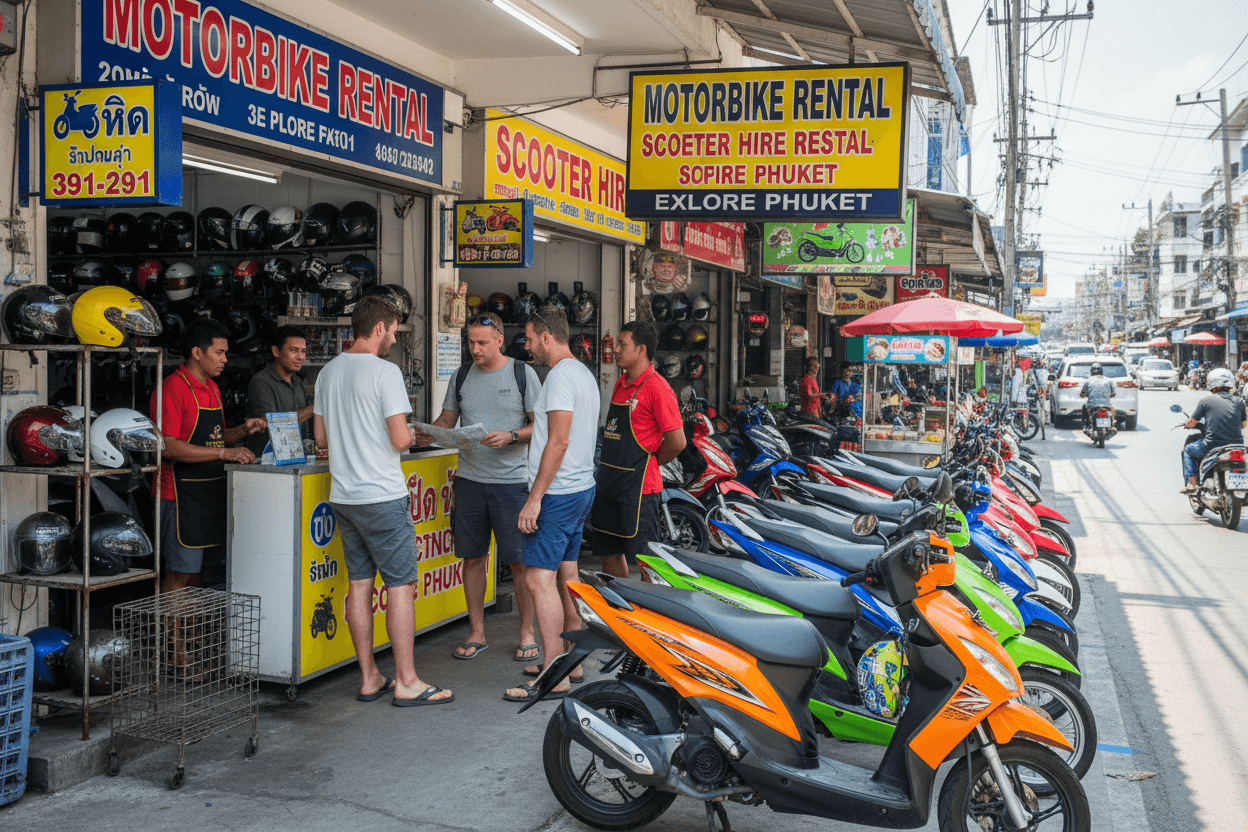
A Thai motorbike license in your wallet is half of legal riding. The other half is renting from a shop whose paperwork doesn't undermine your insurance. Walk into the wrong street shop after a successful DLT day and you've handed your passport to a guy who'll keep it as deposit and rent you a bike with bald tires; suddenly your license matters less than the scratch-fee dispute he's going to invent.
Vetted rental marketplaces enforce the same documentation discipline you just spent a day at the DLT proving you understood: cash deposits only, passport copies accepted, written rental agreements at pickup, and Por.Ror.Bor insurance verified at the shop level. The Motorbike Rental Thailand Guide walks through the rental-shop checklist; the Best Beginner Motorcycles in Thailand covers which Honda Click, Yamaha Filano, or PCX 160 model fits your route.
For long-stay riders, the monthly rental rate (2,000-4,000 THB/month for a 125cc Click) is significantly cheaper than the daily rate × 30; renting from one Byklo partner shop continuously is also how you build a track-record that makes future rentals frictionless.
Frequently Asked Questions
Can I rent a motorbike in Thailand without a Thai license?
Physically, plenty of street shops will rent without checking. Legally, no. Without a Thai license or a valid IDP with motorcycle endorsement plus your home-country license, every ride is illegal under the Traffic Act. Police-checkpoint fines run 500-1,000 THB per stop, and your travel insurance is voided in any accident.
Does my home-country car license cover a Thai scooter?
No. The Thai DLT and Thai law treat motorbikes and cars as separate license classes. A Category B (car) license, with or without a car-only IDP, does not authorize scooter riding. If you crash a scooter while holding only a car license, the insurance denial is automatic.
How long is the Thai motorbike license valid?
The first license is a 2-year temporary license issued after passing the DLT tests. Before it expires, you renew at the DLT for a full 5-year license. Subsequent renewals also extend in 5-year increments under current 2026 rules and typically don't require retesting (just a fresh medical certificate and the renewal fee).
Do I have to retake the theory or practical test for renewal?
Usually no. Renewal requires the aptitude pre-tests (color blindness, peripheral vision, depth perception, reaction time) and a shorter 1-hour road-safety video, but skips the theory and practical tests. Renew before expiry to keep this no-retest pathway; let the license lapse for over a year and you may need to repeat the full process.
Can I get a Thai license on a tourist visa?
Officially, no: non-immigrant visas are required. In practice, some provincial DLT offices process applicants on long visa-exempt stamps or at the discretion of individual officers. Bangkok and Chiang Mai DLT offices are stricter; smaller-province DLTs vary. Don't count on it.
How long does the entire DLT application day take?
Plan for 5-7 hours on the test day: 30 minutes for check-in and aptitude tests, 5 hours of road-safety video (or pre-watched online), 30-60 minutes for the theory test, 30 minutes for the practical test, and 15-30 minutes for photo and card printing. Document preparation (residence certificate especially) takes 1-3 working days before the appointment.
What if I fail the theory test?
The DLT lets you rebook the theory test only without redoing the documents or aptitude tests, typically within a few days. The medical certificate's 30-day validity is the harder constraint; if your certificate is close to expiry, get a fresh one before the retest.
Plan your post-license route
Once your Thai motorbike license is in hand, the country opens up properly. The Mae Hong Son Loop (600km, 1,864 curves) is the iconic northern route; the Pai Loop on Route 1095 compresses 762 of those curves into a 130km day; the Golden Triangle ride from Chiang Rai follows the Mekong border. Rent the right bike for your route at Byklo.rent: verified shops, cash deposits, passport copies accepted, free hotel delivery in 15 cities.