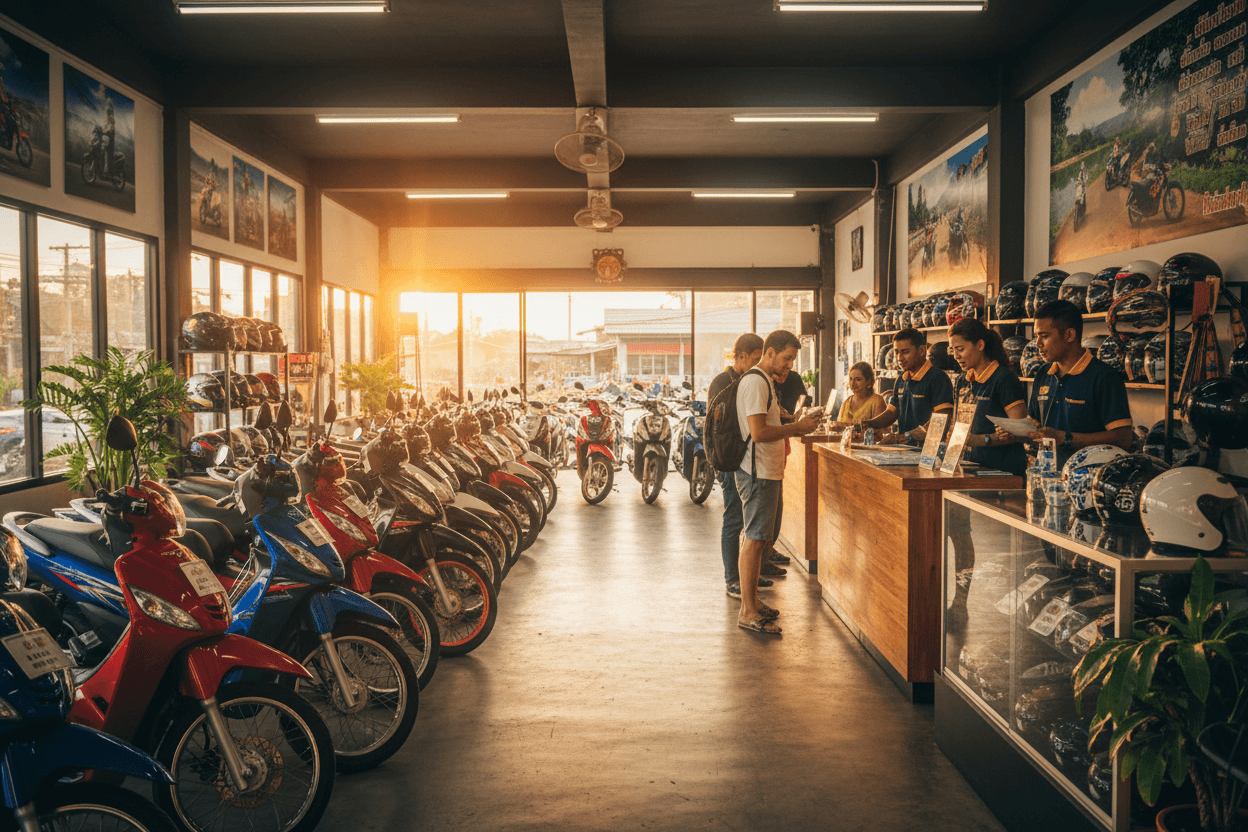
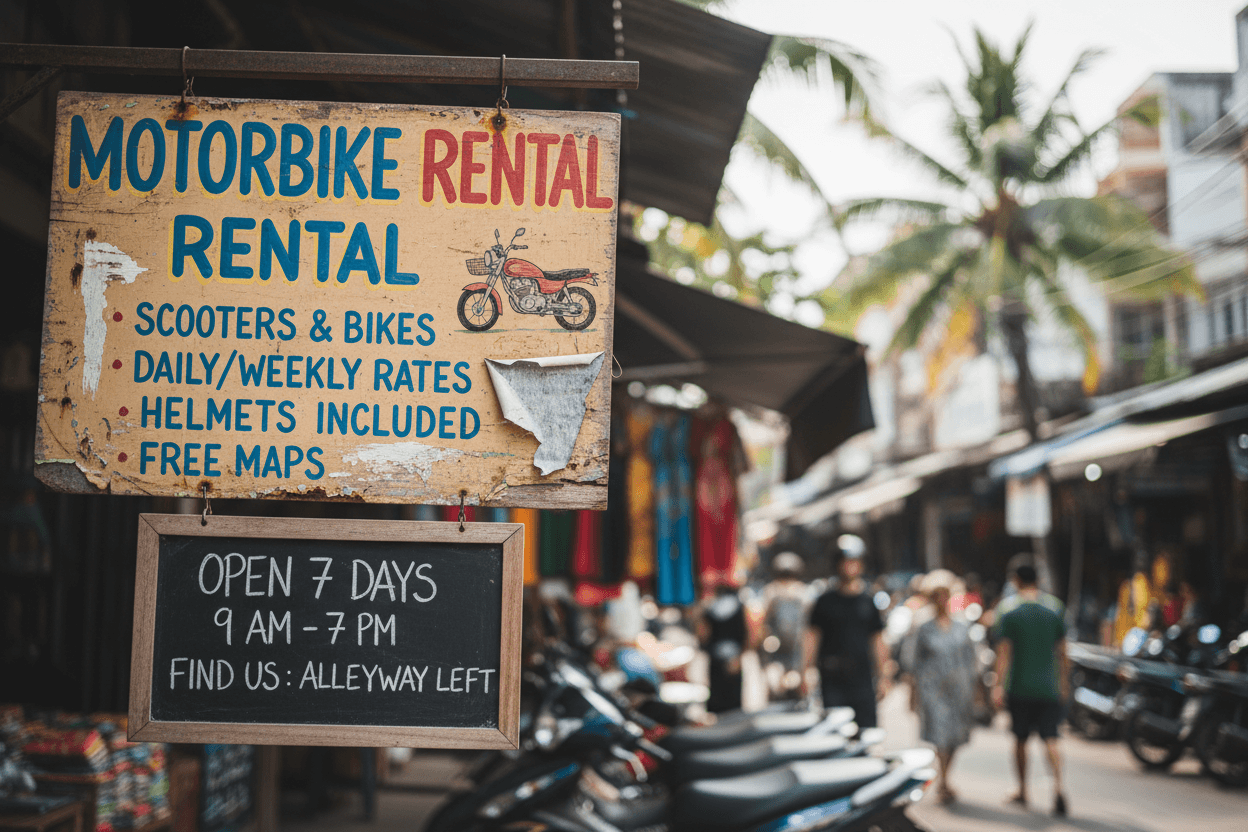
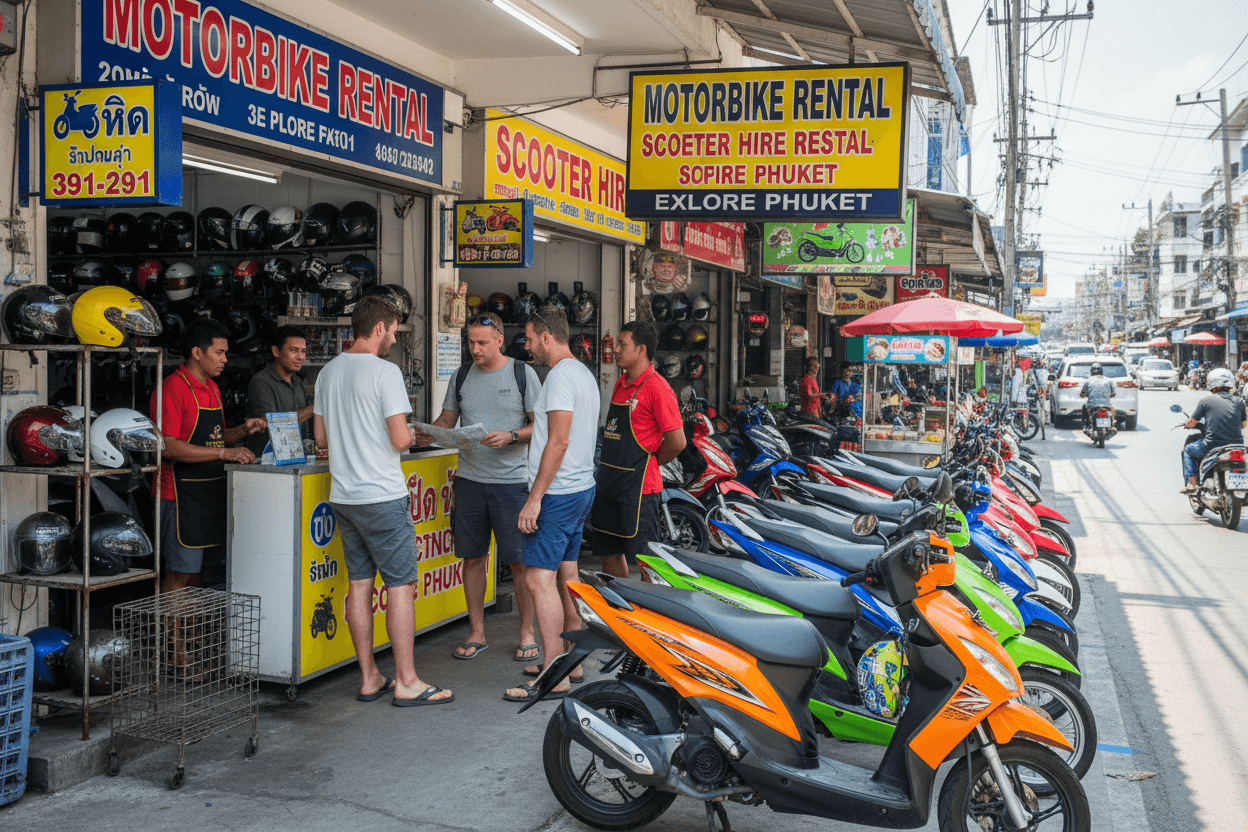
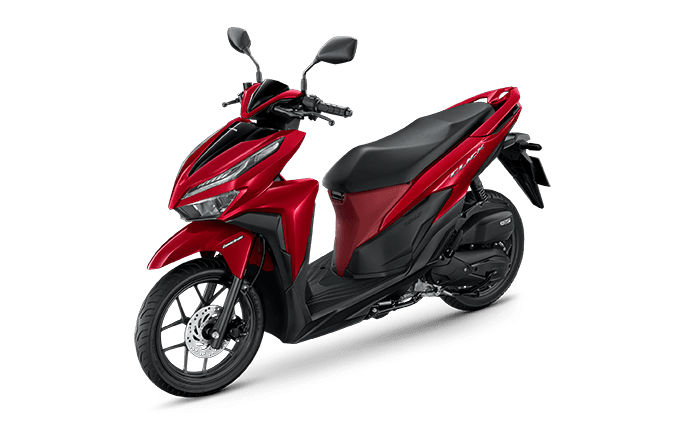
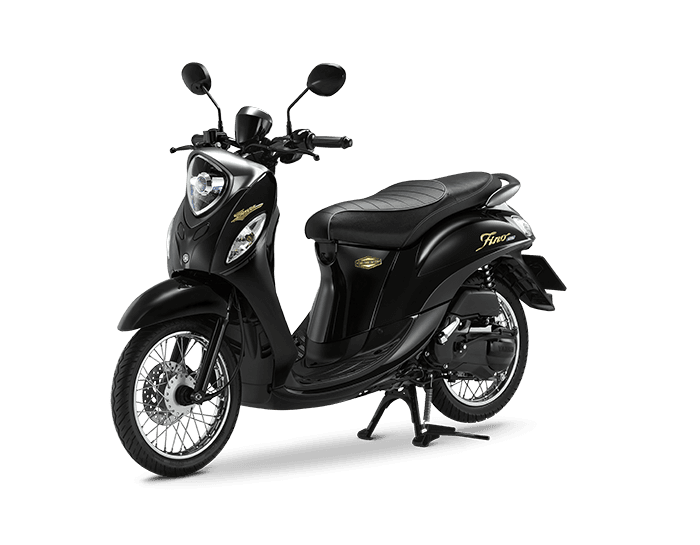
The best beginner motorcycles available in Thailand for 2026 rank in this order: Honda Click 125 (113 kg, 769 mm seat, 50+ km/L, 150-300 THB/day) for first-time renters, Yamaha Fino 125 for short riders and beach-town commuting, Yamaha NMAX 155 (131 kg, 765 mm seat, 250-450 THB/day) for two-up touring and taller riders, Honda PCX 160 (132 kg, 764 mm seat, 250-450 THB/day) for highway comfort, and Honda CB125F or MSX125 for confident learners who want a manual bike. Skip anything above 160cc until you've put 50 km on a 125cc automatic.
Key Takeaways
- Best overall: The Honda Click 125 (113 kg dry, 769 mm seat, 50+ km/L) wins on weight, fleet ubiquity, and 150-300 THB/day cost across Bangkok, Chiang Mai, Phuket, and Krabi.
- Best fuel economy: The Honda Click 125 averages 50-55 km/L, beating the Yamaha NMAX 155 (45 km/L) and Honda PCX 160 (45-48 km/L) on gasohol 95.
- Best for two-up touring: The Yamaha NMAX 155 (15 hp, 765 mm seat, real pillion grab handles) handles a passenger and luggage on Route 1095 to Pai better than any 125cc.
- Best for shorter riders: The Yamaha Fino 125 (96 kg, 765 mm seat) and Honda Click 125 (113 kg, 769 mm) let riders under 5 ft 4 in plant both feet flat at lights.
- Best for highway distance: The Honda PCX 160 (15.8 hp, 8.1 L tank, 320 km tank range) is the only sub-200cc automatic comfortable above 90 km/h for an hour.
- Skip until you're ready: The Honda MSX125 (Grom) and CB125F are genuine beginner manuals, but only after 50+ km on an automatic.
What separates a great beginner motorcycle from a tourist-trap rental?
A great beginner motorcycle has four ergonomic traits a confident first-time rider can detect within the first kilometer: a wet weight under 135 kg, a seat height between 760-790 mm, a fully automatic CVT (no clutch lever, no foot shift), and a centre of gravity that lets the bike turn on a 3 m radius without a foot dab. The Honda Click 125, Yamaha Fino, and Honda PCX 160 each hit all four; older Honda Wave 110 semi-autos miss the no-shift criterion and Honda Dream-class step-throughs miss the weight criterion when carrying a pillion.
Beyond ergonomics, a beginner-friendly fleet bike must be common enough that any roadside Thai mechanic can diagnose it in 15 minutes. The Honda Click 125 and Yamaha NMAX 155 are the two most-sold scooters in Thailand by some margin, so spare parts (a snapped brake lever, a torn seat cover, a CDI unit) are 200-800 THB and same-day. A Vespa GTS or KTM 125 Duke as a "first rental" looks cool on the photos but means a 3-day grounding if anything snaps in Pai or Krabi Town. For the wider price context across cities, see the Thailand scooter rental cost breakdown.
The third filter is brake quality. Every 2026 Honda Click 125 and Yamaha NMAX 155 ships with combined-braking (CBS) on the rear lever and ABS on the front. Older fleet bikes from 2019 or earlier may have neither. Insist the rental form lists model year; brakes are the single biggest gap between a 4-year-old Click and a current-year one, and the differential matters most in Bangkok rain.
Top six beginner motorcycles ranked by ride feel and Thai rental fit
The six bikes below cover every legitimate beginner use-case in Thailand for 2026: pure city commuting, two-up beach-town touring, occasional highway runs to Pai or Doi Suthep, and the rare beginner who wants to learn a manual transmission while in Thailand. The list is ranked by overall first-rental fit, weighted toward weight, seat height, fuel economy, and parts availability rather than peak horsepower.
The Click 125 ranks first because it is wrong on no axis: light enough for a 150 cm rider, fast enough to keep up with Bangkok rush-hour traffic at 80 km/h, frugal enough that 150 THB of fuel covers a full Phuket day, and rentable from at least one shop in every city Byklo serves. The Fino 125 ranks second only because its 9 hp is genuinely thin on hills; on Doi Suthep or the Phuket Big Buddha climb it drops to 30-35 km/h two-up. For taller riders or anyone planning a Pai Loop day, jump straight to a NMAX 155 or PCX 160.
The CB125F and MSX125 sit at the bottom of the beginner list, not because they are bad bikes (the CB125F in particular is one of the best entry manuals on sale anywhere), but because Thailand is a poor place to learn clutch coordination for the first time. Bangkok's stop-go traffic, Chiang Mai's tight Old City lanes, and Phuket's hill switchbacks all punish the rider who stalls on the launch. Save the manual for a quieter market and rent the Click on day one.
Honda Click 125 vs Yamaha Fino 125: the entry-level head-to-head
The Honda Click 125 and Yamaha Fino 125 are Thailand's two best-selling beginner scooters and the two cheapest realistic rentals at 150-300 THB per day in 2026. The Click is heavier (113 kg vs 96 kg), more powerful (11 hp vs 9 hp), and runs liquid-cooling that holds output in 38 C Bangkok heat. The Fino is lighter, prettier, and 4 mm lower in the seat. For most first-time riders, the Click's extra grunt on a Doi Suthep climb or a Sukhumvit overtake is worth more than the Fino's 17 kg weight saving and styling.
The Fino's smaller fuel tank is its real shortcoming on a multi-day trip. At 4.2 L vs the Click's 5.5 L, the Fino needs a refuel every 200 km versus the Click's 280-300 km tank range. On a Pai Loop day where the petrol stations between villages are 30+ km apart, that extra range stops being a luxury. For pure city use in Chiang Mai's Old City or Phuket Town, both bikes do the job and the Fino's softer ride tends to wins on cobbled roads.
A quick word on the Yamaha Filano (sometimes labeled Grand Filano in Thailand). It sits between the Fino and the NMAX in spec: 125cc, 9.4 hp, 102 kg, 770 mm seat, 4.2 L tank. Where stocked, it rents at the Fino's price (150-280 THB) and is a credible substitute for riders who want the Fino style with slightly more cargo space. Most rental shops carry one or the other, not both.
Yamaha NMAX 155 vs Honda PCX 160: which is the better step-up?
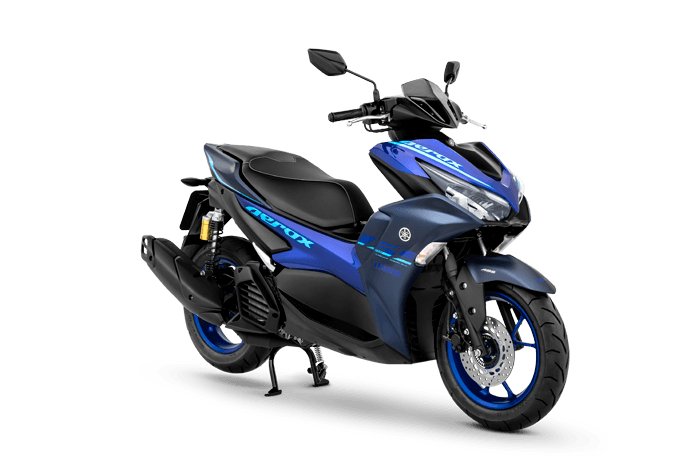
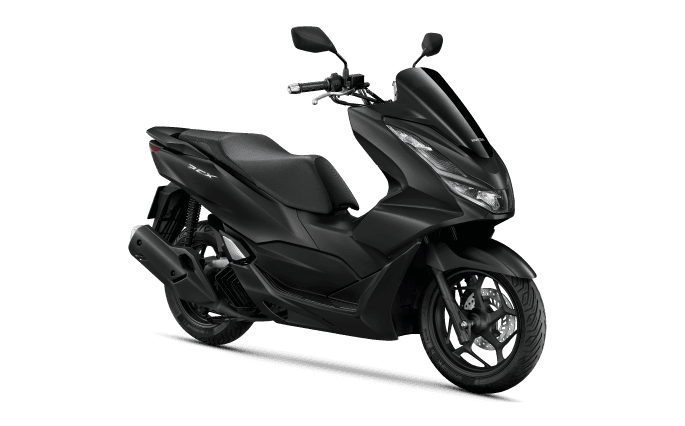
The Yamaha NMAX 155 and Honda PCX 160 are the two real touring scooters in the 250-450 THB-per-day band. The NMAX is sportier and sharper on switchbacks (15 hp, 131 kg, 765 mm seat); the PCX is plusher and quieter on highway distance (15.8 hp, 132 kg, 764 mm seat, 8.1 L tank vs NMAX's 7.1 L). For a two-up day from Krabi Town to Tup Kaek viewpoint or a solo highway hour from Hua Hin to Cha-Am, the PCX wins on comfort. For a 130 km solo Pai Loop with curve density, the NMAX wins on responsiveness.
Both bikes ship with proper ABS on both wheels in 2026, which is the headline difference vs the Click 125's CBS-only setup. For a beginner doing a single day in mixed weather (a mid-monsoon afternoon in Chiang Mai, say), real ABS pays for itself the first time a soi soi-dog runs out at 50 km/h. The PCX's larger tank also matters on the Mae Hong Son Loop and on the long Highway 7 stretch into Bangkok.
The honest case against both bikes for a true first-time renter: 131-132 kg is 18-19 kg more than the Click 125, and the extra mass shows up the moment you push the bike backwards out of a parking spot. If you cannot comfortably hold a 130 kg bike on a slight downhill incline at a fuel station, rent the Click first and step up after a 50 km familiarization day. The cost of that one-day intermediate is 150-300 THB; the cost of dropping a NMAX onto your shin is a 5,000-15,000 THB scratch dispute and a likely ankle sprain.
Beginner manual options: when does an MSX125 or CB125F make sense?
Manual motorcycles are a poor first-day rental in Thailand for 90% of beginners. Bangkok traffic, Chiang Mai's tight lanes, and a 38 C cabin temperature compound the cognitive load of clutch-and-shift coordination on top of left-side traffic and unfamiliar road furniture. The 10% of riders for whom an MSX125 (Grom) or Honda CB125F do make sense are those who already ride a manual in their home country and want the engine-braking control of a real gearbox on long descents like Doi Inthanon's summit road or the Samoeng Loop downhill.
The MSX125 (sold as the Grom outside Thailand) is the more interesting pick for a confident urban rider: it weighs less than a Yamaha Fino, has a 761 mm seat that suits 150 cm riders, and the 4-speed manual rewards a rider who actually wants to engage with the gearbox. Where it falls short is touring; the 12-inch wheels are nervous over potholes and the riding position is awkward beyond 30 minutes. Stay inside city limits.
The CB125F's headline number is the 13 L tank, which gives it 600+ km of range on one fill at 60 km/L. It is the closest thing to a 125cc adventure-touring bike on rent in Thailand, and a rider already fluent on a manual will adapt to it in under 10 km. For a multi-day Nan Loop on Route 1148 at the cheap end of the rental market, a CB125F at 250-350 THB/day is a genuinely strong choice.
Common beginner mistakes that turn a Thailand rental into a horror story
Every named scam pattern in Thailand has a specific bike-class or paperwork mistake at the root. The five mistakes below cover roughly 80% of disputes Byklo's verified shops report, and all five are avoidable in 90 seconds at the rental counter. The full taxonomy lives in the rental dispute patterns breakdown, but for a beginner specifically these are the ones that hurt the most.
The first mistake is renting above your skill class. A first-time rider on a 250cc Honda CRF250L Rally because "it looks adventure" is one wet hairpin away from a 30,000 THB drop. Stay on a 125cc automatic for the first 50 km. The second mistake is leaving the original passport as deposit. Reputable shops accept 1,000-2,000 THB cash plus a passport copy; any shop that demands the original document is positioning for a passport-hostage scratch dispute. Walk away.
The third mistake is skipping the 5-minute pre-ride inspection. Photograph every existing scratch, dent, scuff, and tire-tread depth before signing. The fourth mistake is filling the tank with the wrong fuel; modern Thai fleet bikes (Click 125, NMAX 155, PCX 160) are tuned for gasohol 95, the green pump. Octane 91 will run, but the engine knock over thousands of cycles can damage the cylinder head and the rental shop bills you for it. The fifth mistake is riding without a properly-fastened DOT or ECE-rated helmet; the included shop helmets are often unrated, and Thai checkpoint police fine 500-1,000 THB whether the helmet is sub-standard or simply unfastened.
How beginner bike choice changes by Thai region and route
Thailand's geography pushes beginners toward different bike classes by region. Bangkok and Phuket Town reward the lightest, most flickable scooters because lane-splitting through stalled traffic is a daily reality; the Honda Click 125 and Yamaha Fino are the right call. Chiang Mai's Old City demands the same lightweight class for the moat traffic, but a single Doi Suthep day pushes you toward a NMAX 155 or PCX 160 for the climb. Krabi and Phuket beach-town touring (Ao Nang to Tup Kaek, Patong to Promthep Cape) reward the 150-160cc class for the two-up dimension and the highway stretches. Pai and the Mae Hong Son Loop start to make a 250-400cc manual or adventure bike worth considering, but only well past beginner status.
For city-specific deep dives, see the Bangkok motorbike rental guide, the Chiang Mai motorbike rental guide, the Phuket scooter rental guide, and the Koh Lanta motorbike rental guide. Each names the specific neighborhoods and shops where the recommended class above is most reliably stocked.
Frequently Asked Questions
What is the safest motorcycle for a first-time rider in Thailand?
The Honda Click 125 is the safest beginner motorcycle on Thai rental fleets in 2026. At 113 kg dry it can be picked up if dropped, the 769 mm seat lets shorter riders plant both feet at lights, the 11 hp engine is quick enough to escape Bangkok traffic without overwhelming a novice, and the 2026 model has front-wheel ABS plus combined-braking on the rear. It is also the most-stocked bike at every Byklo-verified shop.
Can I rent a motorbike in Thailand without a motorcycle license?
Physically, plenty of street shops will rent without checking. Legally, no. Thai law requires a valid home-country motorcycle license PLUS your home-country IDP (Geneva Convention with the "A" motorcycle endorsement). A car license or car-only IDP does not authorize a Honda Click 125. Police checkpoint fines run 500-1,000 THB on the spot, and your travel insurance is typically void in any crash where you weren't legally licensed.
Is a Honda Click 125 fast enough for highway riding in Thailand?
The Honda Click 125 tops out around 95-100 km/h on flat ground, which makes it usable but not comfortable on a Highway 4 stretch from Krabi to Phuket or the Highway 35 expressway out of Bangkok. For more than 30 minutes of sustained highway riding, the Honda PCX 160 or Yamaha NMAX 155 (both 100-110 km/h cruise) is a real upgrade. For city, island, and short rural touring, the Click is more than enough.
What's the difference between a Yamaha Fino and a Yamaha Filano?
Both are 125cc Yamaha automatic scooters aimed at the same beginner segment. The Fino is the lighter and more retro-styled (96 kg, 4.2 L tank), while the Filano (sometimes branded Grand Filano) is slightly heavier and more practical (102 kg, more under-seat storage, similar 4.2 L tank). They rent at the same price (150-280 THB/day) and most shops carry one or the other rather than both. For a beginner, either works; pick whichever the shop stocks.
How much does the cheapest beginner motorcycle rental cost in Thailand?
Honda Click 125 and Yamaha Fino daily rentals start at 150 THB in Pai's Walking Street, Hua Hin's main strip, and Chiang Mai's Old City. Bangkok and Phuket Town run 150-300 THB; Patong and Bangla Road sometimes touch 350 THB. Weekly rates save 15-25%; monthly rates save 40-50%. The full city-by-city table is in the Thailand scooter rental cost breakdown.
Should I rent a 125cc or a 150cc as my first bike in Thailand?
Rent a 125cc on day one, regardless of your riding experience. The 17 kg weight saving from a 113 kg Click to a 131 kg NMAX shows up the moment you push the bike backwards out of a parking spot or hold it at a stop on a slight incline. After a 50 km familiarization day, swap to a 155-160cc only if your itinerary genuinely requires it (two-up, sustained highway, or a mountain day). The cost of the swap is one extra day's rental.
Are Honda Wave 110 underbones a good beginner option?
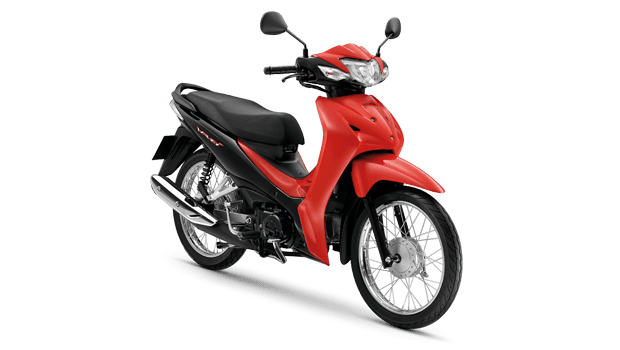
Generally no for foreign first-time riders. The Wave's semi-automatic underbone gearbox sits in an awkward middle ground: it has a foot shifter (so your brain learns clutch-less shifting) but no real clutch lever for engine-braking on descents. On flat city streets the Wave is fine; on Doi Suthep, Phuket Big Buddha, or any Pai Loop hairpin it bogs in the wrong gear. Rent a Honda Click 125 automatic at the same 150-300 THB/day instead.
Plan your first Thailand rental before you land
The best beginner motorcycle in Thailand for 2026 is whatever your nearest verified shop has the most of, which in practice is a Honda Click 125 in any of Bangkok's Sukhumvit, Chiang Mai's Old City, Phuket's Patong, or Krabi's Ao Nang. The 150-300 THB-per-day rate buys a 113 kg, 50+ km/L scooter you can drop and pick up unaided, learn on inside one afternoon, and return without drama. The 50-100 THB-per-day premium for a verified Byklo partner over a tourist-strip walk-in is the cheapest insurance against a passport-hostage scratch dispute, an unrated helmet, or a 4-year-old bike with worn pads.
Compare the Honda Click 125, Yamaha Fino, NMAX 155, and PCX 160 across verified shops in 15 Thai cities at Byklo.rent. Free hotel delivery on every listing, cash deposits accepted, passport stays in your pocket. Read the companion Thailand-context first-time renter guide for the rental-shop walkthrough, and the Thailand motorbike rental guide for the full process from booking to return.