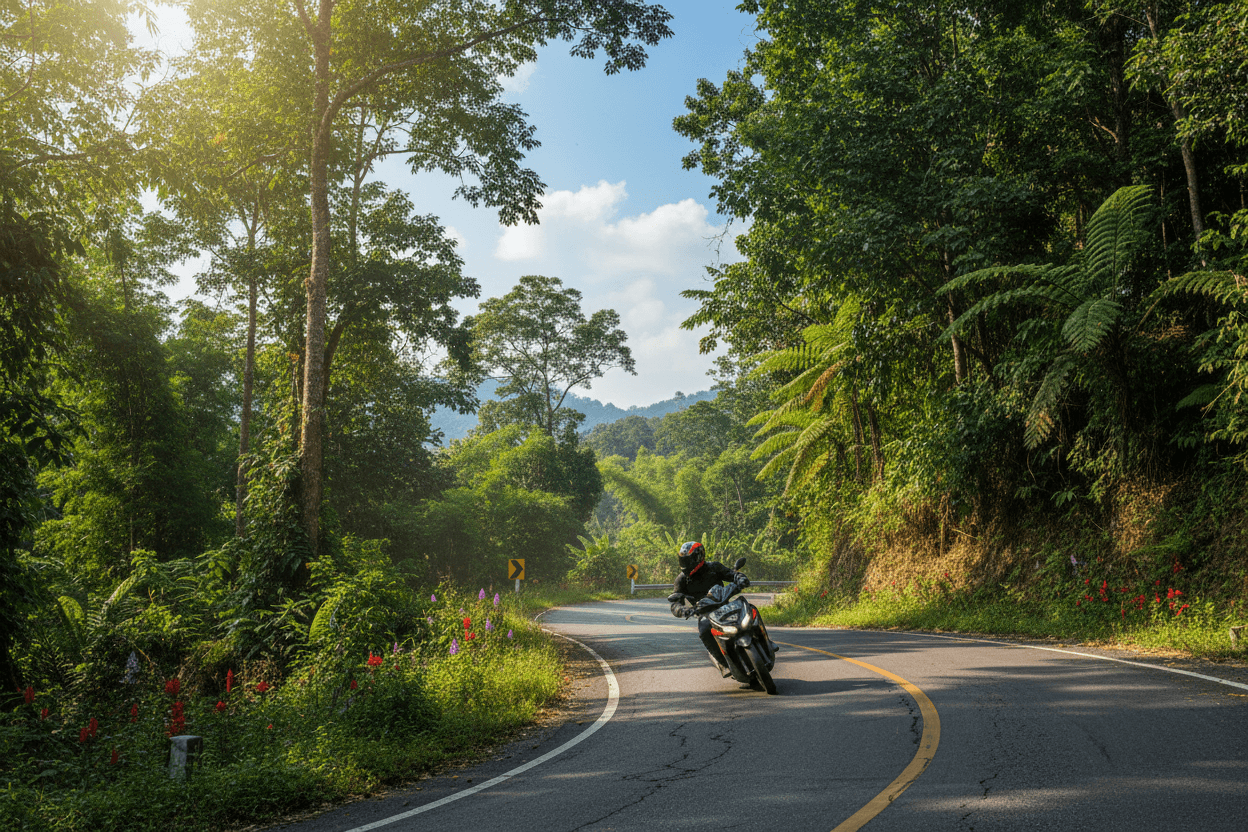
The Chiang Mai Old City is a 1.6 km moat-enclosed historic core that fits in a 1-day itinerary on a 150-300 THB Honda Click 125 from any Tha Phae Gate shop. Four headline wats (Wat Phra Singh, Wat Chedi Luang, Wat Phan Tao, Wat Inthakhin Saduemuang), the Three Kings Monument, the Inthakhin City Pillar shrine, and the Sunday Walking Street on Ratchadamnoen Road all sit inside the moat. Ride times between any two temples are under 8 minutes; rental shops cluster every block on Moonmuang Road and Ratchaphakhinai Road.
Key Takeaways
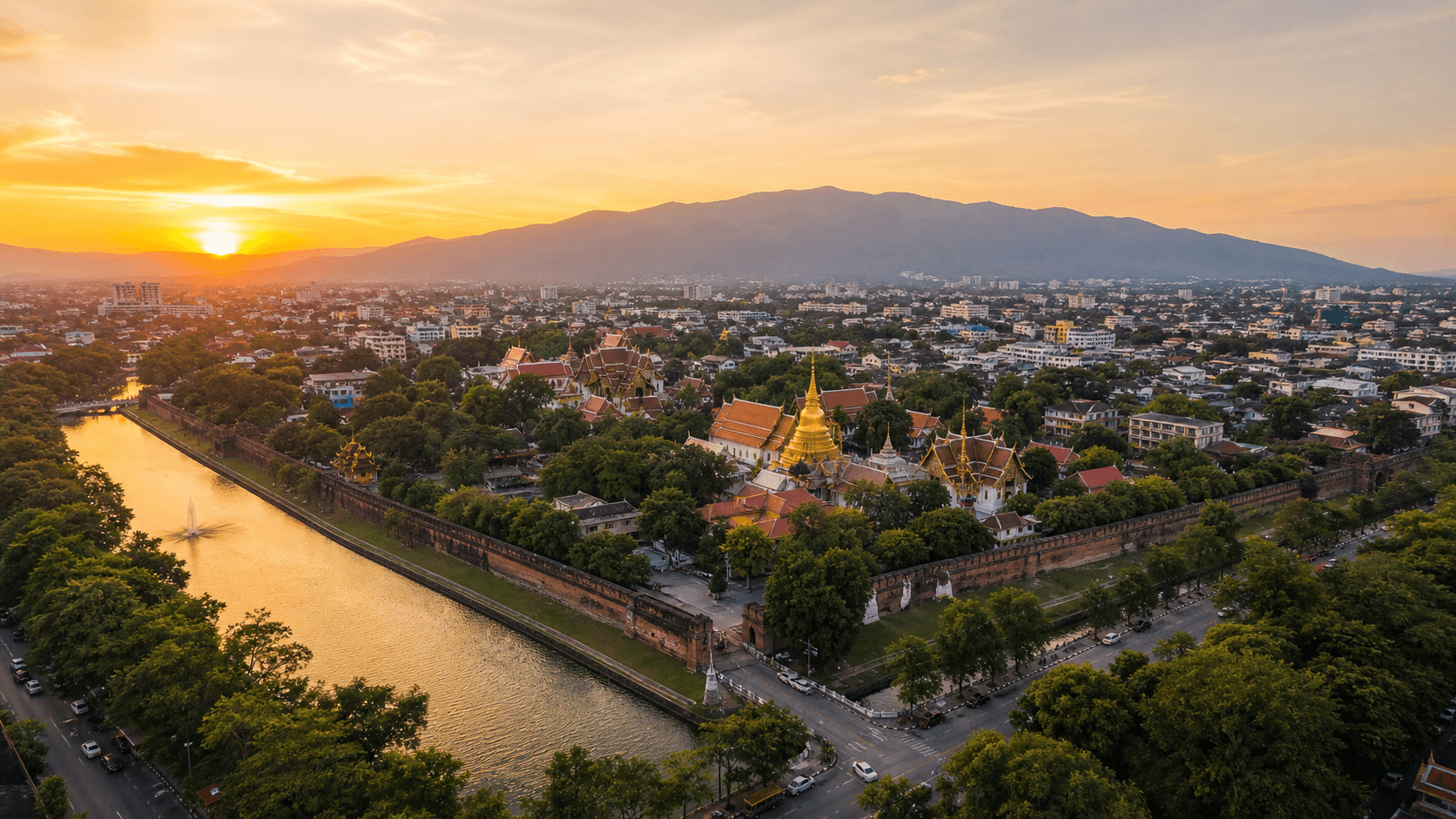
- Old City footprint: A 1.6 km × 1.6 km square founded in 1296 by King Mangrai as the Lanna Kingdom capital; bounded by a 1.8 km surviving moat and brick wall remnants at four named gates.
- Headline temples: Wat Phra Singh (Ratchadamnoen Road, free), Wat Chedi Luang (Phra Pok Klao Road, 50 THB), Wat Phan Tao (free, all-teakwood viharn), and Wat Inthakhin Saduemuang (free, the City Pillar shrine on Inthakhin Road).
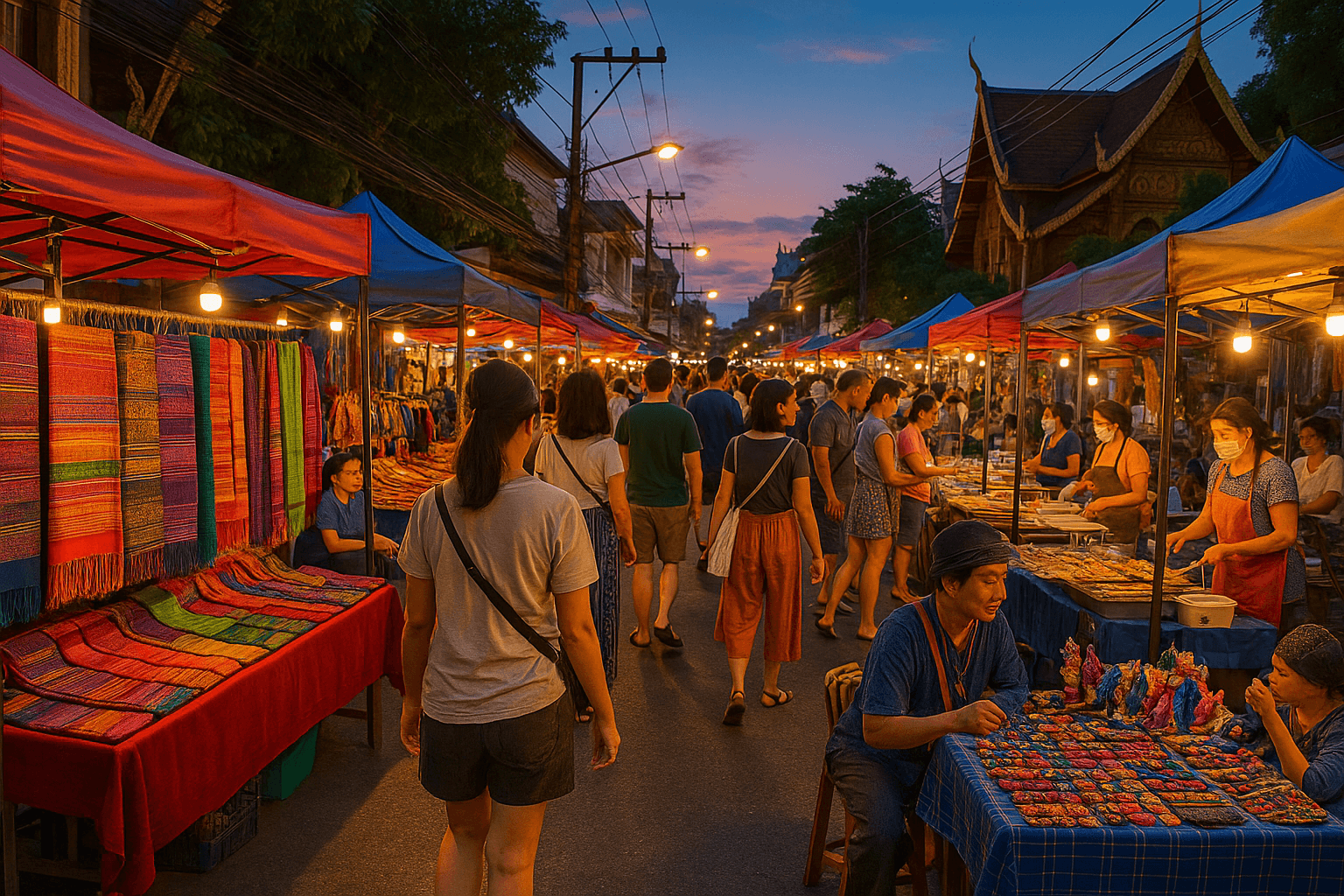
- Walking streets: Sunday Walking Street runs Ratchadamnoen Road from Tha Phae Gate east-to-west 16:00-23:00; Saturday Walking Street runs Wualai Road south of Chiang Mai Gate at the same hours.
- Scooter rate and fuel: 150-300 THB/day for a Honda Click 125 from any Old City shop; the full 7 km Old City loop burns under 0.2 litres (8-10 THB at 2026 PTT prices).
- Best window: November to February for cool, clear riding weather (15-30 °C); avoid March-May "burning season" (PM2.5 routinely 150-300 µg/m³) and Songkran water zones (April 13-15).
- Parking norm: 20 THB inside any temple courtyard; never on the moat verge or footpath, where Royal Thai Police ticket foreign-plated rentals at 500 THB.
Why the Old City is Chiang Mai's natural rental base
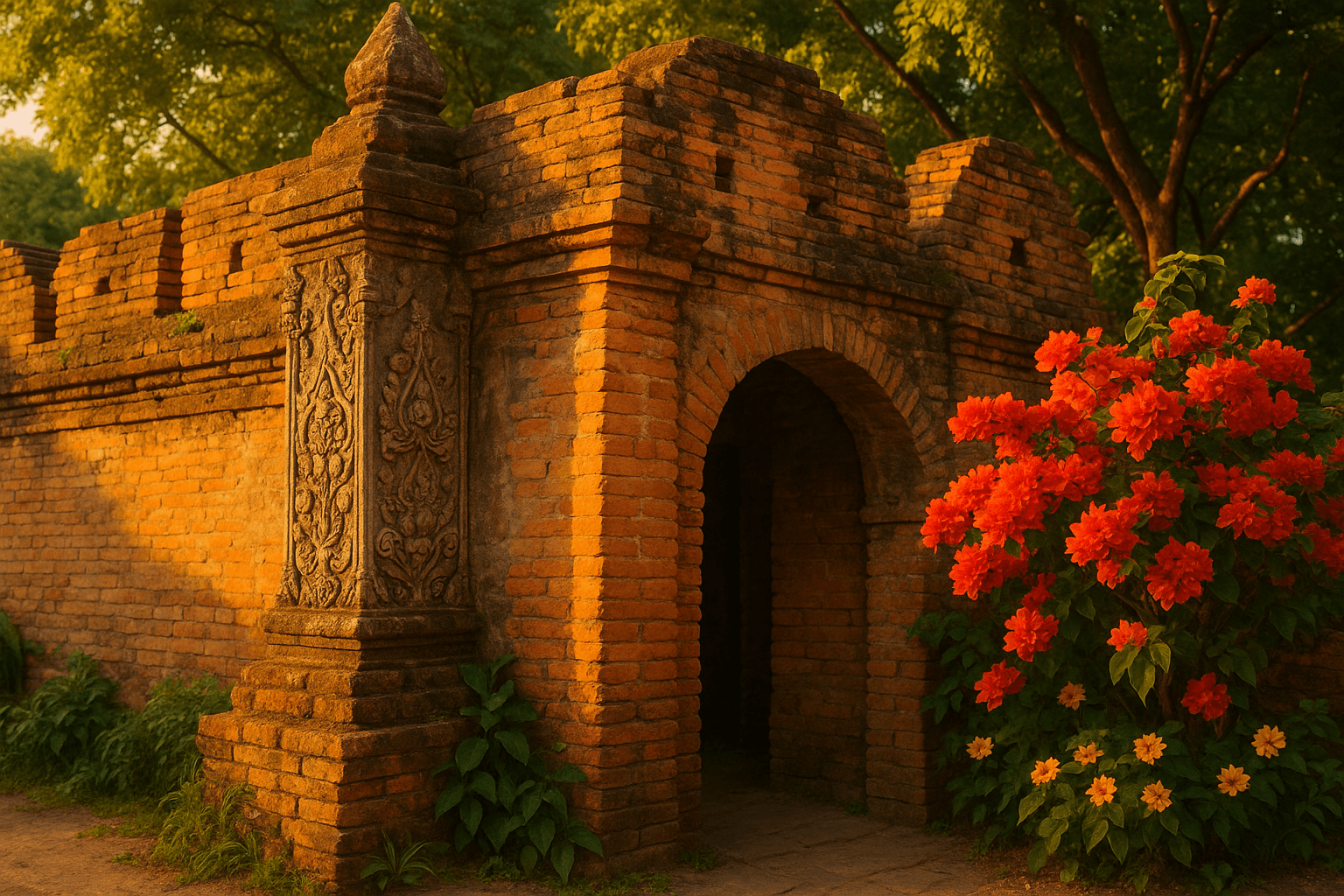
Chiang Mai's Old City is the 1.6 km × 1.6 km moat-enclosed square founded in 1296 by King Mangrai as the Lanna Kingdom capital, and it is the densest concentration of wats, walking-street markets, guesthouses, and motorbike rental shops in Northern Thailand. The walls and moat that defined the original royal capital still trace the modern district boundary; the four corner gates (Tha Phae east, Chang Phueak north, Suan Dok west, Chiang Mai Gate south) channel every road into the same square.
The four-gate layout matters because every Old City rental shop, hostel, and food market clusters within 200 m of one of those four gates. Tha Phae Gate (the eastern entry on Ratchadamnoen Road) is the historical visitor approach and now the densest scooter-rental cluster, with 15+ shops on Moonmuang Road and Ratchaphakhinai Road inside the walls. Chang Phueak Gate to the north opens onto the Manee Nopparat Road north-bound traffic and the Chang Phueak Gate Night Market. Suan Dok Gate to the west exits toward Suthep Road, Wat Suan Dok, and the Doi Suthep climb on Route 1004. Chiang Mai Gate to the south opens onto Wualai Road and the Saturday Walking Street.
Inside the walls, five named roads carry almost all the foot and scooter traffic. Ratchadamnoen Road runs Tha Phae Gate west to Wat Phra Singh and is the Sunday Walking Street trace. Phra Pok Klao Road runs north-south through the centre, past Wat Chedi Luang and the Three Kings Monument. Moonmuang Road runs the inside-east edge of the moat with most of the rental shops and budget guesthouses. Ratchaphakhinai Road parallels Moonmuang one block in. Singharat Road runs the inside-west edge toward Suan Dok Gate. The deeper Chiang Mai 5-day itinerary builds the rest of the city out from this Old City base.
What to see inside the moat
The Old City's must-see roster is six landmarks tightly packed on a 7 km loop: Wat Phra Singh, Wat Chedi Luang, Wat Phan Tao, the Three Kings Monument, the Inthakhin City Pillar shrine, and Tha Phae Gate itself. Add Wat Inthakhin Saduemuang on Inthakhin Road and you have the full inside-moat heritage day. Every site sits within a 1 km radius of the Three Kings Monument, the Old City's geographic centre.
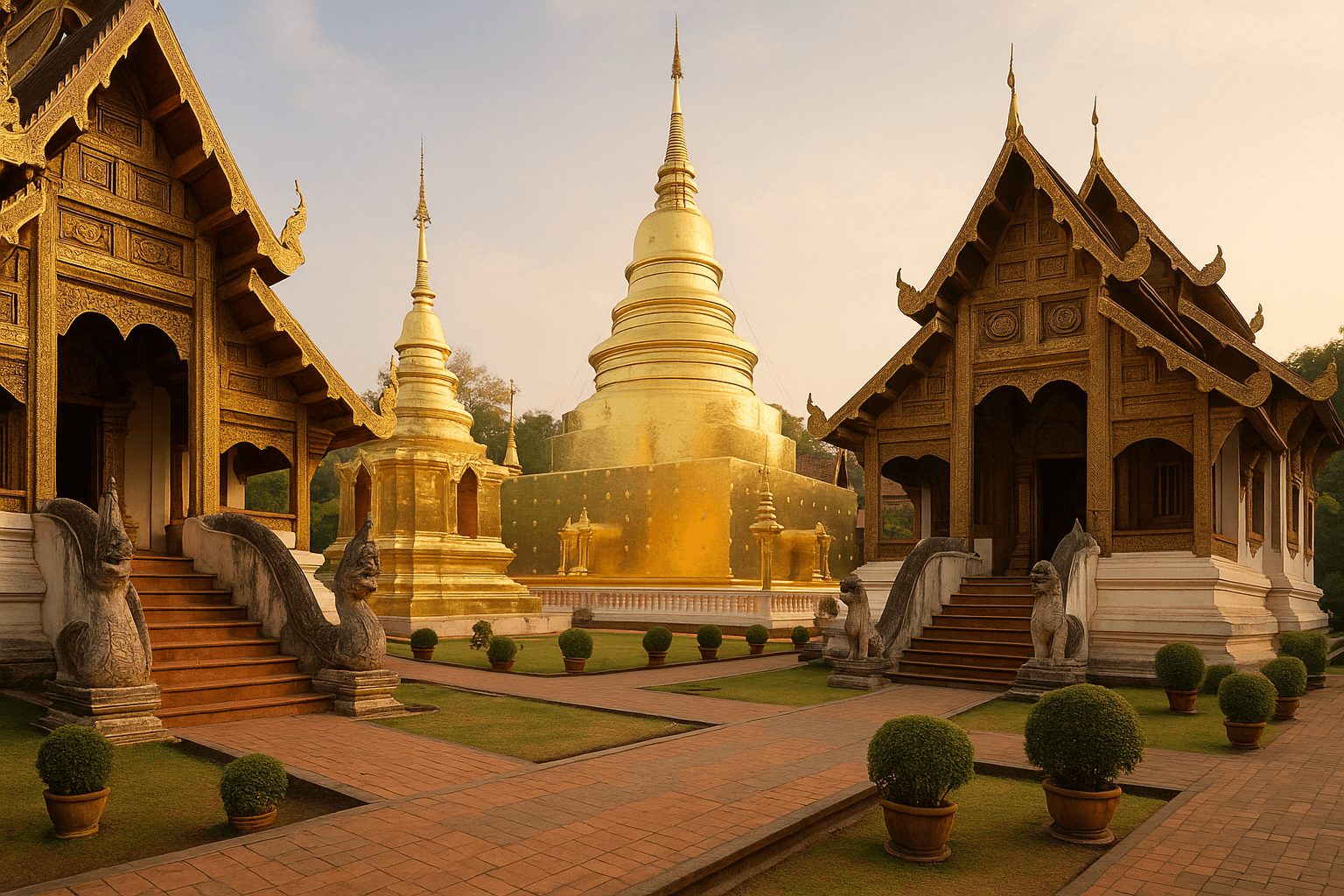
Wat Phra Singh on Ratchadamnoen Road, 800 m west of Tha Phae Gate, is the Lanna painting and woodwork pinnacle. Free entry, free courtyard parking, sarong rental 50 THB at the gate. The Viharn Lai Kham (finished 1345) houses the namesake Phra Singh Buddha image and 14th-century gold-on-red murals depicting the Sang Thong jataka and medieval Chiang Mai daily life. Wat Chedi Luang on Phra Pok Klao Road, 1.4 km south-west of Tha Phae Gate, is the Old City's anchor temple: 50 THB foreigner entry, 20 THB courtyard parking, the 60 m brick stump of the original 84 m chedi (felled by the 1545 earthquake), and the Inthakhin City Pillar shrine on the same compound that locals still venerate during the May Inthakhin Festival.
Wat Phan Tao shares a wall with Wat Chedi Luang and is the rare all-teakwood Lanna viharn (free entry, peacock door reliefs, 19th-century reconstruction of an older 14th-century structure). Wat Inthakhin Saduemuang sits 100 m north of Wat Chedi Luang on Inthakhin Road and is the original location of the City Pillar (moved to Wat Chedi Luang under King Saen Muang Ma); free entry, quiet weekday morning visit. The Three Kings Monument on Phra Pok Klao Road honours King Mangrai (Lanna founder), King Ramkhamhaeng (Sukhothai), and King Ngam Muang (Phayao); free public square, the Lanna Folklife Museum sits in the same compound for 90 THB foreigner entry. Tha Phae Gate itself is a 24/7 free public square at the eastern moat entry and the staging ground for the Sunday Walking Street.
Where to eat inside the moat
Old City eating splits cleanly between three named local markets and a dense walking-street food economy. Somphet Market on Moonmuang Road (open 04:00-13:00, free entry) is the local fresh-produce market favoured by hostel kitchens; the sai ua sausage and khao soi noodle stalls along the south edge serve breakfast for 40-60 THB. Inthakhin Market on Inthakhin Road is the smaller weekday market between Wat Chedi Luang and Chang Phueak Gate and runs 06:00-12:00 with the same khao soi-and-northern-curry density. Chang Phueak Gate Night Market opens 17:00-midnight on the north exterior of the moat and is the cao kha mu (stewed pork leg) anchor; expect a queue at the famous "cowboy hat lady" stall.
The walking-street food economy turns on the day. Sunday Walking Street (Ratchadamnoen Road, 16:00-23:00) has the deepest food line on the corner of Ratchadamnoen and Phra Pok Klao Road, with northern Thai specialties (khao soi, sai ua, khao kha mu, mango sticky rice) at 40-80 THB per dish. Saturday Walking Street on Wualai Road south of Chiang Mai Gate runs the same hours and is heavier on silver-craft and lighter on food. Any other evening, the Tha Phae Gate East Side cluster (the 200 m strip immediately outside the eastern moat) holds the year-round restaurants: Khao Soi Khun Yai (the inside-moat khao soi anchor), the David's Kitchen riverside option, and the Aroon Rai northern-Thai fixture on Kotchasarn Road.
For a fuller market layout including the Warorot Market (Kad Luang) east of the moat, the Chiang Mai night markets guide covers the seven main markets with hours and bike-parking notes; the Chiang Mai street food guide breaks the food economy down by neighbourhood and dish; the Chiang Mai local markets post lists Somphet, Inthakhin, and the smaller daily markets in detail.
Where to stay inside the moat
The Old City's stay layout splits along the four interior roads: Moonmuang Road and Ratchaphakhinai Road on the east hold the cheapest hostels and rental-shop guesthouses, Ratchadamnoen Road carries the boutique hotels with Sunday Walking Street access, Phra Pok Klao Road has the higher-end heritage hotels around the Three Kings Monument, and Singharat Road on the west is quieter family-run stays close to Suan Dok Gate. Hostels run 200-400 THB/dorm-bed, guesthouses 600-1,200 THB/night, mid-range boutique hotels 1,500-3,500 THB/night.
The east side near Tha Phae Gate is the default for first-time visitors. Stamps Backpackers, Bann Hostel, and the Awana House cluster within 300 m of the gate; rental shops sit literally on the same block. Trade-off: Sunday Walking Street noise from 16:00 onwards and Songkran water-zone density in April. Phra Pok Klao Road around the Three Kings Monument is the heritage option: De Lanna Hotel, Hotel des Artists, and Tamarind Village wrap small Lanna-style courtyards around 12-30 rooms each. Trade-off: more limited scooter parking and a 5-minute walk to the rental cluster on Moonmuang Road.
The west side near Suan Dok Gate is the quietest. Smaller family guesthouses (Banthai Village, Lanna Tree, Galare Guesthouse) sit on Singharat Road and Samlan Road with 800-1,800 THB rooms, free or covered scooter parking, and easy ride access to Suthep Road and the Doi Suthep climb. Trade-off: 15-minute walk to Tha Phae Gate for the Sunday Walking Street. The deeper Chiang Mai 5-day itinerary covers the Old City versus Nimman versus Riverside basing trade-offs in detail; the Chiang Mai budget travel guide breaks the per-night ranges down by tier. The Old City compared to Nimman, Riverside, and Santitham is in Where to Stay in Chiang Mai.
Walking versus a 110cc inside the moat
A 110-125cc scooter beats walking inside the Old City for any visit longer than 4 hours, because the 1.6 km square that takes 20-25 minutes corner-to-corner on foot collapses to 5-8 minutes on a Honda Click 125. Walking wins for a half-day visit centred on the Wat Phra Singh and Wat Chedi Luang pair (700 m apart, 8 minutes on foot, no parking concerns). A scooter wins for a full-day plan that adds the Sunday Walking Street setup, the Chang Phueak Night Market dinner, and any Suthep Road or Mae Sa Valley extension.
The decision really turns on the heat and the day's geographic spread. Inside the moat between 11:00 and 16:00 in the March-May hot season, walking surfaces sit at 35-40 °C and the 1.6 km square feels much larger; a scooter slashes the heat exposure by 80%. November to February at 22-28 °C makes walking realistic for a full day. A scooter also opens the Suan Dok Gate exit toward Wat Suan Dok and Wat Umong (4-7 km west on Suthep Road), the Wualai Road silver-craft alley south of Chiang Mai Gate, and the Chiang Mai temple loop on Route 1004 up to Wat Phra That Doi Suthep.
A 150-300 THB Honda Click 125 also unlocks every meaningful Day 2 extension at zero additional rental cost: the Wat Phra That Doi Suthep climb on Route 1004 (16 km west, 30-40 minutes), the 100 km Samoeng circuit, the Pai day trip on Route 1095 (135 km one-way), and the Doi Inthanon ride (212 km round-trip). The full city-rental playbook, covering Old City versus Nimman fleet differences and the booking-flow walkthrough, sits in the Motorbike Rental Chiang Mai Guide.
When to visit and what to plan around
The best window for Chiang Mai's Old City is November to February: 15-30 °C ambient, low humidity, clear views to Doi Suthep and Doi Inthanon, full Sunday and Saturday Walking Street operation, and the Yi Peng Lantern Festival in mid-November. Avoid March to May for the "burning season" (PM2.5 routinely 150-300 µg/m³ during agricultural-burn episodes) and Songkran (April 13-15) when Tha Phae Gate, Ratchadamnoen Road, and the entire moat ring become a city-wide water-fight zone.
The May Inthakhin Festival (the second week of May) is a separate planning beat: Wat Chedi Luang's Inthakhin City Pillar shrine becomes the venue for the city's annual founding-pillar veneration, with 6-8 days of evening processions, flower offerings, and additional crowd density that closes Phra Pok Klao Road around the temple to bikes from 17:00 onwards. Visit during the festival for the cultural depth; avoid it if you want to ride straight through the temple cluster. June to October is monsoon season: 22-28 °C with daily 14:00-17:00 thunderstorms that the Old City absorbs better than a Doi Suthep climb (covered prayer halls, sheltered walking-street stretches), so a wet-season Old City day is more workable than a wet-season mountain day.
The official Tourism Authority of Thailand portal at tourismthailand.org publishes the festival calendar including Yi Peng, Loy Krathong, the Flower Festival (first weekend of February), Songkran water-zone permits, and the Inthakhin Festival dates; the Chiang Mai 5-day itinerary post slots each season into a workable plan, and the best time to visit Chiang Mai post breaks out the month-by-month weather-and-events grid.
Frequently Asked Questions
How big is Chiang Mai's Old City and can I walk it?
Chiang Mai's Old City is a 1.6 km × 1.6 km square enclosed by a moat and brick wall remnants. Corner to corner is about 2.3 km, walkable in 25-30 minutes in cool weather. Most visitors cover Wat Phra Singh and Wat Chedi Luang on foot (700 m apart) and switch to a scooter for the full-day plan with Suthep Road or Wualai Road extensions.
What does it cost to enter the Old City temples?
Most are free. Wat Phra Singh, Wat Phan Tao, and Wat Inthakhin Saduemuang charge no foreigner fee; Wat Chedi Luang charges 50 THB; the Lanna Folklife Museum on the Three Kings Monument compound charges 90 THB. Add 20 THB courtyard parking at Wat Chedi Luang and the full inside-moat heritage circuit comes in under 200 THB cash.
Where do I park my scooter inside the Old City?
In the supervised courtyard of every wat (free at Wat Phra Singh, Wat Phan Tao, Wat Inthakhin Saduemuang; 20 THB at Wat Chedi Luang) and in the Tha Phae Gate east-side public lot (20 THB) for the Sunday Walking Street. Never on the moat verge or the Phra Pok Klao Road footpath: Royal Thai Police ticket foreign-plated rentals at 500 THB, and the rental shop deducts the fine from your cash deposit.
When does the Sunday Walking Street run, and is the road closed to bikes?
The Sunday Walking Street runs Ratchadamnoen Road from Tha Phae Gate west to Wat Phra Singh every Sunday 16:00-23:00, free entry. Ratchadamnoen Road is closed to motorbikes during market hours; park at any Tha Phae Gate east-side lot or at your Moonmuang Road shop and walk in. The Saturday Walking Street on Wualai Road (south of Chiang Mai Gate) runs 16:00-22:30 with the same closure rule.
What's the best time of year to visit the Old City?
November to February for cool, dry, 15-30 °C weather and clear views; mid-November adds the Yi Peng Lantern Festival. Avoid March-May for the "burning season" (PM2.5 routinely 150-300 µg/m³) and Songkran (April 13-15) when the moat ring becomes a water-fight zone. June to October is rainy-season green with daily 14:00-17:00 storms that the Old City absorbs better than mountain rides.
Is it safe to ride a 110cc inside the Old City as a first-time visitor?
Yes, with two caveats. The moat one-way pattern (clockwise inside, anti-clockwise outside) is the most common foreign-rider error and a 500 THB ticket; ride one direction at a time. The Royal Thai Police checkpoint on Huay Kaew Road climbing toward Doi Suthep also pulls every foreign-plated rental for IDP and helmet checks. Carry a home-country IDP with the "A" endorsement plus your home-country licence; the rental dispute patterns walkthrough covers the passport-hostage trap to avoid at handover.
How long do I need inside the Old City to see the highlights?
A full day on a 110cc covers all six headline landmarks (Wat Phra Singh, Wat Chedi Luang, Wat Phan Tao, Wat Inthakhin Saduemuang, Three Kings Monument, Tha Phae Gate) plus the Sunday or Saturday Walking Street if your day matches. A half-day on foot covers the Wat Phra Singh and Wat Chedi Luang pair plus a Sunday market walk-through. Allow at least one full day for any first-time Chiang Mai visit.
Plan your Old City day with a verified Chiang Mai rental
Rent a Honda Click 125 from any Tha Phae Gate, Moonmuang Road, or Ratchaphakhinai Road shop at 150-300 THB per day via Byklo, reach Wat Phra Singh in 5 minutes, and combine the same rental day with the Chiang Mai temples by motorbike loop (35 km, 6-7 hours including Wat Phra That Doi Suthep) or stretch into the 5-day Chiang Mai itinerary with the Samoeng Loop and a Pai overnight on Route 1095. Free hotel delivery across the Old City, Nimman, and Santitham; cash deposits paid in cash; the original passport stays in your pocket.