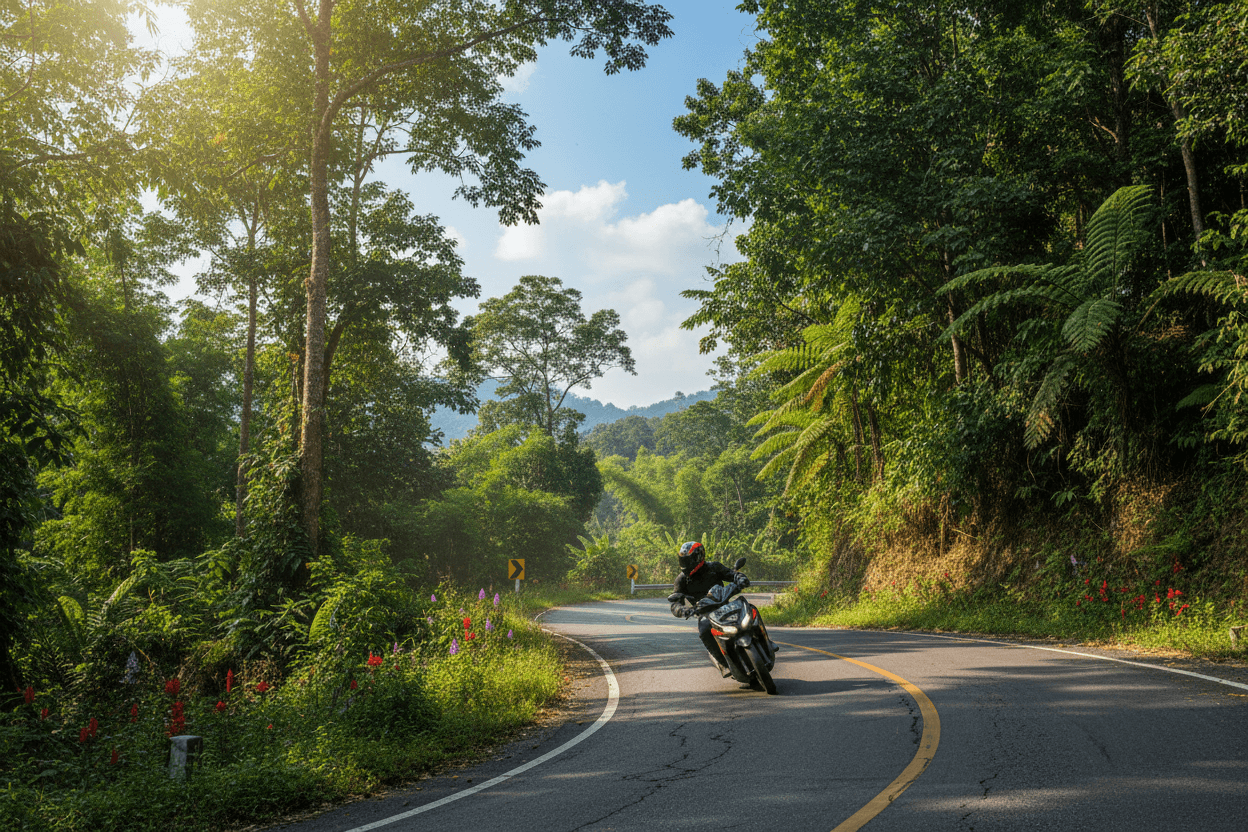
How to get around Chiang Mai in 2026 comes down to five modes with clear price tiers: 20-30 THB for the RTC City Bus, 30-50 THB per person for a red songthaew, 80-150 THB for a tuk-tuk, 70-200 THB for a Grab car or bike, and 150-300 THB per day for a rented 125cc scooter. The Old City is a 1.5 km square that walks end-to-end in 25 minutes; the airport sits 4 km southwest; Doi Suthep is 15 km uphill. Mix walking inside the moat, songthaews to Nimman, Grab at night, and a scooter for Doi Suthep day trips.
Key Takeaways
- Cheapest mode: red songthaews at a flat 30 THB per person for shared rides anywhere inside the moat-to-Nimman-to-Night-Bazaar triangle, no app, cash on exit.
- RTC City Bus: 20-30 THB per ride on six fixed routes (R1-R6) connecting Chiang Mai International Airport, the Old City, Nimman, and the Night Bazaar; track in real time via the CM Transit app.
- Tuk-tuk reality: 80-150 THB for short trips, but always negotiate before climbing in; the "tourist tax" markup on Tha Phae Gate evening rides runs 200-300% over fair price.
- Grab pricing: GrabCar 70-200 THB, GrabBike 50-120 THB, both with upfront fares and credit-card payment; the most reliable late-night option after 10 PM.
- Scooter rental: 150-300 THB/day for a Honda Click 125 in the Old City and Nimman, the cheapest mode if you stay 4+ days and ride; helmet legally required, IDP legally required.
- Walking zones: the Old City moat encloses a 1.5 km × 1.5 km square; the temple loop from Tha Phae Gate to Wat Phra Singh covers under 3 km of flat ground.
What three things do I need before getting around Chiang Mai?
You need three things in your pocket before navigating Chiang Mai in 2026: a working SIM with mobile data (for Grab and CM Transit), 500-1,000 THB in small notes (songthaew and tuk-tuk drivers rarely break 1,000-baht bills), and an offline-saved map of the Old City moat plus Nimman and the Night Bazaar. Add an International Driving Permit with the motorcycle "A" endorsement only if you plan to rent a scooter, which is enforced at police checkpoints around the moat.
The CM Transit app and Grab both want active data: AIS, TrueMove, and dtac all sell tourist eSIMs at the airport for 200-500 THB per week. The 500-baht denomination and below covers every flat-rate songthaew and tuk-tuk fare twice over without forcing the driver to dig for change. The offline map matters because Old City sois (small lanes) often confuse first-time visitors who expect grid streets.
For the scooter pathway specifically, the Thai Driving License Requirements post covers the IDP-vs-Thai-license distinction tourists need, and How to Rent a Scooter in Chiang Mai walks through shop selection. Without an IDP plus motorcycle endorsement, every police-checkpoint stop on the moat is a 500-1,000 THB on-the-spot fine.
Step 1: Get from Chiang Mai International Airport to the Old City
Chiang Mai International Airport (CNX) sits 4 km southwest of the Old City moat. The four ways to cover that distance in 2026 are: GrabCar 80-180 THB door-to-door (15-20 minutes); the airport-licensed yellow metered taxi 150-200 THB to most Old City hotels; the RTC R3 City Bus 30 THB to the Old City stop (40 minutes including the route loop); and a red songthaew 40-50 THB per person for a shared ride or 200 THB private. Avoid the unmetered "VIP taxi" desk inside the terminal.
Grab is the simplest option for a first arrival: book the moment you collect baggage, walk to the Grab pickup zone (signed in English), and the price is locked before you climb in. The yellow metered taxi is the second-best fallback; it uses an honest meter once you confirm "meter, please" before the door closes. The R3 bus is genuine budget travel but slower and harder to navigate at night with luggage. The songthaew is a fine option if you have backpacks rather than rolling suitcases and have already memorised the Thai script for your hotel.
For onward route planning once you're settled, the Best Day Trips from Chiang Mai covers Doi Inthanon, Pai, and the Samoeng Loop, and the Chiang Mai Travel Guide 5-Day Itinerary maps which transport mode to use on which day.
Step 2: Move around the Old City on foot
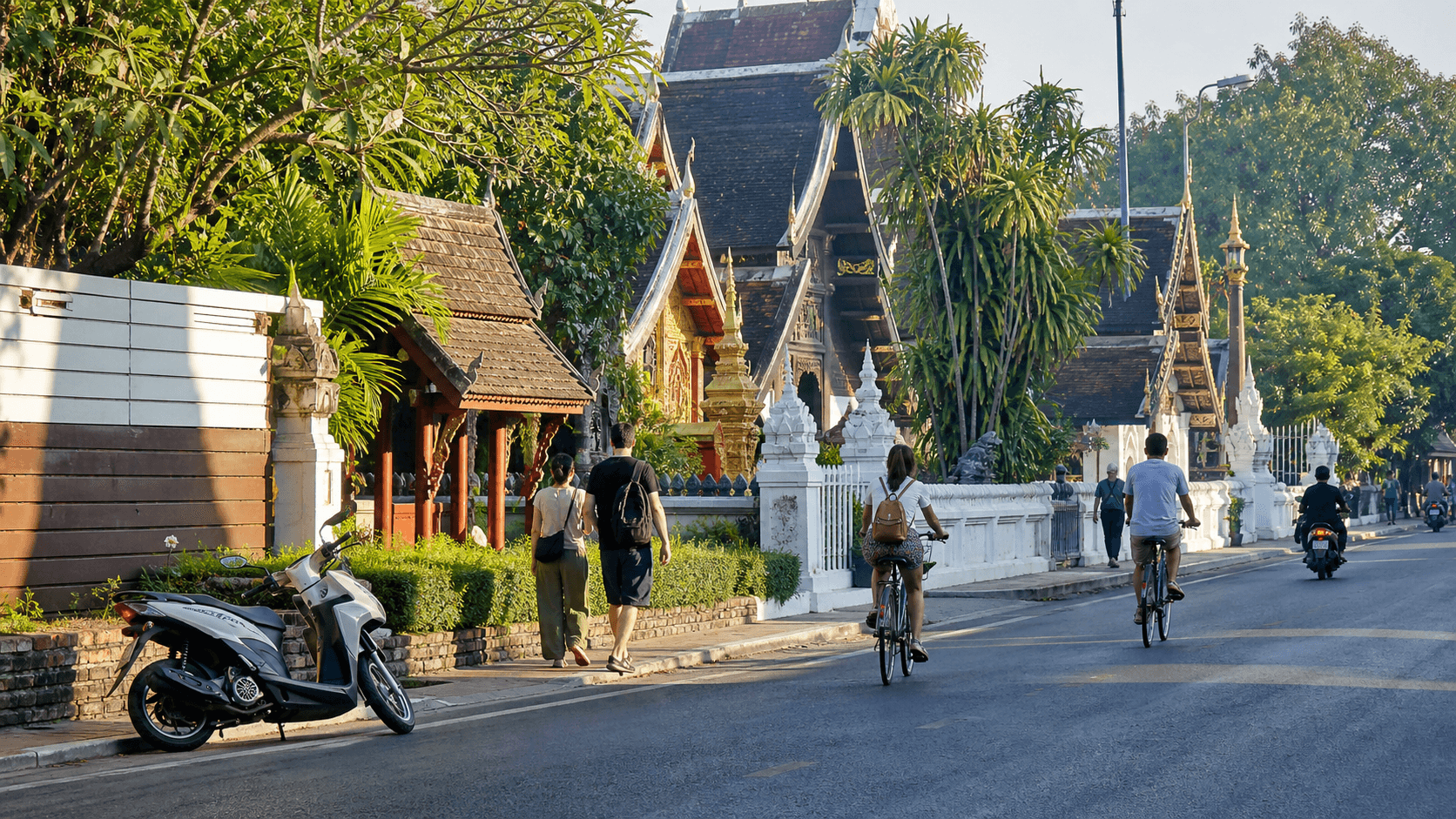
The Old City moat encloses a 1.5 km × 1.5 km square, which means any two points inside walk in 25 minutes or less. Wat Phra Singh sits dead-center; Wat Chedi Luang is 350 m east; Tha Phae Gate is 1.2 km east of Wat Phra Singh on Ratchadamnoen Road; the Sunday Walking Street takes over Ratchadamnoen every Sunday from 4 PM. Inside the moat you walk almost everything, then take a 30-baht songthaew if you need to leave the square.
Walking is the cheapest mode (free) and the only one that lets you see the smaller temples like Wat Phan Tao and the Lanna-era shrines tucked between guesthouses. The streets are flat and well-lit through about 11 PM. Footpaths run on most main roads, but expect to walk on the road shoulder on minor sois; Thai pedestrian etiquette is to move with traffic and let scooters thread past you. Avoid the moat road itself for crossing on foot during 7-9 AM and 4:30-7 PM rush hours; use the dedicated zebra crossings near the gates instead.
The temple loop most visitors do covers Wat Phra Singh, Wat Chedi Luang, Wat Phan Tao, and Tha Phae Gate in roughly 3 km of walking spread over 2-3 hours including temple visits. The Best Temples in Chiang Mai post details opening hours and entry fees, and the Chiang Mai Old City Guide maps the moat-and-bastions historical context. Wikipedia's Chiang Mai page carries a public-domain layout of the Lanna-era city walls if you want background before you arrive.
Step 3: Take a red songthaew between neighborhoods
Red songthaews are Chiang Mai's flat-rate 30-THB shared taxi system. They look like covered red pickup trucks with bench seats in the bed, and they run flexible routes across the city: anywhere inside the moat-to-Nimman-to-Night-Bazaar triangle is a flat 30 THB per person, longer trips to Maya Mall or the airport are 40-60 THB, and you can hire one privately for 150-300 THB per hour for temple loops. Flag one down, tell the driver your destination, sit in the back, pay cash on exit.
The four-step protocol works the same on every ride. Step one: hold out your hand on the road shoulder and make eye contact with the driver. Step two: state your destination clearly (point at a map if your pronunciation is shaky). Step three: agree on the price before climbing in; the driver will say "30 baht" or "40 baht" and you confirm. Step four: tap the roof or press the buzzer when your stop approaches, hop down, and pay the driver through his window. Cash only, small notes preferred.
For multi-temple day trips outside the city, the private-hire songthaew is the cheapest comfortable option: 800-1,200 THB for the full day to Doi Suthep, Wat Pha Lat, and the Bhubing Palace garden. Negotiate the route and the price before you leave the parking spot. The Best Day Trips from Chiang Mai covers which sites pair well in a single songthaew day.
Step 4: Use Grab for late-night and door-to-door trips
Grab is the most reliable mode in Chiang Mai for late-night returns from Nimman or the Night Bazaar, group transfers with luggage, and any trip where you don't want to negotiate. GrabCar runs 70-200 THB across the standard tourist trips: 80-180 THB to or from the airport, 60-90 THB Old City to Nimman, 50-80 THB Old City to the Night Bazaar, 250-400 THB to Doi Suthep one-way. GrabBike is 30-40% cheaper for solo riders carrying nothing more than a small bag, and faster in rush-hour traffic.
The pricing advantage over tuk-tuks shows up most clearly after 10 PM, when tuk-tuk drivers near the bars on Loi Kroh Road and around the Night Bazaar quote 200-400 THB for short hops back to the Old City. A Grab ride on the same route is the same 50-80 THB it would be at noon. Surge pricing exists in Chiang Mai during 7-9 AM and 4:30-7 PM rush hours and during heavy rain, but the multiplier rarely pushes past 1.5×; the upfront price always shows before you confirm.
The two practical limits: Grab struggles to find drivers in remote spots like Doi Suthep peak car park (book the return before you start the temple climb, or negotiate a songthaew round-trip from Suan Dok Gate at the bottom). And cash payment is technically supported but flaky; setting up a card on file in the app before you land removes the only friction point. The official Grab page on Chiang Mai lists current service zones if you're heading out to a less-touristed neighborhood.

Step 5: Rent a scooter for Doi Suthep and out-of-city days
A 125cc scooter rental is the cheapest mode in Chiang Mai if you stay four or more days, and the only practical mode for the Doi Suthep climb, the Samoeng Loop, the Sticky Falls (Bua Tong), and most day trips outside the city. Daily rates run 150-300 THB for a Honda Click 125 in the Old City and Nimman, weekly rates 900-1,800 THB, and monthly rates 2,000-4,000 THB. Add 100-150 THB to fill the tank from empty at 2026 pump prices, plus a 1,000-2,000 THB cash deposit at pickup.
The legal layer matters in Chiang Mai because police checkpoints on the moat road run multiple times per week in peak season. Three things that get you through a checkpoint cleanly: a helmet on every ride (mandatory for both rider and pillion under Thai law), an International Driving Permit with the motorcycle "A" endorsement carried alongside your home-country motorcycle license, and a registered Por.Ror.Bor sticker on the bike (the rental shop's job, not yours). The fines without these run 500-1,000 THB each on the spot.
For the rental shop choice, How to Rent a Scooter in Chiang Mai walks through the cash-deposit-only checklist and the passport-copy-not-original rule. The Chiang Mai Motorbike Rental Guide covers shop comparisons across the Old City and Nimman; the Top 10 Scenic Motorbike Routes Around Chiang Mai maps Doi Suthep, the Samoeng Loop, and the Mae Sa Valley waterfalls. The Royal Thai Embassy publishes official IDP guidance for tourists who haven't applied yet.

Compare every mode side by side
Different modes win different trips in Chiang Mai. Songthaews win the moat-to-Nimman commute on cost; tuk-tuks rarely win anything except the photo; Grab wins late-night and groups; the bus wins solo-budget airport runs; the scooter wins multi-day stays and Doi Suthep. The table below stacks the typical 2026 cost, time, and flexibility per mode for the trips you'll actually take.
Mix-and-match is what locals actually do. A typical tourist day looks like: walk the temple loop in the morning (0 THB), songthaew to Nimman for lunch (30 THB), GrabBike back to the hotel after a coffee (60 THB), walk to the Night Bazaar in the evening (0 THB), GrabCar back at midnight after dinner (80 THB). Total: 170 THB for a full day of moving around. The same day on tuk-tuks: 600-1,000 THB.
For city-to-city onward travel, How to Get to Koh Lanta and the broader Thailand Motorbike Rental Guide cover the next-leg options. The Lonely Planet Chiang Mai transport page maintains a useful overview of the slower mainline transport options (trains, intercity buses) for travelers heading to Bangkok or Pai by ground.
Frequently Asked Questions
What is the cheapest way to get around Chiang Mai?
Red songthaews at a flat 30 THB per person are the cheapest paid mode for trips inside the moat-to-Nimman-to-Night-Bazaar triangle. Walking is cheaper still and works for almost everything inside the Old City moat, which is only 1.5 km square. The RTC City Bus at 20-30 THB beats the songthaew for the airport transfer if you have a single backpack and don't mind a 40-minute ride.
Is Grab reliable in Chiang Mai?
Yes, Grab is the most reliable late-night and door-to-door mode in Chiang Mai in 2026. GrabCar covers the city core, the airport, Nimman, and the Night Bazaar; GrabBike is faster in rush hour and 30-40% cheaper for solo riders. Driver coverage thins in remote spots like Doi Suthep peak; book the return ride before you start the temple climb, or hire a private songthaew round-trip from Suan Dok Gate.
How do I use the red songthaews in Chiang Mai?
Flag one down on the road shoulder, state your destination clearly (point at a map if needed), agree on the price (usually a flat 30 THB inside the city), climb in the back with the other passengers, and pay the driver in cash through his side window when you get off. Tap the roof or press the buzzer to signal your stop. No app, no booking, no surge pricing.
How much should I pay for a tuk-tuk in Chiang Mai?
Fair tuk-tuk fares inside the Old City and Nimman are 80-150 THB for trips under 2 km in 2026. Always negotiate the price before climbing in. Tuk-tuks parked at tourist hotspots (Tha Phae Gate during the Sunday Walking Street, the Night Bazaar gates after dark) often quote 200-400 THB; flag a moving tuk-tuk on Ratchadamnoen Road instead to get the real rate.
Do I need an IDP to rent a scooter in Chiang Mai?
Yes. Thai law requires either a Thai motorbike license or an International Driving Permit with the motorcycle "A" endorsement carried alongside your home-country motorcycle license. Police checkpoints on the Old City moat run multiple times per week in peak season; the on-the-spot fine for missing or wrong-class licensing is 500-1,000 THB plus voided travel insurance in any subsequent accident.
What's the best transport from Chiang Mai International Airport to the Old City?
The four options in 2026 are GrabCar (80-180 THB, 15-20 minutes door-to-door), the airport-licensed yellow metered taxi (150-200 THB, 15-20 minutes), the RTC R3 City Bus (30 THB, 40 minutes), and a private red songthaew (200 THB, 15-20 minutes). Grab is the simplest first-arrival option because the price locks in the app before you climb in. Avoid the unmetered "VIP taxi" desk inside the terminal.
Is it safe to ride a scooter in Chiang Mai?
Riding a scooter in Chiang Mai is safe with three precautions: helmet on every ride for both rider and pillion (mandatory under Thai law), an IDP-with-motorcycle-endorsement to keep the police-checkpoint and travel-insurance side clean, and avoiding the moat road during 7-9 AM and 4:30-7 PM rush hours. New riders should practice in the quieter side sois inside the Old City before tackling the Doi Suthep climb on Route 1004.
Plan your Chiang Mai stay around the right transport mix
The cheapest, fastest version of Chiang Mai is the one where you stop overpaying for tuk-tuks and start mixing free walks inside the Old City, 30-baht songthaews to Nimman, GrabCar at midnight, and a 200-THB scooter day for Doi Suthep and the Samoeng Loop. For the scooter side of that mix, see How to Rent a Scooter in Chiang Mai for the shop checklist, then book a Honda Click 125 with cash deposit and free hotel delivery at Byklo.rent. Helmet included, passport stays in your hand.