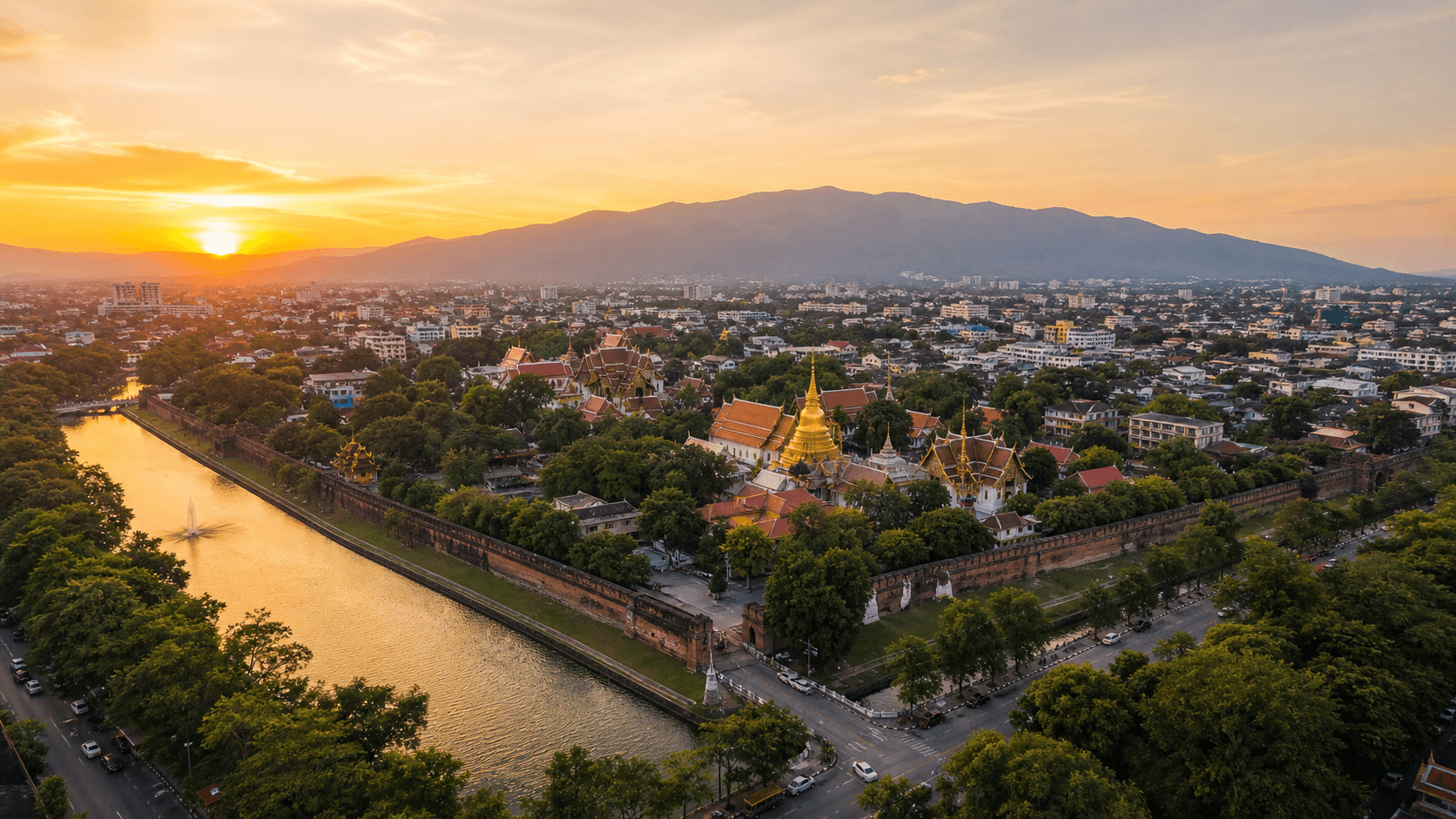
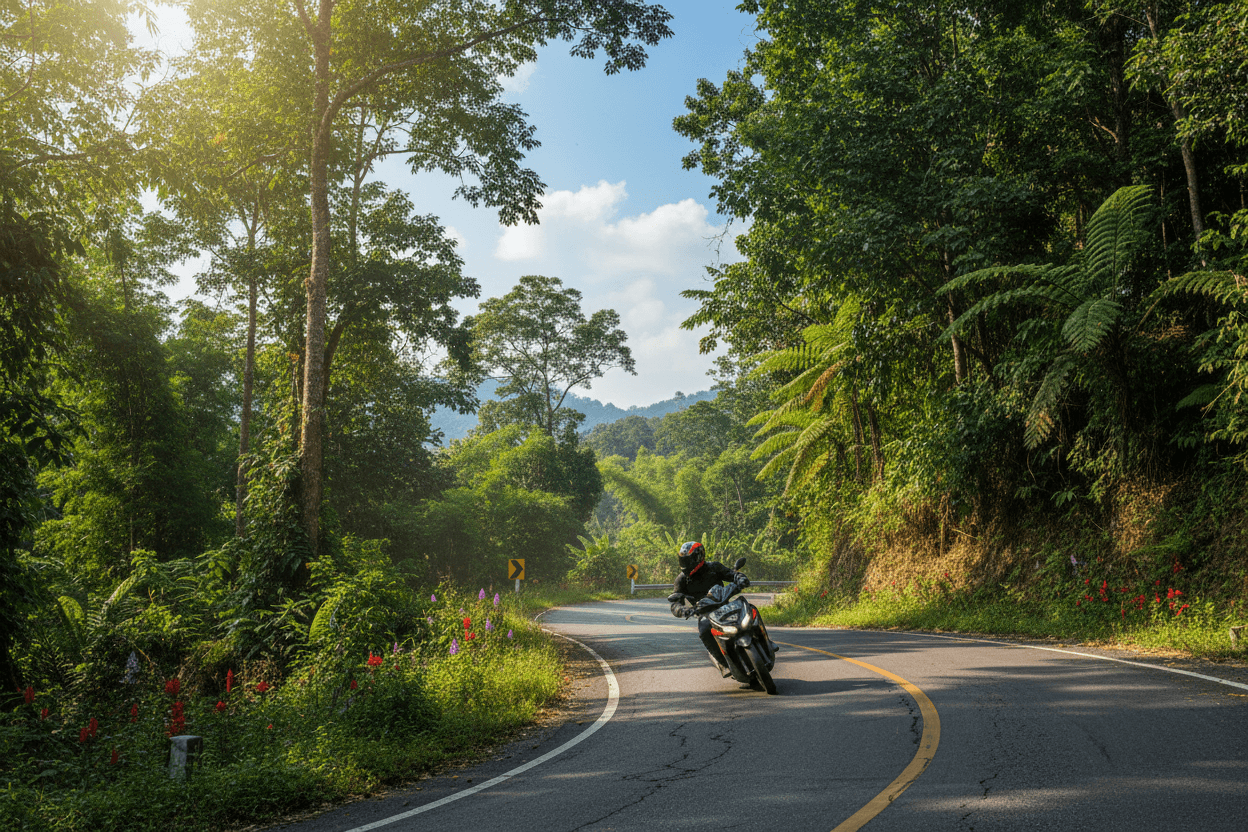
Yi Peng Lantern Festival in Chiang Mai 2026 lands November 24-25 (full moon of the 12th lunar month, dates shift annually) and overlaps with Loy Krathong on the same two nights. The headline ticketed event is the Mae Jo (Lanna Dhutanka grounds) mass khom loy release 18 km north of the Old City on Route 1001, priced at 4,000-12,000 THB and selling out 6-8 weeks ahead. The free venues are Tha Phae Gate, Three Kings Monument, Wat Phan Tao, and the Ping River banks at Nawarat Bridge for floating krathongs. Rideshare collapses across the Old City moat from 18:00 onward both nights. A 150-300 THB Honda Click 125 booked 6+ weeks ahead at any Tha Phae Gate or Nimman shop is the only practical way to combine Mae Jo with the Old City venues on one evening.

Key Takeaways
- 2026 dates: Yi Peng plus Loy Krathong land on the November 24-25, 2026 full moon (12th lunar month). The dates shift every year; confirm at the Tourism Authority of Thailand listing 60 days out before booking flights or Mae Jo tickets.
- Mae Jo ticket window: the Lanna Dhutanka mass release at Mae Jo University grounds (18 km north of the Old City on Route 1001) sells out 6-8 weeks ahead at 4,000-12,000 THB per seat, with separate dinner-included and standard tiers; the November 22 and 23 "preview" nights are also Mae Jo events, not the main full moon.
- Free venues: Tha Phae Gate, Three Kings Monument, Wat Phan Tao (the candle-lit teak viharn), Wat Lok Molee on the north moat, and the Ping River banks at Nawarat Bridge cost 0 THB and are reachable on a 5-10 minute scooter ride from any Old City shop.
- Scooter rate during festival: a 125cc Honda Click runs 250-300 THB/day at Tha Phae Gate and Nimman shops in Yi Peng week, the peak end of the canonical 150-300 THB range; book 6+ weeks ahead because demand mirrors the Mae Jo ticket window.
- Airport fire-lantern restriction: Chiang Mai Airport (CNX, 4 km southwest of the Old City moat) enforces a no-release zone in a 5-7 km radius around the runway during commercial flight hours; police actively confiscate lanterns released near Suthep Road.
- Combined-venue scooter loop: Tha Phae Gate to Three Kings Monument (1.0 km), to Wat Phan Tao (200 m), to the Ping River at Nawarat Bridge (1.2 km), to Mae Jo on Route 1001 (18 km) is a 21 km loop costing under 50 THB of fuel on a 125cc Click.
What is Yi Peng and how does it differ from Loy Krathong?
Yi Peng is the Lanna Buddhist sky-lantern festival celebrated on the full moon of the 12th month of the Thai lunar calendar, historically only in the eight northern provinces of the former Lanna kingdom. The signature ritual is the release of khom loy (paper hot-air lanterns) at the moment of the full moon, symbolising letting go of misfortune from the past year and accumulating merit. Loy Krathong is the parallel nationwide Thai festival on the same lunar date, where decorated banana-leaf rafts (krathongs) are floated on rivers to honour Phra Mae Khongkha, the goddess of water. Chiang Mai is the only city in Thailand where both festivals run at full intensity on the same two nights.
The practical implication for a 2026 visitor is that both rituals happen across the same Old City evening. Tha Phae Gate, Three Kings Monument, and the moat corners host khom loy releases; the Ping River banks at Nawarat Bridge and Iron Bridge host krathong floating; and the Mae Jo Lanna Dhutanka grounds host the iconic mass release that appears in every photo of the festival. Yi Peng additionally includes parade processions on Tha Phae Road and decorative khom paad (hanging lanterns) on every temple and shophouse, which start three to four days before the full moon and turn the entire walled city into a continuous photogenic backdrop.
The Yi Peng tradition traces to the 13th-century Lanna kingdom and the city of Chiang Mai (founded 1296 by King Mengrai). The Mae Jo mass release in its current ticketed form dates only to the early 2000s; the free Tha Phae releases are the older folk-tradition version. Both are authentic; the difference is venue scale, ticket cost, and crowd density, not historical legitimacy.
Where to watch Yi Peng + Loy Krathong in 2026
The five highest-value venues in Chiang Mai split across one paid mass-release event and four free Old City sites; the Ping River banks add krathong floating on top. Each has different parking, hours, and crowd pressure, and the only way to hit more than one in a single evening is on a scooter because rideshare and songthaews collapse across the Old City moat from 18:00 onward both nights. The free Old City venues are 200 m to 1.2 km apart on foot but combine to a 5 km scooter loop; Mae Jo adds 18 km north on Route 1001 with parking at the Lanna Dhutanka grounds.
The free venues each have a slightly different vibe. Tha Phae Gate is the headline crowd-pressure zone with stage performances, parade end-points, and the densest khom loy releases of any free site; expect Times-Square-on-New-Year's density from 19:00 to 23:00. Three Kings Monument is the smaller, more reverent venue with monk-led blessings and a quieter release tempo. Wat Phan Tao (a 14th-century teak viharn 200 m east of Wat Chedi Luang) is the most photogenic of the candle-lit temples; the courtyard fills with dozens of butter-candle lamps and orange-robed monks. Wat Lok Molee on the north moat near Chang Phueak Gate is the local-residents alternative with smaller crowds. The Ping River banks at Nawarat Bridge are where you float a krathong after the lantern release.
The pattern that works for a single evening with one rented scooter is: park at Tha Phae Gate by 17:30 to catch the parade end and first-wave lantern releases (17:30-19:00), ride 200 m to Wat Phan Tao for the candle ceremony (19:00-20:00), continue to Three Kings Monument for the second-wave release at the moment of moonrise (20:00-21:00), then drop down 1.4 km to Nawarat Bridge to float a krathong (21:00-22:00). If you bought Mae Jo tickets, that becomes the evening's anchor instead and the Old City venues fill the 16:00-17:30 pre-departure window.
How to ride to Mae Jo and combine the Old City venues
The Mae Jo Lanna Dhutanka grounds sit 18 km north of the Old City moat on Route 1001 (Sankampaeng-Maejo Road), a 30-35 minute scooter ride costing under 50 THB of fuel from any Tha Phae Gate or Nimman rental shop. The route is paved and well-lit but adds heavy festival traffic between 16:00 and 18:00 on event nights; depart by 15:30 to arrive with parking inside the grounds rather than on the verge. A 125cc Honda Click handles the route comfortably for a solo rider; for two-up with luggage, step up to a Honda PCX 160 or Yamaha NMAX at 250-450 THB/day for the better engine and front-tyre footprint.
The bike-class question becomes more important if you plan to ride back to the Old City on the same night. After the 21:00 mass release, the Route 1001 southbound carriageway clogs for 30-60 minutes with departing traffic; a 125cc Click in third gear handles the slow stop-start fine, but the heavier maxi-scooter is more comfortable in the heat (October-November Chiang Mai nights still sit at 17-20°C, but the helmet-and-jacket combination plus stop-start traffic warms up fast). Fuel up at the PTT or Bangchak stations on Mani Nopharat Road or Huay Kaew Road before departure; the Mae Jo direction has fewer late-night fuel stations than the Old City.
The internal-link companion is the Chiang Mai motorbike rental guide for full pricing and shop-cluster locations; the best time to visit Chiang Mai post sets the November cool-season weather context (PM2.5 under 50 µg/m³, 17-29°C dawn-day range, dry tarmac); and the 5-day Chiang Mai itinerary plans the two-night festival window inside a longer trip. For routes that combine the festival nights with day-rides outside the city, the top 10 motorbike routes around Chiang Mai ranks the Doi Suthep climb (16 km on Route 1004) and the day-trip warm-up loop from Chiang Mai (100 km) as the cool-season morning rides that pair best with festival evenings.
Free venues vs Mae Jo: which one for your trip?
The choice between the free Old City venues and the ticketed Mae Jo mass release comes down to crowd tolerance, photo priority, and the size of the travel budget. Mae Jo at 4,000-12,000 THB per seat delivers the iconic single-frame photo of thousands of khom loy released in unison, with stage music and a guided meditation; that is the image used on every guidebook cover. The free Old City circuit at 0 THB per stop delivers a more participatory, distributed experience where you release lanterns alongside Thai families at four or five different spots over a four-hour evening. Neither is more authentic; they target different ends of the festival's purpose.
The crowd density tells you the operational difference. Mae Jo seats 4,000-6,000 people inside the Lanna Dhutanka enclosure, with strict 17:00 entry cutoffs and a single coordinated release moment. Tha Phae Gate hosts 30,000-50,000 people across the open plaza with continuous releases from 18:00 to midnight; Three Kings Monument adds another 10,000-15,000; Wat Phan Tao caps at maybe 1,500 inside the temple courtyard. The total free-venue footprint is much larger than Mae Jo's, but distributed across a 5 km Old City loop rather than concentrated at one stage.
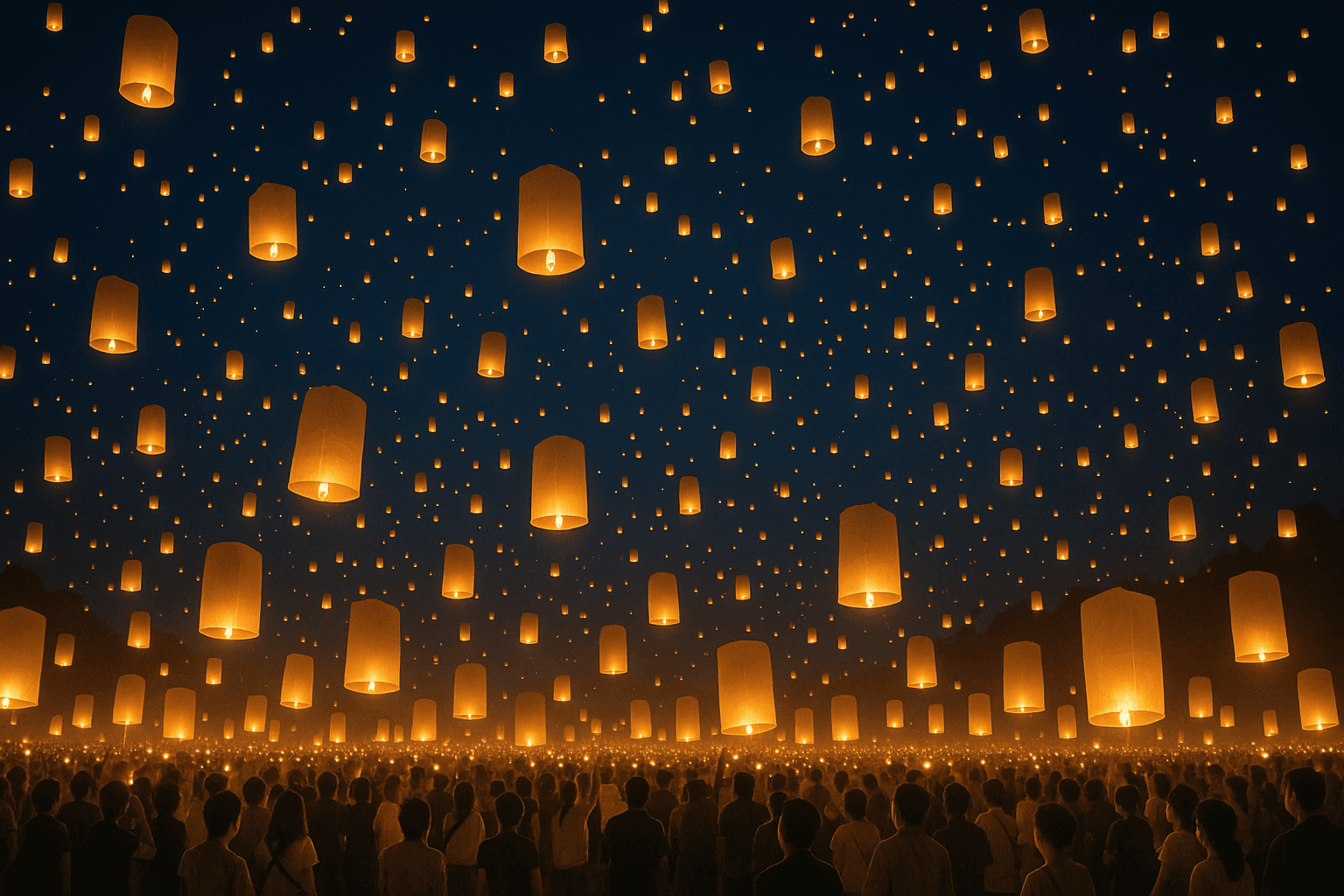
The photographer's choice is usually Mae Jo for the single iconic frame plus one Old City temple (Wat Phan Tao) for the candle-lit-viharn ground shot. The local-experience choice is the four-venue Old City loop with one krathong float at Nawarat Bridge. The compromise is a Mae Jo seat on November 22 or 23 (preview nights, slightly cheaper at 3,000-8,000 THB) plus the free Old City circuit on the November 24-25 main full moon. All three options need a scooter; rideshare across the moat does not function in this window.
Cultural respect and the airport fire-lantern restriction
Yi Peng is a Buddhist religious festival before it is a tourist attraction, and 2026 enforcement of cultural and safety rules is stricter than in previous decades. The two non-negotiable rules are: only release biodegradable rice-paper khom loy from designated ground-level sites (no rooftops, no temple interiors), and never release within the airport restricted zone. Chiang Mai Airport (CNX) sits 4 km southwest of the Old City moat, and the no-release radius extends 5-7 km around the runway during commercial flight hours, covering Suthep Road and the southern moat from roughly 17:00 release-time onward. Police actively confiscate lanterns and issue 1,000-2,000 THB fines in this zone; release inside the Old City moat or 5+ km north of CNX (Mae Jo direction) instead.
Inside temple grounds (Wat Phan Tao, Wat Lok Molee, Wat Chedi Luang during the candle ceremonies), dress modestly with shoulders covered and knees covered for both men and women. Remove shoes at the viharn entrance. Do not point feet at Buddha images. Do not raise selfie sticks during monk chanting. Photograph only from the back or sides of seated monks, never frontally during prayer. These rules apply year-round at Thai temples but enforcement is visibly tighter during festival nights because the resident monastic community is hosting the ceremony, not staffing a tourist site.
What about Songkran, Flower Festival, and the rest of the calendar?
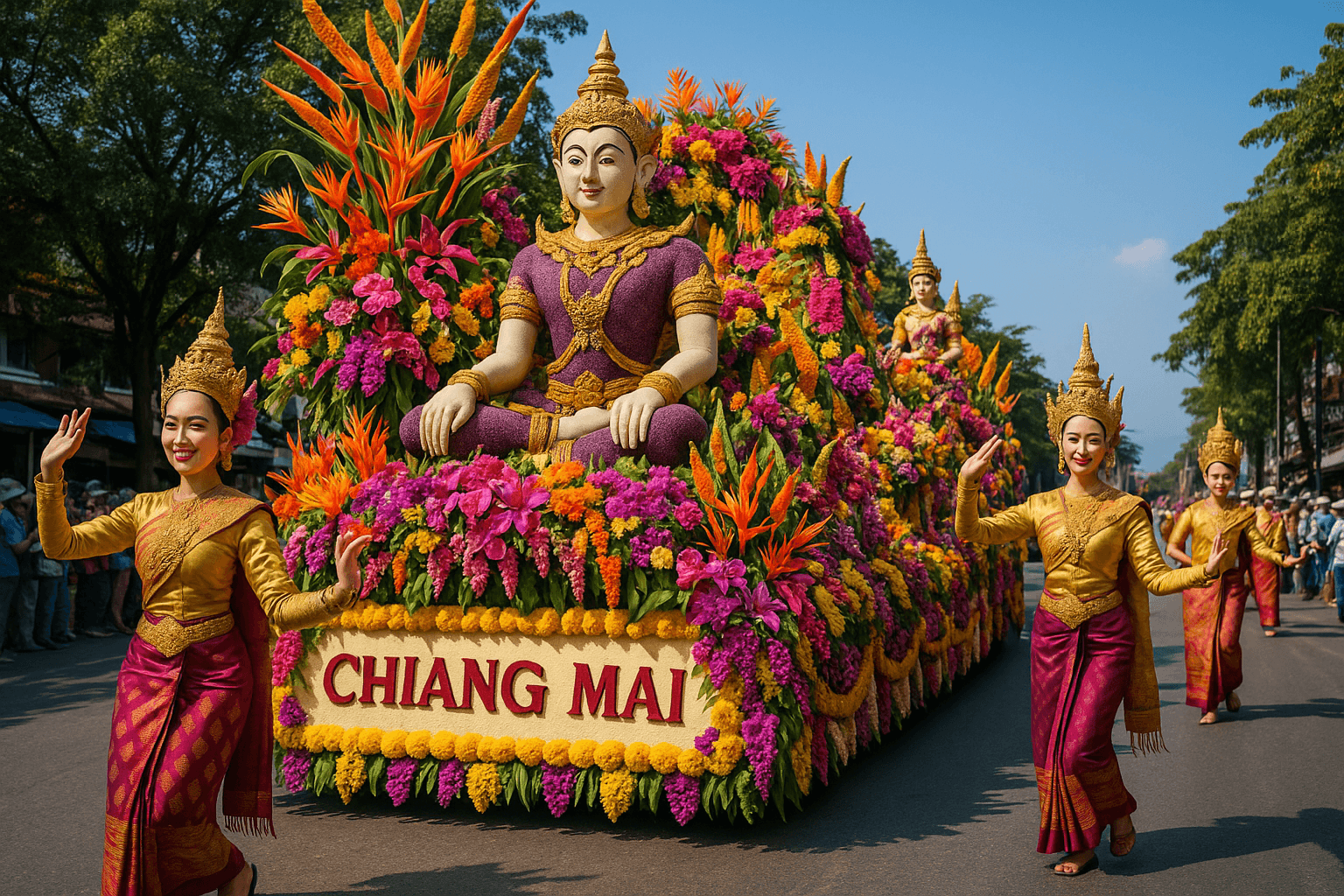
Yi Peng plus Loy Krathong is the single biggest cultural moment of the Chiang Mai year, but the city runs three other major festivals on the calendar, and a longer trip can stack two or three of them on different visits. The Chiang Mai Flower Festival lands the first weekend of February (February 6-8 in 2026) with floral parades on Charoen Muang Road and elaborate display gardens at Suan Buak Haad Park; it is the second-tier event by international visitor count but the most photogenic for daytime light. Songkran (Thai New Year) runs April 13-15 every year as a continuous three-day water fight across the Old City moat; the Chiang Mai Songkran section of the seasonal guide flags the rented-scooter risk. Bun Bang Fai (Rocket Festival) runs in May or June in nearby provinces (San Patong, Mae Rim) but does not centre in the Chiang Mai walled city itself.
For the Songkran water-fight nights specifically, garaging the rented scooter for April 13-15 is the standard advice; pickup-truck water cannons and ice-bucket ambushes at the Old City moat corners cause CVT-seizure repair bills of 8,000-20,000 THB debited against the cash deposit. The Thailand motorbike safety New Year post documents the specific failure pattern. Yi Peng has no equivalent CVT-water risk; the scooter risk during Yi Peng is small (lantern-debris ignition near parked bikes, addressed by parking 50+ m from release zones), and the operational reason to rent is purely to combine venues.

Frequently Asked Questions
When is Yi Peng Lantern Festival in 2026?
Yi Peng plus Loy Krathong land on the November 24-25, 2026 full moon (the 12th lunar month). The Mae Jo Lanna Dhutanka mass-release event runs across November 22-25 with the main night on the full moon itself. Festival dates shift annually because they follow the lunar calendar; confirm the specific dates with the Tourism Authority of Thailand 60 days out before booking flights or Mae Jo tickets.
How much do Mae Jo Yi Peng tickets cost?
Mae Jo Lanna Dhutanka tickets cost 4,000-12,000 THB per seat in 2026, depending on tier (standard, dinner-included, premium with reserved cushion). Tickets sell out 6-8 weeks ahead through licensed travel operators, not at the gate. The November 22 and 23 preview nights are slightly cheaper at 3,000-8,000 THB. The free Old City venues (Tha Phae Gate, Three Kings Monument, Wat Phan Tao, Wat Lok Molee) cost 0 THB plus a 50-150 THB lantern from temple stalls.
Where can I see Yi Peng for free in Chiang Mai?
The four headline free venues are Tha Phae Gate (densest crowds, stage performances), Three Kings Monument (quieter, monk-led blessings), Wat Phan Tao (most photogenic candle-lit teak viharn), and Wat Lok Molee on the north moat (smaller crowds with local residents). All four sit within a 1.5 km radius of Tha Phae Gate and combine into a 5 km Old City scooter loop. Floating krathongs on the Ping River at Nawarat Bridge is also free.
Do I need to rent a scooter to see Yi Peng?
A scooter is not strictly required to see one venue, but it is the only practical way to combine multiple venues on a single evening. Rideshare collapses across the Old City moat from 18:00 onward both nights; songthaews charge festival surge rates and route around the closed Tha Phae and Pratu Chiang Mai gates. A 150-300 THB Honda Click 125 from any Tha Phae Gate or Nimman shop covers the four free Old City venues plus Mae Jo (18 km on Route 1001) on one tank of fuel.
Can I release a fire lantern anywhere in Chiang Mai?
No. Khom loy releases are restricted by the Civil Aviation Authority of Thailand within a 5-7 km radius of Chiang Mai Airport (CNX) during commercial flight hours, covering the southern moat near Suan Dok Gate and Suthep Road. Rooftop releases are banned because falling lanterns ignite tile and thatch roofs. Release only at the official temple sites and the Mae Jo grounds; police actively confiscate lanterns in the airport buffer zone with 1,000-2,000 THB fines.
What should I wear to Yi Peng temple ceremonies?
Dress modestly with shoulders and knees covered for both men and women at Wat Phan Tao, Wat Lok Molee, Wat Chedi Luang, and any temple courtyard ceremony. Remove shoes at the viharn entrance. Layers are useful because Chiang Mai November nights drop to 17-20°C while daytime sits at 25-29°C. Closed-toe shoes are practical for temple gravel and for parking the scooter; flip-flops are not ideal for the Mae Jo grass-parking field.
Is Yi Peng or Songkran the better time to visit Chiang Mai?
Yi Peng (November full moon) is the better cool-season pick: PM2.5 under 50 µg/m³, 17-29°C dry weather, no scooter water-damage risk, and the iconic photographic spectacle. Songkran (April 13-15) is hotter (35-40°C), often hazy with PM2.5 above 150 µg/m³, and rented scooters face 8,000-20,000 THB CVT-seizure bills from water-bucket damage. Both deliver authentic Thai cultural immersion; Yi Peng is the easier riding window.
Plan your Yi Peng Chiang Mai night ride
Yi Peng plus Loy Krathong on the November 24-25, 2026 full moon is the single best photographic and cultural night of the Chiang Mai year, and a rented scooter is the only practical way to combine Mae Jo (18 km north on Route 1001, 4,000-12,000 THB tickets) with the free Old City venues at Tha Phae Gate, Three Kings Monument, Wat Phan Tao, and Wat Lok Molee. Book a 250-300 THB Honda Click 125 from any Tha Phae Gate or Nimman shop via Byklo at least 6 weeks ahead, pair the festival nights with morning rides on the Doi Suthep climb (16 km on Route 1004) or the Mae Sa Valley waterfall route (100 km), and use the 5-day Chiang Mai itinerary to stretch the festival window into a full cool-season week. Park 50+ m from any release zone, fuel up before the Mae Jo run, and respect the CNX airport no-release radius around Suthep Road.