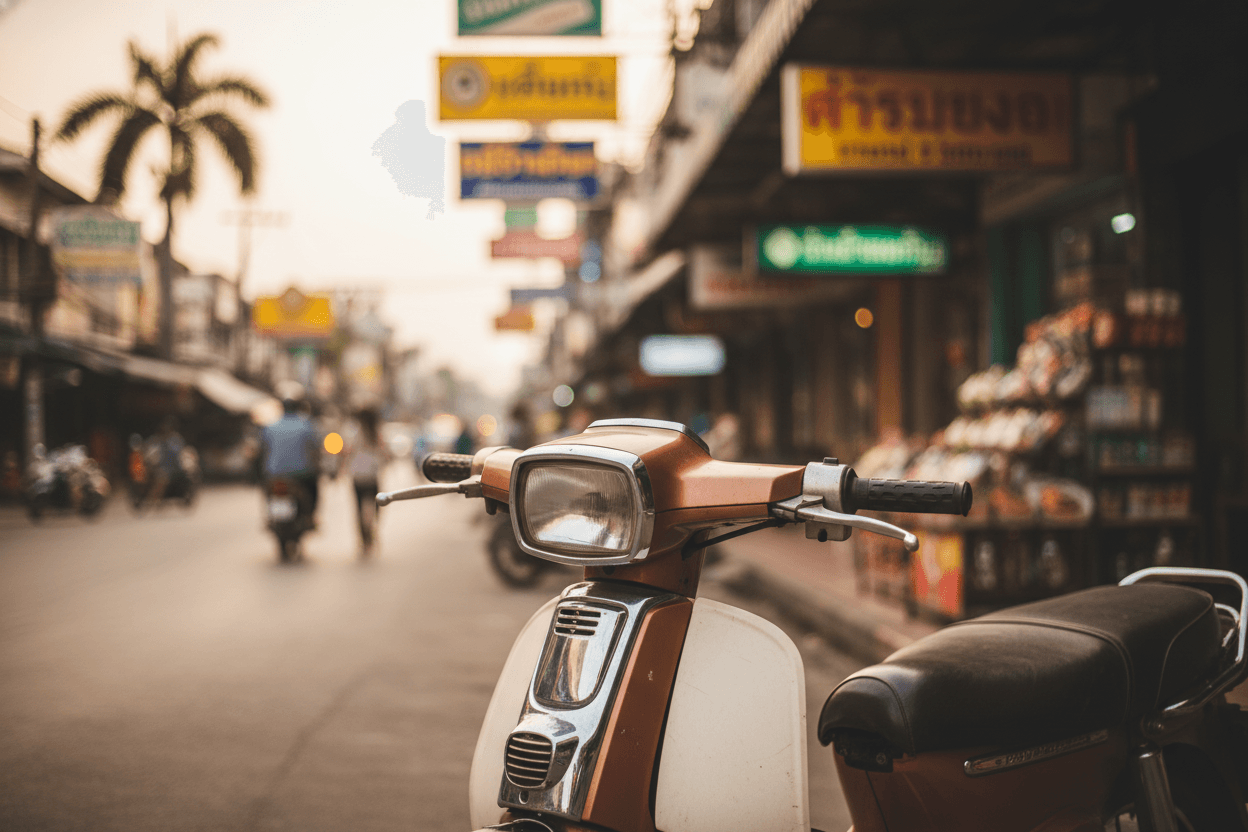
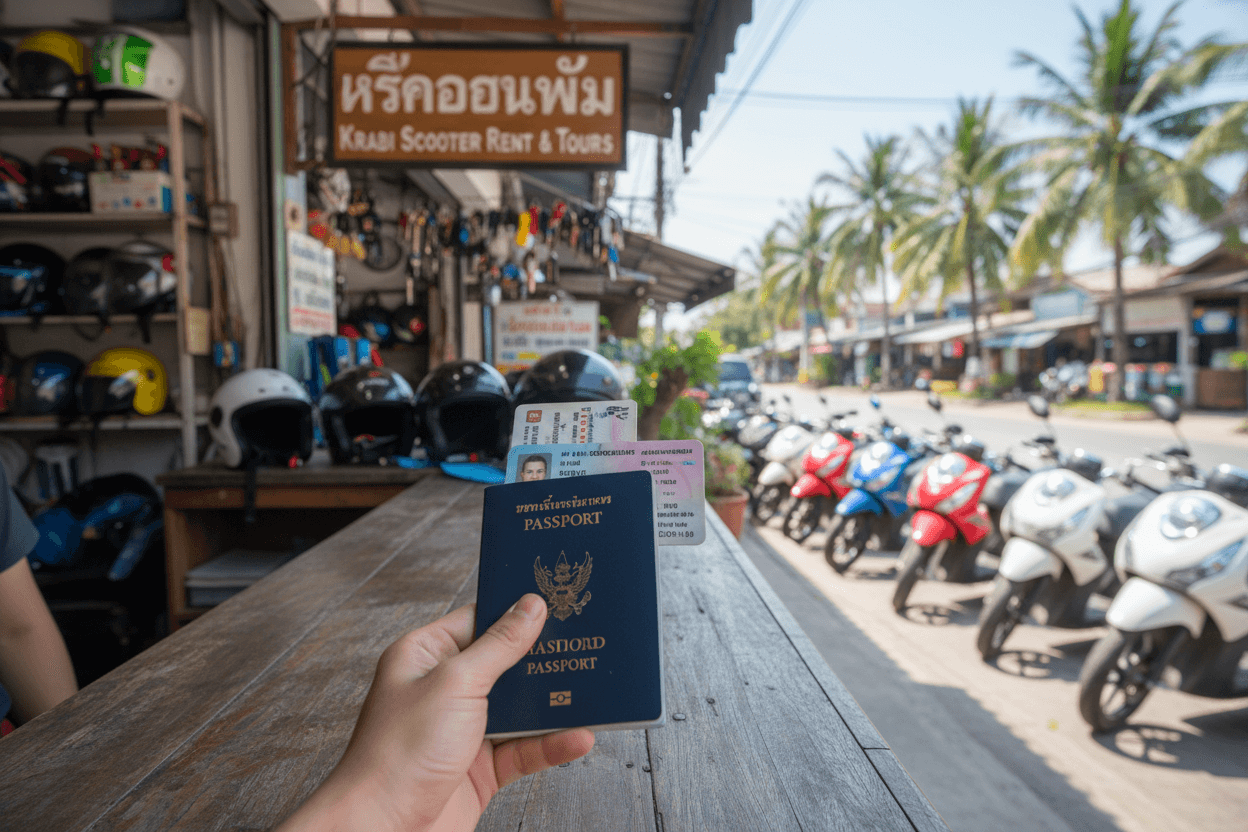
When to visit Krabi depends less on the calendar and more on which traveler you are. Rock climbers want November to February for dry-friction Railay limestone; beach holidays peak December to March (calm Andaman seas, 8-9 hours of sun); island hoppers stretch to April before ferry cancellations; motorcycle tourists need November to February for dry Highway 4034 cliff sections. Both rental hubs (Krabi Town 150-200 THB/day, Ao Nang 200-300 THB/day) sit 13-25 km from Krabi International Airport (KBV) and run year-round.
Key Takeaways
- Dry-season window: November to early March is Krabi's calm-sea, dry-rock, dry-road peak; the Andaman runs 26-32°C with 8-9 hours of sunshine and Highway 4034 grippy.
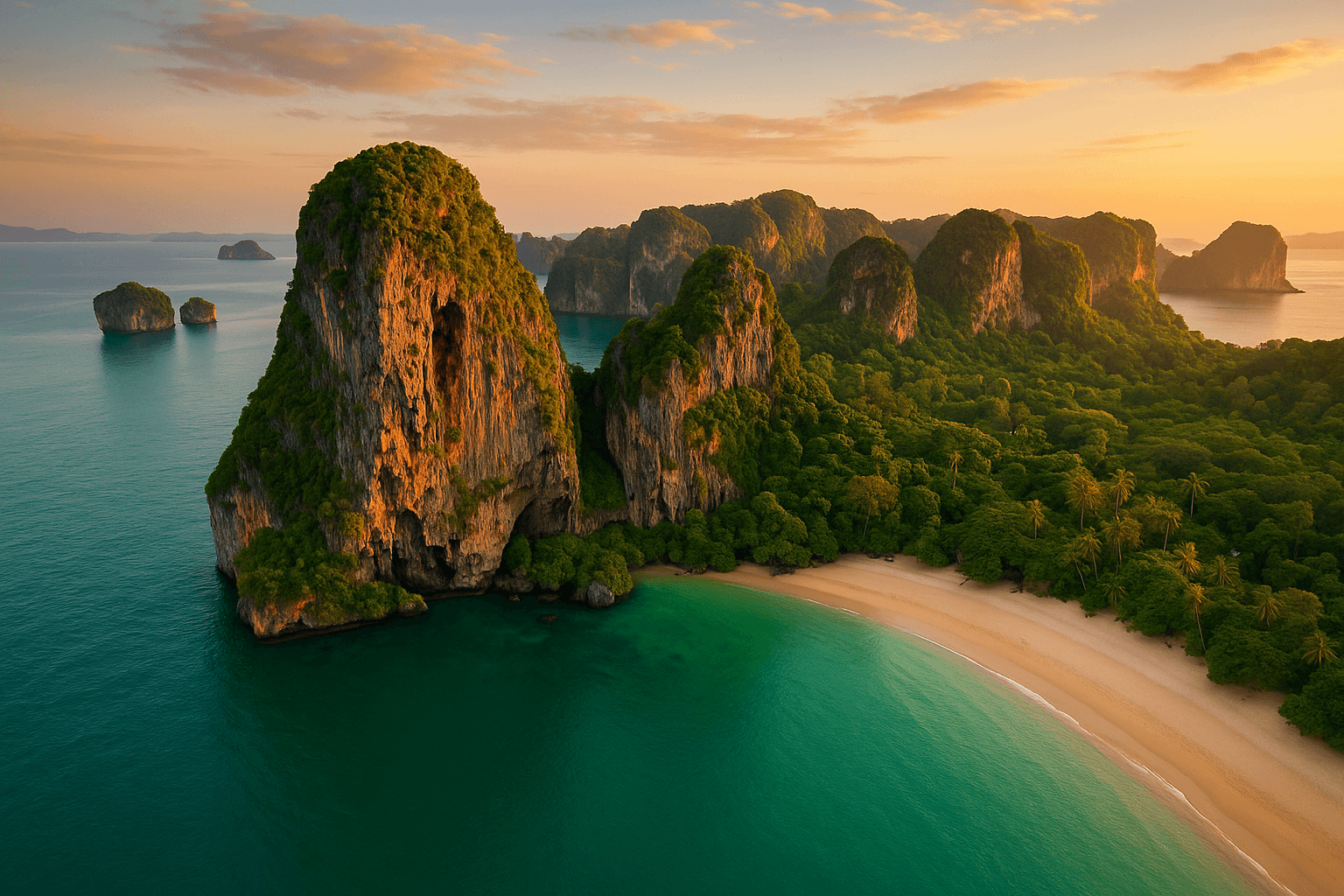
- Climber's window: November to February for Railay's three crags; Phra Nang Cave Beach holds friction longest because it stays in the rain shadow until late February.
- Beach-holiday window: December to March for Phi Phi day trips, Hong Islands tours, and Four Islands by longtail from Ao Nang Pier.
- Island-hopper window: January to April; ferry suspensions begin late April when Andaman swells start to build before the official monsoon onset.
- Motorcycle-tourist window: November to early February for the Highway 4203/4034 coastal arc to Tup Kaek viewpoint and Highway 4 north toward Phang Nga; rates run 150-300 THB/day for a 125cc Honda Click.
- Avoid: Songkran (April 13-15) for Railay closures and price spikes, plus September-October for the wettest 300-355 mm monthly rainfall and longtail cancellations.
When to visit Krabi if you are a rock climber
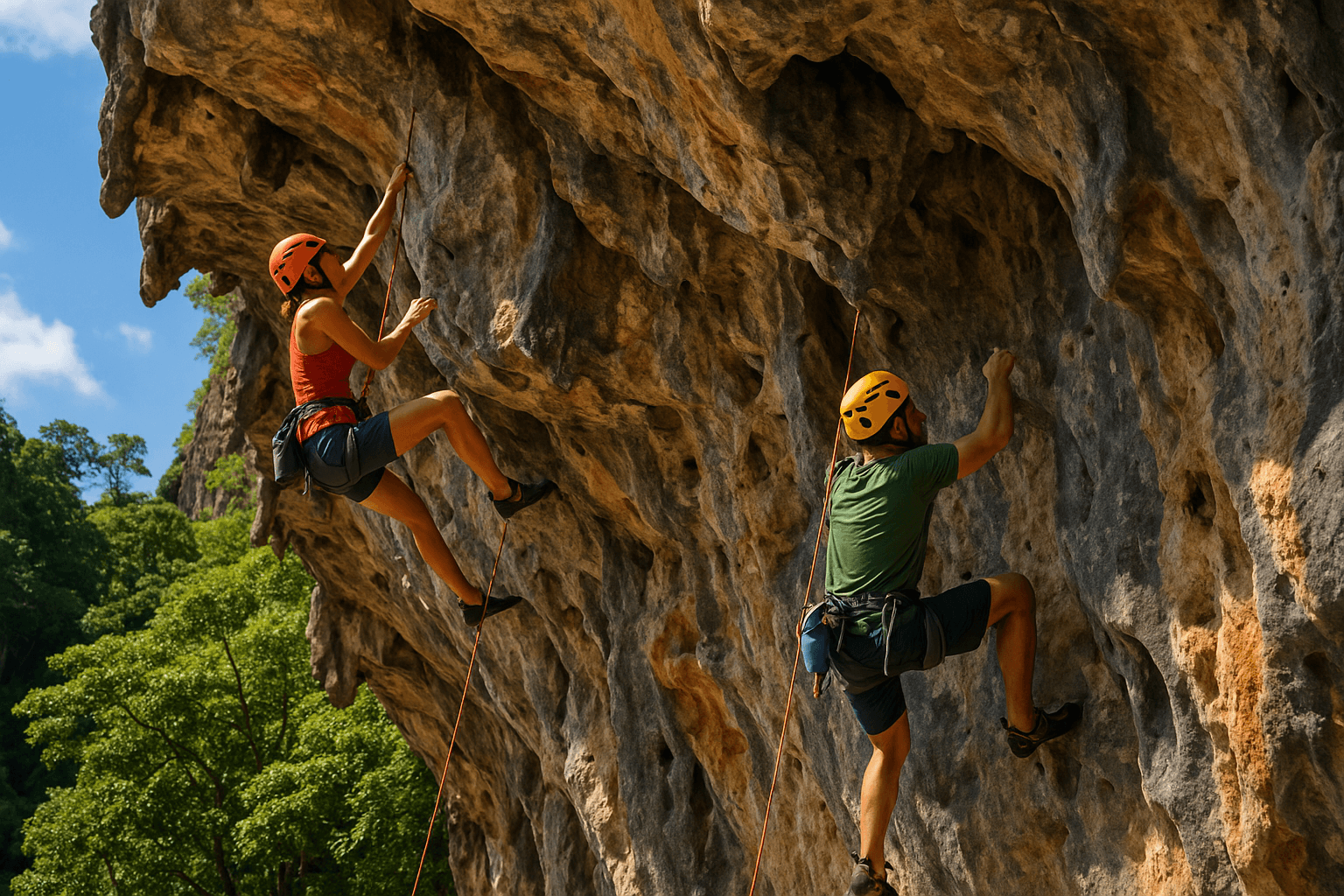
Rock climbers should target Krabi between mid-November and late February, the four-month window when Railay's limestone keeps friction high, the Phra Nang Cave Beach wall stays out of midday glare, and the morning dew burns off by 09:00. Daytime sits at 26-30°C with low humidity, the rain shadow keeps Tonsai West dry through mid-February, and afternoon onshore breezes cool the south-facing crags. December and January bring heavy bookings on the Railay peninsula; book bungalows 4-6 weeks ahead.
The climber's geography in Krabi is unusual because Railay is boat-only. The peninsula's three crags (Railay West, Railay East, and Phra Nang Cave Beach) sit behind limestone cliffs that cut the cars and scooters off entirely, so any rental day starts with a 100-150 THB longtail from Ao Nang's Nopparat Thara Pier. Plan motorbike rentals to bracket Railay nights, not include them. The full per-spot grading and approach guide is in Top 10 Climbing Spots in Krabi, and Best Beaches in Krabi covers the road-accessible coastal alternatives between climbing days.
Avoid May to October for Railay. The southwest monsoon turns Tonsai's tufa stalactites slick within 10 minutes of any squall, the Phra Nang stairs run with rainwater, and several routes seep through the wet season because the porous limestone holds moisture longer than the surface looks. October is the worst single climbing month: 300 mm of rain, a 14-day average of unsettled days, and frequent multi-day weather windows with no climbing. Late February to early March is the underrated edge-window: prices ease, crowds thin at Tonsai, and friction stays high until the first hot-season humidity arrives in mid-March.
When to visit Krabi for a beach holiday
Beach travelers should target December to March, the four-month window when the Andaman seas run calm, daytime sits at 28-32°C, sunshine averages 8-9 hours per day, and Ao Nang's longtail and speedboat schedules run uninterrupted. December is the launch of the high season, January and February are the consistent peak (lowest rainfall at 23-28 mm), and March is the warmest beach month before the April hot-season humidity sets in. Accommodation prices peak in late December and early January (Christmas-New Year), then ease back through January. The Thai Meteorological Department tracks the southwest monsoon onset and Andaman swell forecasts.
The beach geography sits on three layers. Ao Nang Beach itself is the convenience-tier launchpad on Highway 4203, lined with the Soi Ao Nang strip and a 5-minute walk from Nopparat Thara longtail pier. Klong Muang and Tup Kaek viewpoint sit 18-22 km west on Highway 4203 and 4034, the calmer resort-tier coastline with Pai Plong cove and Hat Noppharat Thara National Park between. Railay (boat-only) and the Four Islands cluster (Koh Poda, Koh Gai, Koh Tub, Koh Mor connected by the Talay Waek sandbar at low tide) anchor the longtail-only beaches. The full per-beach breakdown with sunset timing is in Best Beaches in Krabi and Best Sunset Spots in Krabi.
The shoulder months (May and October) drop accommodation rates 30-50% but trade away two things beach travelers care about: the Andaman gets choppy, and longtail trips cancel. Between June and September the wettest months close the day-trip pipeline on roughly one day in three, although the resorts at Klong Muang and Tup Kaek still deliver decent beach time during morning weather windows. If you are flexible on dates, late November or early March are the highest-value sweet spots: dry season conditions, 20-30% lower rates than the December-February peak, and the Tup Kaek sunset is at its best.
When to visit Krabi for island hopping
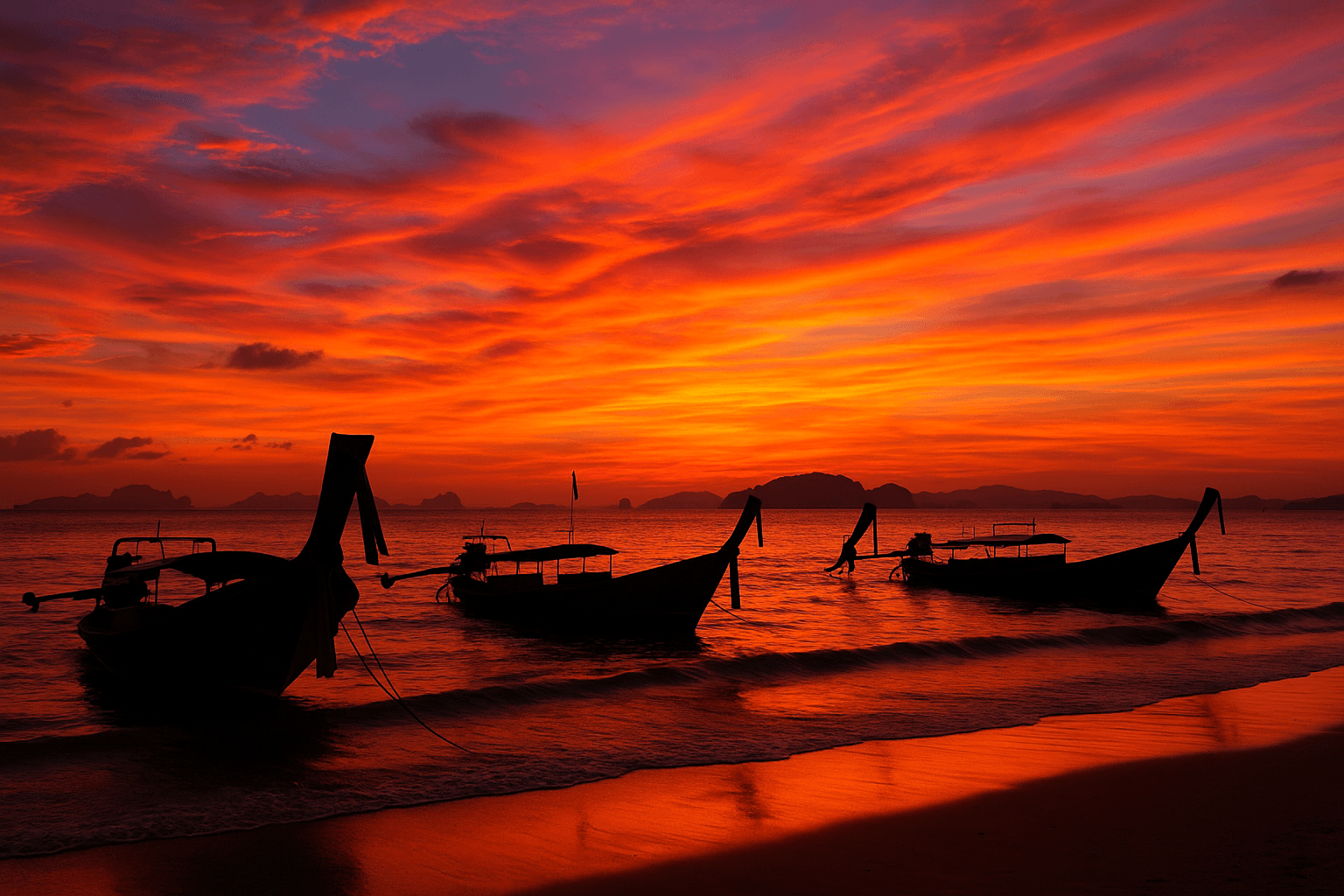
Island hoppers should target January to April, the longest window for reliable Phi Phi, Hong Islands, and Four Islands tours from Ao Nang Pier. Speedboats run their full 09:00 and 11:00 schedule with low cancellation risk; the open Andaman crossing to Phi Phi (45 minutes each way) stays comfortable; Hong Lagoon's narrow cliff entrance is navigable on a kayak. Group tours run 600-1,800 THB depending on the route, and pier-side scooter parking at Ao Nang Pier costs 50-100 THB on tour days.
April is the underrated tail of the island-hopping window. Through the first three weeks of April the seas stay calm enough for the Four Islands tour and most Phi Phi runs, with a coin-flip on Hong Islands depending on the morning forecast. Songkran (April 13-15) is the operational exception: Phi Phi Don's beachfront shuts for the festival, several Railay longtail operators take the week off, and prices on Ao Nang spike. After Songkran the seas hold roughly until late April or early May, when ferry cancellations begin to cluster. The full per-island reef notes and tour pricing are in Krabi Top 10 Islands and Krabi Island Hopping Tour Guide.
The wet-season penalty for island hoppers is steeper than for beach-hotel travelers. Speedboat operators cancel half-day tours on roughly one day in three from June to October, and the September-October peak (300-355 mm of monthly rainfall) cancels closer to one day in two. Even when tours run, swells reduce snorkel visibility and shorten the in-water time at Maya Bay and Pileh Lagoon. If your trip is locked to the green season, build in a two-day buffer for the headline boat day so you can re-roll if the morning forecast cancels the first attempt.
When to visit Krabi as a motorcycle tourist
Motorcycle tourists should target November to early February, the dry-season window when Krabi Province's road network runs at full grip. Highway 4203's Ao Nang-to-Klong Muang stretch is sealed and uneventful in any weather, but Highway 4034's two short steep climbing sections (Klong Muang up to Tup Kaek viewpoint) go slick within 10 minutes of any wet-season squall. Daytime sits at 26-30°C, mornings drop to 19-22°C in the cooler weeks of December and January, and the Highway 4 corridor north toward Phang Nga and Khao Sok holds dry through January.
The standard Krabi rental day is a 28-32 km loop on a Honda Click 125 from any Ao Nang shop (200-300 THB/day with free hotel delivery) or a Krabi Town shop at 150-200 THB/day. The full route catalogue with per-route bike-class advice is in Top 10 Krabi Motorbike Rides, and the cost mathematics, helmet rules, and scam patterns sit in Motorbike Rental Krabi Guide. The fuel math is friendly all year round: a Click 125 returns roughly 50 km/L on these mostly sealed roads, and a 4 L tank fills for 150-200 THB at any PTT or Bangchak station along Highway 4.
The shoulder months (March, April, October) work for motorcycle tourists who watch the radar. April adds the burning-season haze that drifts down from northern Thailand to reduce visibility from Tup Kaek, and Highway 4034's climbing sections need careful timing on any showery afternoon. The June-September monsoon forces a different riding plan: most days have a clear morning window from 06:30 to 11:00, then thunderstorms build over Khao Phanom Bencha and the Highway 4034 cliff sections become genuinely hazardous after lunch. If you only have a green-season window, ride before 11:00 and stay on the lower-altitude Highway 4 corridor toward Krabi Town and Khlong Thom hot springs.
When to visit Krabi for a family or honeymoon trip
Families and honeymooners should target the November to February dry-season window with two distinct preferences: families optimize for school holidays and predictable beach days, while honeymooners want the early-March or late-November sweet spots where Klong Muang's resort coast empties out and prices drop 20-30%. Daytime sits at 28-31°C, the seas stay calm enough for Phi Phi day trips with kids, and the Highway 4203 coastal road handles family scooter rides on a Honda PCX 160 (250-450 THB/day) more comfortably than the Honda Click for two-up over the Tup Kaek climb.
The family geography splits into two bases. Klong Muang and Tup Kaek (the resort coast 18-22 km west of Ao Nang on Highway 4203/4034) suit families who want a single quiet beach base, where the concierge tier delivers a Honda PCX 160 to the resort lobby. Ao Nang itself works for families who plan multiple boat days from the Pier and want the convenience of the Soi Ao Nang strip for restaurants and pharmacies. Krabi Town is a fit for honeymooners or families on longer stays, with cheaper rentals (150-200 THB/day) and easier access to the inland day trips at Wat Tham Suea (Tiger Cave Temple) and the Khlong Thom hot springs. The full base comparison is in Krabi Town vs Ao Nang Rental.
Avoid the December 26 to January 5 high-season peak for honeymoon trips because resort rates double, the Pier queues for Phi Phi run long, and Ao Nang's evening bar street gets loud. Songkran (April 13-15) is the operational exception in the other direction: families with kids who enjoy water-fight festivals can plan around Songkran, but expect Railay closures and the Phi Phi Don beachfront effectively shut down. Outside those two windows, late November and early March deliver the highest-value combination of weather, prices, and crowd levels for both family and honeymoon trips.
Reach Krabi by motorbike: routes, distance, and bike class by season
Krabi's road network rewards a scooter-anchored week year-round, but the bike-class recommendation shifts with the season. In the November to February dry window a 110-125cc Honda Click handles 90% of the route catalogue (Ao Nang to Tup Kaek 14 km, Krabi Town to Wat Tham Suea 9 km, Krabi Town to Khlong Thom hot springs 45 km). In the June to September wet window the same Click handles the lower Highway 4 corridor in the morning, but two-up trips over the Highway 4034 climb need a Honda PCX 160 or Yamaha NMAX (250-450 THB/day) for the better suspension on the wet-road sections. The full Highway 4 corridor toward Phang Nga and Khao Sok (90 km one-way) calls for a 250-400cc manual (500-1,200 THB/day) regardless of season for stable highway speeds.
The per-traveler-profile decision tree maps directly onto these route conditions. Climbers ride only as much as they need to bracket Railay nights, beach holidays use the Highway 4203 coastal arc for sunset rides to Tup Kaek, island hoppers ride mostly to and from the Pier, and motorcycle tourists make the routes the trip itself. Compare verified Krabi Town and Ao Nang shops, see real renter reviews, and reserve your bike in Motorbike Rental Krabi Guide before you fly.
The Krabi season decision tree at a glance
Frequently Asked Questions
What is the absolute best month to visit Krabi?
February is Krabi's single best month for most traveler profiles. Daytime sits at 28-31°C, rainfall averages 23 mm, the Andaman seas run their calmest, all longtail and speedboat schedules operate uninterrupted, and Highway 4034 to Tup Kaek viewpoint stays dry. Climbers, beach holidays, and motorcycle tourists all peak in February.
When should rock climbers visit Railay specifically?
Rock climbers should target mid-November to late February. Railay's three crags (Railay West, Railay East, Phra Nang Cave Beach) hold dry friction through this window because the limestone stays in the southwest monsoon's rain shadow. December and January are peak booked; January and early February deliver the highest friction-to-crowd ratio. Avoid October entirely (300 mm rainfall, persistent seep on tufa routes).
Is Krabi worth visiting during the monsoon season?
Yes, with caveats. May, June, and October are budget-friendly shoulder months with 30-50% lower accommodation rates and partial activity coverage; weather windows in the morning still allow scooter rides and beach days. Avoid September entirely if your trip depends on island hopping: rainfall peaks at 355 mm and speedboats cancel on roughly one day in two. Bring rain gear, build buffer days, and expect ferry suspensions.
Can I go island hopping during the rainy season?
Partially. From May to October, group speedboat tours to Phi Phi, Hong Islands, and the Four Islands cancel on roughly one day in three from rough seas. June and July run a slightly better cancellation rate than September-October. If you must island-hop in the wet season, book a flexible-cancellation tour, schedule the headline boat day for the second or third morning of your trip, and watch the marine forecast from Krabi International Airport (KBV) before paying.
How does the weather affect motorbike riding in Krabi?
The dry season (November-February) gives you essentially every route every day on a 110-125cc Honda Click. The wet season (June-September) requires watching the radar: Highway 4034's Klong Muang to Tup Kaek climb goes slick within 10 minutes of any squall, and afternoon thunderheads over Khao Phanom Bencha make the post-noon hours genuinely hazardous. Ride before 11:00 in the wet season and stick to the lower Highway 4 corridor.
When should I visit to avoid crowds in Krabi?
Late November (after the early high-season ramp but before December's Christmas-New Year peak) and early March (after the February peak but before April's Songkran) are the quietest dry-season windows. Both deliver near-peak weather, calm seas, full longtail schedules, and 20-30% lower hotel rates than mid-January. Avoid December 26 to January 5 if you want quiet beaches; that fortnight is Krabi's loudest dry-season stretch.
Is the burning season a problem in Krabi like it is in Chiang Mai?
Less so. Krabi sits 1,000 km south of the northern burning-season hotspot, so the haze that affects Chiang Mai's air quality from March to early April reaches Krabi at a noticeably reduced concentration. Tup Kaek viewpoint can lose some long-distance haze clarity in late March, but PM2.5 readings rarely exceed the moderate range. The hot-season humidity and 33-34°C April temperatures are the larger comfort issues for Krabi travelers.
Plan your Krabi week around the right window
Krabi rewards the traveler who picks the right window for their priority and then anchors the trip on a scooter. Climbers in November to February book Railay bungalows and ride only the 5 km from Ao Nang to Nopparat Thara Pier; beach holidays in December to March take the Highway 4203 coastal arc to Tup Kaek viewpoint and combine it with a Phi Phi day from Ao Nang Pier; motorcycle tourists in November to early February run the full Highway 4 corridor north to Phang Nga and Khao Sok. Pick up a Honda Click 125 from any Ao Nang shop at 200-300 THB/day with free hotel delivery, or a Krabi Town shop at 150-200 THB/day, then bracket the rental with longtail days to Railay, Phi Phi, and the Hong Islands. Compare verified shops, lock in the bike model, and reserve before you fly at Byklo. Free hotel delivery in both bases plus Krabi International Airport (KBV) pickup, cash deposits, and your passport stays in your hand. For the calendar-by-month view of the same season, see the sister Best Time to Visit Krabi post.