When to visit Phuket: the best time in 2026 is mid-November to mid-February, with 28-33°C, sunshine 8-9 hours per day, calm Andaman seas for Phi Phi and Similan tours, dry Highway 4233 cliff sections, and peak hotel rates. May to October is the southwest monsoon with 30-50% accommodation savings, daily afternoon squalls, and red-flag swim conditions on Patong, Karon, and Kata. Late September is the wettest fortnight; mid-November and April are the dry-season shoulders. From any Phuket Town, Patong, Kata, Karon, or Rawai rental hub, a 150-300 THB Honda Click 125 reaches Promthep Cape in 15-40 minutes year-round, but the Karon-Kata ridge becomes a serious wet-tarmac risk between June and September.
Key Takeaways
- Best window: mid-November through mid-February for guaranteed sunshine (28-33°C, 8-9 hours daily), calm Andaman seas, and dry Highway 4233 cliff sections; book hotels and big-bike rentals 4-6 weeks ahead.
- Cheapest window: June through September drops accommodation 30-50% off peak rates and cuts crowds at Promthep Cape, Karon Viewpoint, and Patong Beach by half, but cancels roughly one Phi Phi sailing in three.
- Wettest fortnight: the last 2 weeks of September average 280-340 mm rainfall and trigger the heaviest red-flag swim closures of the year on Patong, Karon, and Kata.
- Riding-conditions cutoff: the Karon-Kata ridge, the Big Buddha climb on Highway 4233, and the Promthep Cape access road go slick within 10 minutes of any monsoon squall; ride before noon June-September and bias inland routes after rain.
- Named events: Phuket Vegetarian Festival (late September or early October, 9 days), Songkran (April 13-15 island-wide water fight), Loy Krathong (November full moon), Chinese New Year (late January or February, hotel demand spike).
- Distance from rental hubs: Promthep Cape sits 6 km / 15 minutes from Rawai, 12 km / 25 minutes from Kata, 18 km / 40 minutes from Patong on Highway 4233, ridable year-round in dry weather.
Phuket's two-season climate and what it means for riders
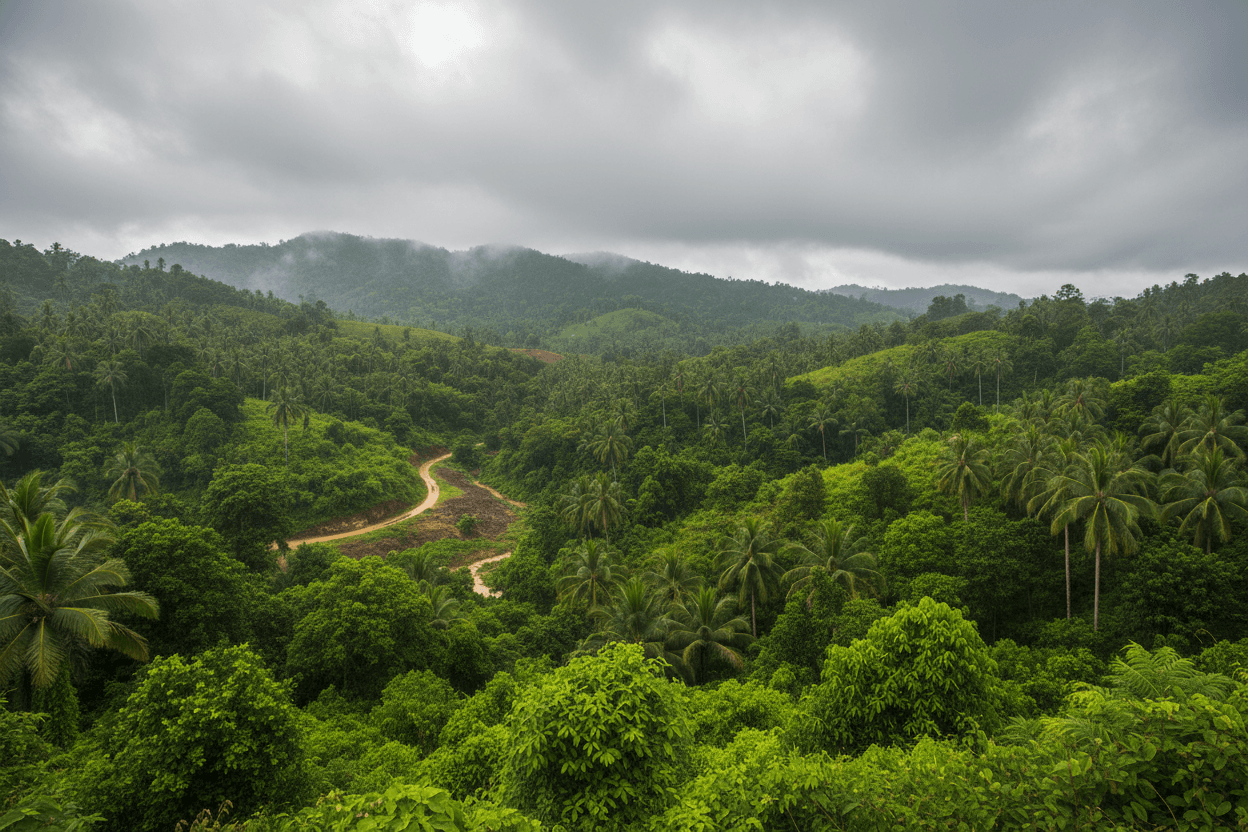
Phuket runs on a tropical monsoon climate with two seasons, not four, and the seasonal switch determines whether the island's headline rides are dry tarmac or slick cliff descents. The northeast monsoon (November to April) delivers dry sunny days, calm Andaman water, and 28-33°C highs; the southwest monsoon (May to October) brings daily afternoon squalls, 4-6 metre swells on the west-coast beaches, and the only weeks of the year when Phi Phi and Similan ferry sailings cancel routinely. Year-round temperature stays warm (24-36°C) so the seasonal call is about rain and sea state, not cold.
Humidity tracks the rainfall calendar. The dry-season air feels comfortable from mid-November through February; March and April are the hottest pre-monsoon months when the heat and humidity stack before the rains break; September and October are oppressively damp because the rain is heaviest and the wind is light. For riders, the practical effect is that morning rides through November-February run dry from 09:00 to sunset, while June-September rides need to wrap before the 14:00-17:00 squall window. The full island route catalogue and per-route bike-class advice lives in the discovering Phuket 4-day plan.
The sea-state shift is the underrated story. Dry-season Andaman water is calm enough that Phi Phi day-trips run 95% of scheduled sailings; wet-season sea state cancels roughly 1 in 3 sailings outright in July-August and roughly 1 in 2 in September. Lifeguards on Patong, Karon, and Kata raise red flags for 60-80% of the May-October period and the Tourist Police 1155 line documents drowning fatalities annually when riders ignore those flags. The west-coast cliff routes (Highway 4233 between Karon and Promthep Cape, the Big Buddha access road) carry the same wet-season risk on two wheels.
When is the best time to visit Phuket weather-wise?
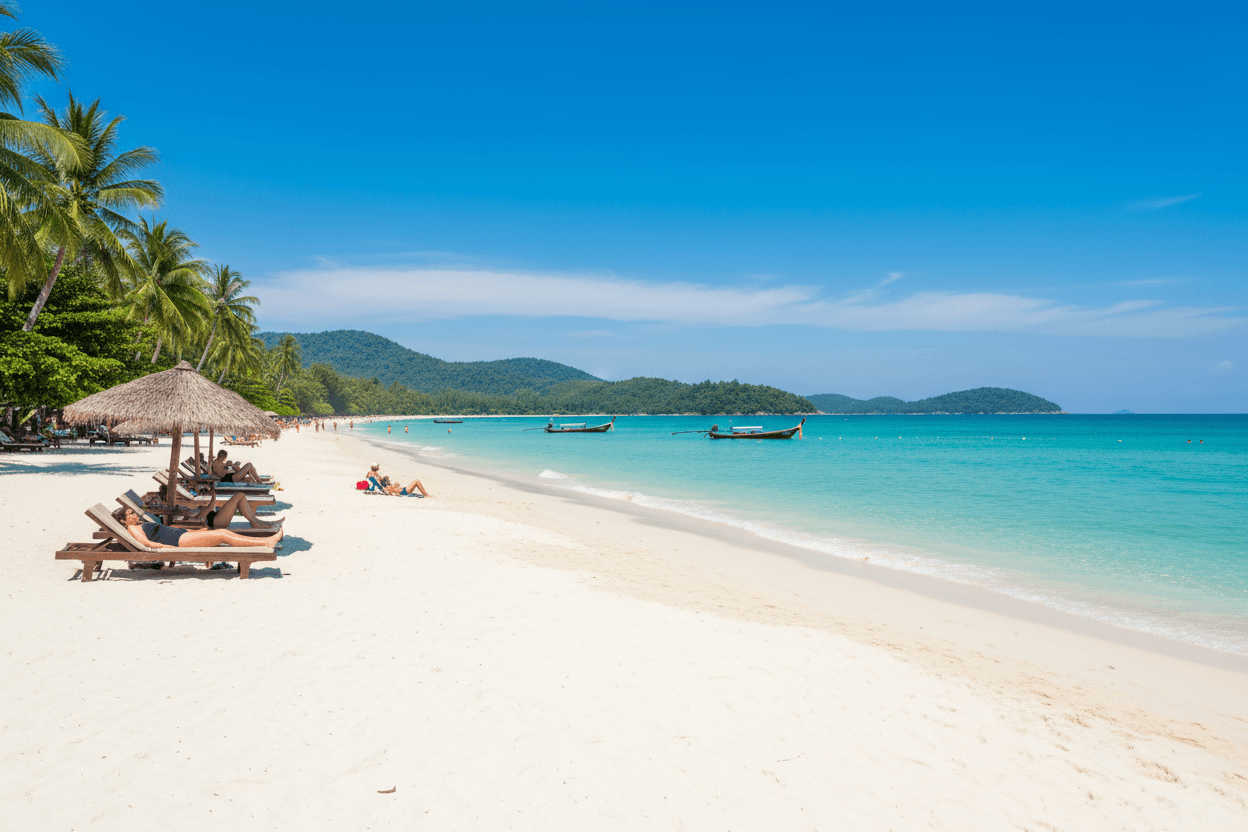
The best time to visit Phuket weather-wise is mid-November through mid-February, with December and January as the peak weeks. Daytime highs sit at 28-31°C, overnight lows drop to a comfortable 23-25°C, sunshine averages 8-9 hours per day, and rainfall averages 30-60 mm per month. The Andaman is calm for swimming, snorkeling, and Phi Phi or Similan sailings; the Karon-Kata ridge stays dry; the Promthep Cape sunset window between 18:15 and 18:45 runs almost every night. Hotel rates peak (especially Christmas to mid-January when 4-star Patong rooms touch 4,000-7,000 THB per night).
The shoulder windows are the cheapest dry weeks. Late November (post-Loy Krathong, before December peak) and the first 3 weeks of April (post-Songkran, pre-monsoon) trade slightly hotter temperatures for 20-30% lower accommodation rates and noticeably thinner crowds at Promthep Cape and Karon Viewpoint. April is the hottest month (32-34°C highs, high humidity) but riding conditions are still excellent: dry tarmac, full ferry schedule, no sea-state cancellations. Bias toward shoulder weeks if you want the dry-season bike rides without the December room rates.
For riders specifically, mid-January through February is the operational sweet spot. Roads are dry, daylight runs 11-12 hours, the Promthep Cape access at 18:15-18:45 is reliably clear, the Big Buddha climb on Highway 4233 has no rain-slick risk, and the inland Highway 4027 east-coast loop through Pa Khlok is dust-dry rather than mud-rutted. Pair the dry weather with a 150-300 THB Honda Click 125 from a verified Phuket rental shop and you cover the entire 250 km island on a single contract.
What is the rainy season in Phuket actually like?
Phuket's rainy season runs May to October with two distinct phases. May to August delivers the classic "tropical squall" pattern: sunny morning, heavy 1-2 hour afternoon downpour between 14:00 and 17:00, sunset clearing. September and October are the genuinely wet weeks: rain bands stack for days at a time, the southwest swell pushes 4-6 metre waves onto the west coast, and the Phuket Vegetarian Festival's late September timing falls right inside the wettest fortnight. Daily highs stay warm (28-32°C) and the afternoon squalls drop temperatures only briefly.
Off-season prices justify the rain calculation for many travelers. June, July, and August accommodation rates drop 30-40% off peak; September and October drop 40-50%. A Patong 4-star room that lists at 5,500 THB per night in December lists at 2,800-3,200 THB in September, and Phuket Town boutique stays drop into the 1,000-1,500 THB band. Phi Phi day trips at 1,500-2,000 THB still run on roughly 60-70% of monsoon days; book these flexibly so you can swap the Phi Phi day for a Phuket Town museum walk if the morning radar shows red.
The riding maths shifts accordingly. A Honda Click 125 still rents at 150-300 THB per day in Patong and Phuket Town, and most short rides through the Old Town Phuket grid, Highway 4030 north to Mai Khao, or the Phuket Town to Rawai south circuit run dry between rain bands. The watch-out is the Karon-Kata ridge on Highway 4233, the Big Buddha access road, and the Promthep Cape cliff descent: leaf-covered tarmac, sand wash from beach access roads, and reduced visibility turn these into elevated-risk stretches the moment a squall opens. Plan early-morning rides, abort to a coffee stop if a band rolls in, and bias the inland Highway 4027 loop over the cliff routes when the radar shows red.
Phuket weather month by month, with riding conditions
Phuket weather and ride conditions track six recognisable phases across the year. December and January hold peak dry weather and peak prices; February and early March stay dry but quieter and cheaper; late March and April turn hot but stay dry; May and June ease into the monsoon with predictable afternoon showers; July and August stay wet but with frequent dry mornings; September and October hit peak rain. The table below combines the weather, named events, accommodation pricing, and the ride implications per month so you can match the trip to the season.
The single most important row for riders is September. The Karon-Kata ridge, the Big Buddha access road, and the Promthep Cape cliff descent all carry elevated wet-tarmac risk through this fortnight, the southwest swell closes most west-coast swim beaches under red flags, and the Phi Phi ferry timetable from Rassada Pier runs at 60-65% reliability. Late September's false peak (covered in the callout above) is the meaningful exception. October typically opens the dry-season recovery window: by the third week of October the rain bands have thinned, the Promthep Cape sunset is reliably clear again, and hotel prices haven't yet climbed for November.

Named events that shape the timing call
Three named events change the visit calculation outside the pure weather story. The Phuket Vegetarian Festival (late September or early October, 9 days, lunar-calendar dates) is the island's most distinctive cultural event: street processions through Phuket Town's Old Town district feature mediums in trance, body-piercing rituals, and the loudest unregulated firecracker volleys in Thailand. The festival overlaps with the wettest fortnight of the year and shifts foot traffic, parking, and ride risk in the central Phuket Town grid; the Royal Thai Tourism Authority lists the official dates each year.
Songkran (April 13-15) is the Thai New Year water festival and turns the entire island into a 72-hour water fight. The pour-points cluster at Patong's Bangla Road, Phuket Town's Thalang Road, and the Phuket-mainland causeway. Riders should expect water bombardment from pickup trucks at every stoplight; weatherproof your phone, accept that shoes will be soaked, and ride at half pace because Bangla Road's tile-and-water mix is slick. Songkran riding is doable but the Royal Thai Police checkpoint cluster on Highway 4030 and 4233 doubles for the festival, with Tourist Police 1155 active throughout.
Chinese New Year falls in late January or early February depending on the lunar calendar. It's not a Thai public holiday but it triggers a 5-7 day spike in mainland Chinese tourism that lifts Patong and Kata accommodation prices 20-40% above the already-high December band, fills Phi Phi sailings, and stretches Phuket International Airport HKT arrivals. Plan around Chinese New Year week or accept the surcharge. Loy Krathong (November full moon, 1 night) is the festival of lights and brings a quieter Old Town Phuket evening on the Khlong Bang Yai canal, ideal for a slow scooter loop after dinner.
Reach Phuket from a rental hub: routes, distances, and bike class
A 150-300 THB Honda Click 125 from any Phuket Town, Patong, Kata, Karon, or Rawai rental hub reaches every headline destination on the island within 45 minutes year-round. Phuket Town carries the cheapest 125cc supply (150-250 THB per day) and is 32 km from the Phuket International Airport HKT; Patong is 12 km from Big Buddha on Highway 4233 and 18 km from Promthep Cape; Rawai sits 6 km from Promthep Cape, the shortest sunset run on the island. A 110-125cc Honda Click handles 80% of the season-flexible routes solo; pay the 100-150 THB per day premium for a Honda PCX 160 or Yamaha NMAX 155 only for two-up rides over the Big Buddha climb, the Karon-Kata ridge, or the full-distance Promthep Cape sunset run.
Fuel economics are the same year-round but matter more in monsoon season because you're more likely to ride longer to dodge rain bands. A Honda Click 125 returns roughly 50 km per litre on Phuket's mostly-sealed highways, and a 4-litre tank fills for 150-200 THB at any Bangchak or PTT station along Highway 4030 between Phuket Town and the airport. A typical day of riding (Phuket Town to Promthep Cape and back, with a Big Buddha climb in the middle) burns 60-80 THB of Gasohol 95 at 38-42 THB per litre. Budget 200-300 THB total for a 4-day exploration of the island regardless of season. The full route catalogue with viewpoint coordinates, road conditions, and bike-class advice per route lives in the discovering Phuket road-trip guide.
The single bike-class call that genuinely depends on season is the cliff-route sunset run. December-February: a 125cc Honda Click solo reaches Promthep Cape comfortably from any base. June-September: a 150-160cc Honda PCX 160 or Yamaha NMAX 155 is materially safer because the extra weight and wider tyres handle wet tarmac better than a 125cc Click on the same descent. Two-up riders heading for Promthep Cape sunset in monsoon season should rent the maxi-scooter regardless of the price premium; the best scooter rental Phuket breakdown ranks the 110-160cc automatic class in deeper detail and the first-time visiting Phuket guide walks first-timers through the same call.
How to time a Phuket trip by traveler profile
Phuket's two-season climate maps onto four traveler profiles, and the right month differs for each. Beach holidaymakers prioritise calm Andaman swimming and dry beach days, so November to April is the only realistic window. Budget travelers prioritise low accommodation rates and thin crowds, so June to September works despite the rain because the 30-50% off-peak savings dwarf the lost beach days. Cultural travelers chasing the Phuket Vegetarian Festival or Loy Krathong align dates to lunar events. Riders prioritise dry tarmac and time-flexible rides, which biases mid-November through February.
The first-time-visitor sweet spot is mid-November to early December. The dry season is fully open by November 15, accommodation hasn't yet hit Christmas peak, sea state is calm enough for the full Phi Phi and Similan trip menu, daytime temperatures are pleasant rather than hot, the Karon-Kata ridge runs dry, and the Promthep Cape sunset is reliably clear. The downside is that this window is also when rental shops in Patong and Kata book out their best-maintained 125cc inventory; book through a verified shop 2-3 weeks ahead, especially over the Loy Krathong long weekend.
Returning visitors who already know Phuket often pick the late-September false peak (see the callout above) for the price-to-weather ratio, the late-October recovery window for similar reasons with more reliable Phi Phi sailings, or April for the post-Songkran dry weeks before the May rains. None of those work for first-timers because the weather risk is real, but they can be the best-value weeks of the year if the radar cooperates. The Phuket budget travel 4-day itinerary and the first-time visiting Phuket guide cover the per-profile planning detail.
Pack and plan around the season
Pack lists and itinerary flexibility shift sharply by season. Dry-season travel (November to April) needs sun protection (high-SPF sunscreen, wide-brim hat, sunglasses), light cotton or linen clothing, and either flip-flops or sandals for the beaches plus closed shoes for the temple visits. Daytime sun is intense (UV index frequently hits 11+ between 11:00 and 15:00) so a long-sleeve rashguard is the underrated kit item for beach days. Monsoon-season travel (May to October) adds a packable rain jacket, a 25 cm compact umbrella, mosquito repellent (DEET-based concentrations work better than picaridin during peak rain), waterproof phone case, and dry bags for valuables on scooter days.
For the rental day itself, a closed-toe shoe (not a flip-flop) is the difference between a manageable scuff and a serious foot injury in any spill. Carry the IDP, your home-country motorcycle license, and a passport copy at all times; the original passport stays in the hotel safe, never with the rental shop. Bring a hotel address card in Thai script for the worst-case "lost on the wrong soi at midnight" scenario; both Patong and Phuket Town have layouts that turn confusing fast after dark, especially in rain.
Travel insurance is the underrated monsoon-season investment. Comprehensive cover with motorbike-rider clause (most policies require IDP-with-motorcycle-endorsement and exclude bikes over 250cc) plus weather-related cancellation cover handles the real wet-season risks: a cancelled Phi Phi sailing, a hospital admission after a wet-tarmac spill, a typhoon-grounded flight from HKT. The rental waiver tiers reference walks the four cover tiers and the gap between Por.Ror.Bor third-party and full comprehensive cover. Build a rain-day shortlist before you fly: an Old Town Phuket walking tour, a Thai cooking class in Kathu or Cherngtalay, a Sino-Portuguese museum hour, a Sirinat National Park inland walk, or a Big Buddha visit on a clear morning between rain bands.
Frequently Asked Questions
What is the best month to visit Phuket?
The best month to visit Phuket is January or February: 28-31°C, dry sunshine, calm Andaman seas, and the lowest rainfall of the year (25-50 mm per month). Phi Phi and Similan day trips run their full schedule, the Karon-Kata ridge stays dry, and the Promthep Cape sunset window between 18:15 and 18:45 runs almost every night. The trade-off is peak hotel rates, especially over Christmas, New Year, and Chinese New Year week.
Is Phuket worth visiting during the rainy season?
Yes, with planning. May to October cuts accommodation costs 30-50% off peak and clears the crowds at Promthep Cape, Karon Viewpoint, and Patong Beach by half. Mornings are usually dry, afternoon squalls last 1-2 hours, and the late-September false peak window often delivers near-dry-season weather at peak-monsoon prices. Avoid the wettest fortnight in late September if you want reliable Phi Phi sailings and dry cliff routes, and bias inland rides over the Karon-Kata ridge after rain.
Is it safe to swim in Phuket during the rainy season?
Swimming in Phuket during May to October is dangerous on the west-coast beaches when red flags are flying. Patong, Karon, Kata, and Surin lifeguards raise red flags for 60-80% of the monsoon period because the southwest swell drives 4-6 metre waves and strong rip currents onto beaches that look benign from the sand. Drowning fatalities cluster in this window. East-coast bays at Rawai and Pa Khlok stay calmer; check the flag before entering the water on any beach.
When does Phuket weather change from dry to rainy?
Phuket transitions from dry to rainy season around mid-May, when the southwest monsoon arrives and the first afternoon squalls begin. The reverse transition, monsoon back to dry, happens in mid to late October as the rain bands thin and the Andaman sea state settles. Mid-November is when the dry season is fully reliable again, with calm seas, dry tarmac on Highway 4233, and the Promthep Cape sunset window opening for the December peak.
How far ahead should I book a Phuket trip?
Book 4-6 weeks ahead for November to February travel, especially over Christmas, New Year, and Chinese New Year, when 4-star Patong rooms touch 4,000-7,000 THB per night and big-bike rentals book out 2-4 weeks before peak. Mid-November shoulder weeks and April post-Songkran take 2-3 weeks of lead time. June to September monsoon travel often takes good last-minute deals because demand is thin; you can land a 50% off-peak Patong room with 3-7 days notice.
What is the wettest month in Phuket?
September is the wettest month in Phuket, averaging 280-340 mm of rainfall, with the last 2 weeks of September the year's heaviest rain band. Sea state turns roughest of the year, the southwest swell closes most west-coast swim beaches under red flags, and roughly 1 Phi Phi ferry sailing in 3 cancels for weather. October is wet but tapering: the third week of October typically opens the dry-season recovery, with hotels still at off-peak prices and Promthep Cape sunsets returning to clear.
Can I rent a motorbike in Phuket year-round?
Yes. Phuket rental shops in Phuket Town, Patong, Kata, Karon, and Rawai operate year-round at the same 150-300 THB per day rate for a Honda Click 125. The seasonal change is route-specific, not rental-availability. Dry season opens every route on the island; monsoon season biases riders toward early-morning departures, the inland Highway 4027 loop over the Karon-Kata cliff routes, and the 150-160cc Honda PCX 160 or Yamaha NMAX 155 over a 125cc Click for two-up cliff descents. The motorbike rental Phuket guide covers per-shop pricing, deposit norms, and verified-shop selection.
Plan a Phuket trip on two wheels around the season
Rent a Honda Click 125 at 150-300 THB per day from any Phuket Town, Patong, Kata, Karon, or Rawai shop via Byklo, and the entire 543 km² island opens on a single rental contract regardless of season. In dry-season weeks (November to April) ride the headline circuit through Patong, Kata, Karon, and Promthep Cape on Highway 4233 with reliable sunsets and dry tarmac; the discovering Phuket 4-day plan and the best beaches in Phuket guide cover the per-stop detail. In monsoon weeks (May to October) ride mornings only, bias the inland Highway 4027 loop through Pa Khlok and Khao Phra Thaeo, and combine the Phuket budget travel 4-day itinerary with the first-time visiting Phuket guide for the rain-day shortlist. Free hotel delivery in Patong, Karon, Kata, and Rawai, IDP-required, original passport stays in your pocket, and the Phuket / Pattaya / Koh Samui rental scams reference covers the deposit-return script before you ride.